
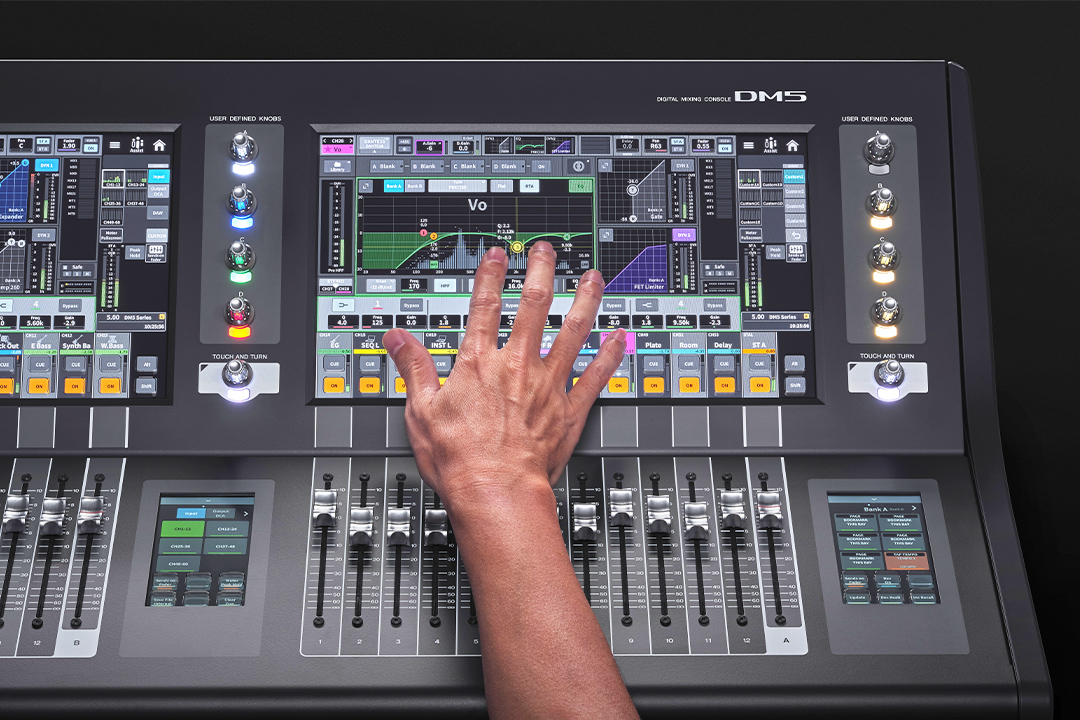
Yamaha introduces its new DM5 series of digital mixing consoles, a major evolution in the portfolio of one of the leading manufacturers of digital mixing systems. The two models in the range, the DM5 and DM5 Compact, bring the ergonomics and user experience of the DM7 series into an even smaller footprint. The DM5 also incorporates numerous improvements and innovations, including a faster graphics engine for the user interface and the new Glass Keys on the control surface, a world first.
The software suite has also evolved, with redesigned graphics for the audio plug-in interfaces, mixing feature packages specifically tailored to broadcast and theater applications, and updated control software. Added to this are PY expansion cards, either to increase DSP power or extend connectivity, together with three new RUio interfaces. This new compact platform should prove particularly attractive for small- and medium-scale live sound applications, providing easy and flexible access to Yamaha’s mixing ecosystem.
The new DM5 series uses the same surface and chassis topology in two different sizes. The DM5 control surface incorporates two 13.3-inch touchscreens, two customizable 4.3-inch touchscreens and two 12+1 fader sections, while retaining compact dimensions of 826 x 235 x 441 mm (W x H x D). Able to process 60 input channels, the DM5 provides 32 analog inputs and 16 analog outputs locally.
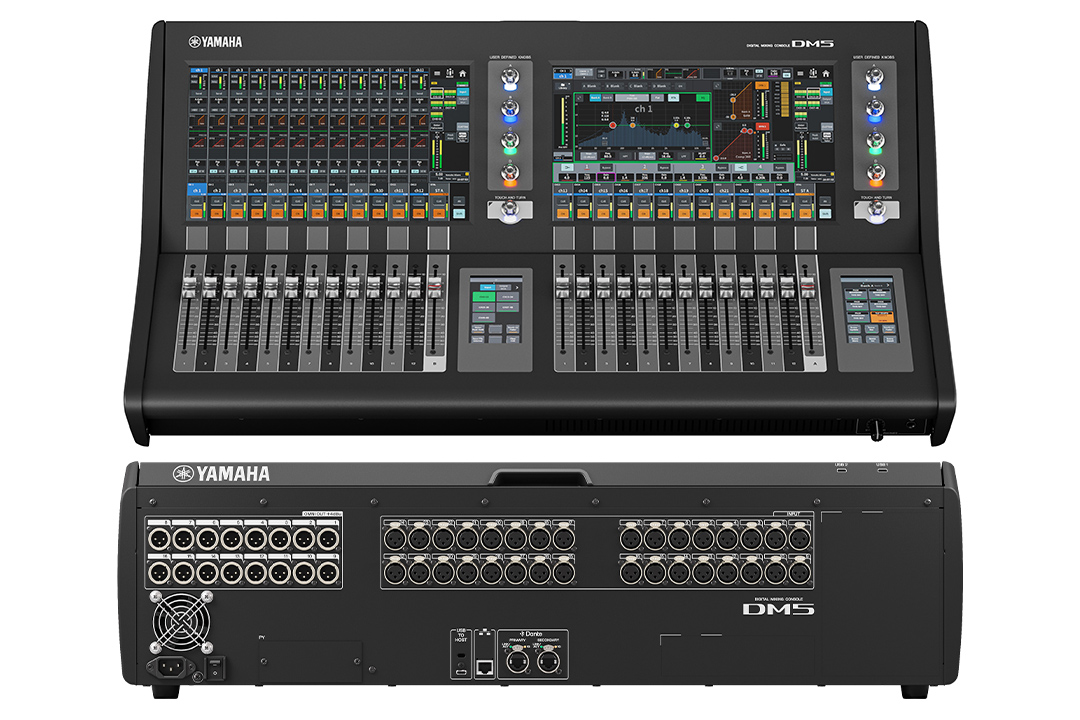
The DM5 Compact retains the height and depth of the DM5 but reduces its width to just 446 mm. It incorporates one 13.3-inch touchscreen, one customizable 4.3-inch touchscreen and a single 12+1 fader section. Mixing capacity is reduced to 48 input channels, with 16 local analog inputs and 16 local analog outputs. Both models also provide 64 channels of Dante I/O at 96 kHz, together with 24 mix buses, 12 matrices, 2 stereo buses and 12 DCAs. They also offer 18 channels of I/O via USB, an RJ45 connector for console control, and Bluetooth connectivity for audio playback as well as saving and loading memory files.
The consoles’ I/O can be expanded to additional formats through the PY expansion-card slot. Three cards are available: the PY64-D adds 64 additional channels of Dante I/O, the PY64-MD supports 64 channels of MADI I/O, and the PY8-AE is equipped with a 25-pin D-sub connector providing 8 channels of AES/EBU I/O. All three cards incorporate sample-rate converters, available on inputs only with the PY8-AE.
Two additional cards further extend connectivity options: the PY-MIDI-GPI provides MIDI/GPI control through 5-pin DIN and 15-pin D-sub connectors, while the WSG-PY64, developed by Waves Audio Ltd, enables integration with a SoundGrid system.
The launch of the DM5 is accompanied by V2 firmware for the platform it shares with the DM7. In addition to increased responsiveness and a refreshed visual design for the screen user interface, this new version adds practical mixing and workflow functions including Channel Move, Mix Bus Sends Copy, improved patching, third-party device control including Stage Tech’s Nexus routing system, and new Selected Channel and Dynamic display modes for faster assignment and operation of user-defined controls.
Audio processing
Each DM5 channel offers extensive dynamics processing and four EQ types, all supported by a real-time analyzer. Input channels provide a 4-band parametric EQ plus 2 filters with RTA, two dynamics processors including compressor, gate and ducking functions, and up to 4 insert plug-ins. Output channels provide an 8-band parametric EQ plus 2 filters with RTA, one dynamics processor for compression, and up to 4 insert plug-ins. A 16-slot internal effects rack provides 43 versatile, high-quality effects, including reverbs and eight types of delay.
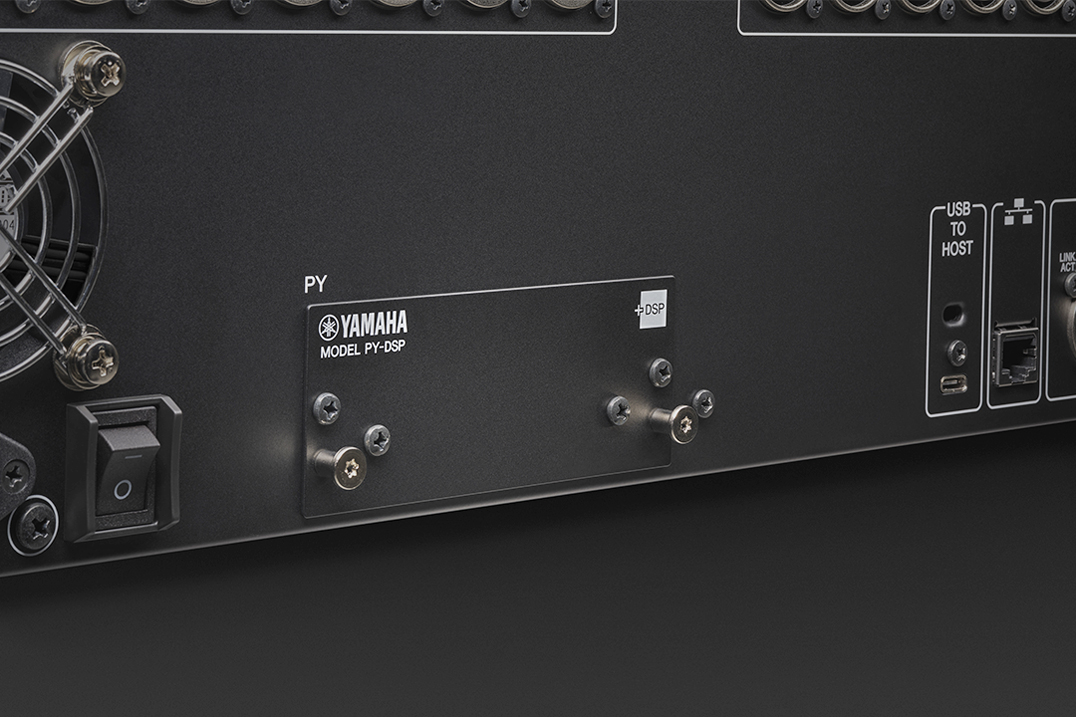
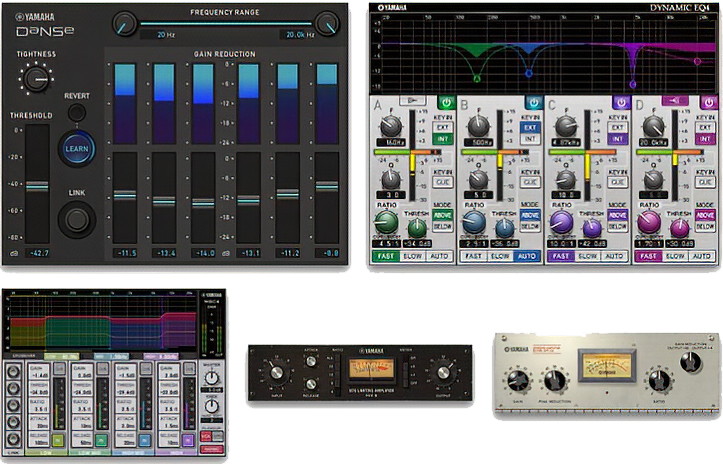
To extend the effects capacity of the DM5 consoles, the expansion slot can accept the PY-DSP card, adding 32 extra instances of Premium Effects. The card can also be used with the DM7. The Premium Rack provides a broad selection of high-end plug-ins, including the Portico 5033 EQ and Portico 5043 compressor developed in collaboration with Rupert Neve Designs, as well as Dynamic EQ, the MBC4 multiband processor, Vintage Compressor and the DaNSe dynamic noise suppressor.
A world first for an improved user interface
The most visible feature of the new DM5 consoles is their new 13.3-inch main touchscreens, which incorporate innovative controls that are physically integrated into the display: the Glass Keys. They operate like real tactile buttons and dynamically display their status according to the console state.
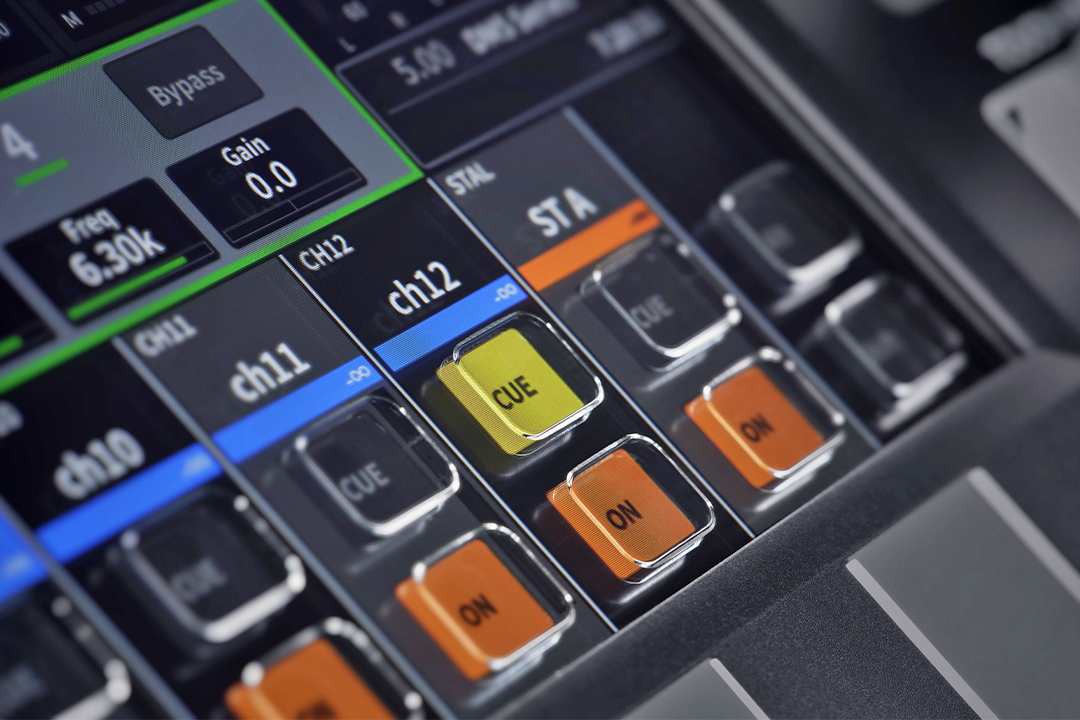
This reliable, high-performance technology gives operators an on-screen control with the tactile feel of a physical console button. One key advantage is that users can rest a finger on the display without triggering the command. The slight raised profile makes each key easy to locate by touch, allowing the sound engineer to keep visual contact with the stage or performer and trigger the action at exactly the right moment without having to check or look down at the screen. This also helps prevent accidental operations.
The 4.3-inch touchscreens also feature six Glass Keys dedicated to programmable user controls, making them especially practical in operation, together with six additional conventional keys. In addition, four assignable rotary encoders positioned alongside the main display use Dynamic mode to show and adjust the parameters of the functions selected on the relevant channel.
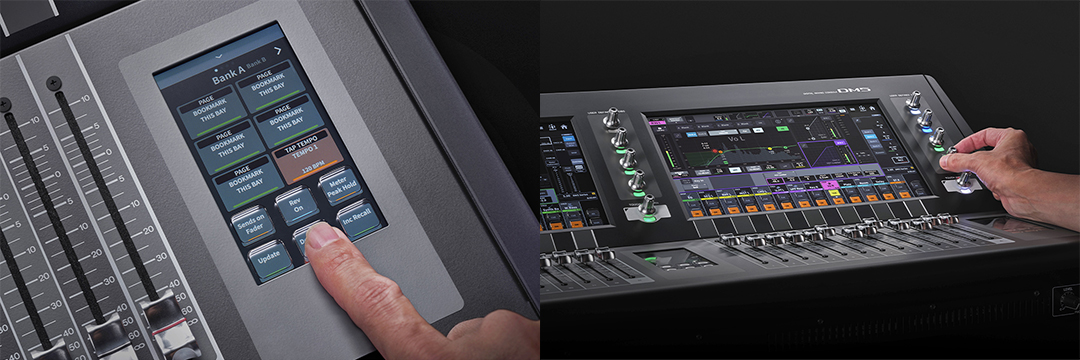
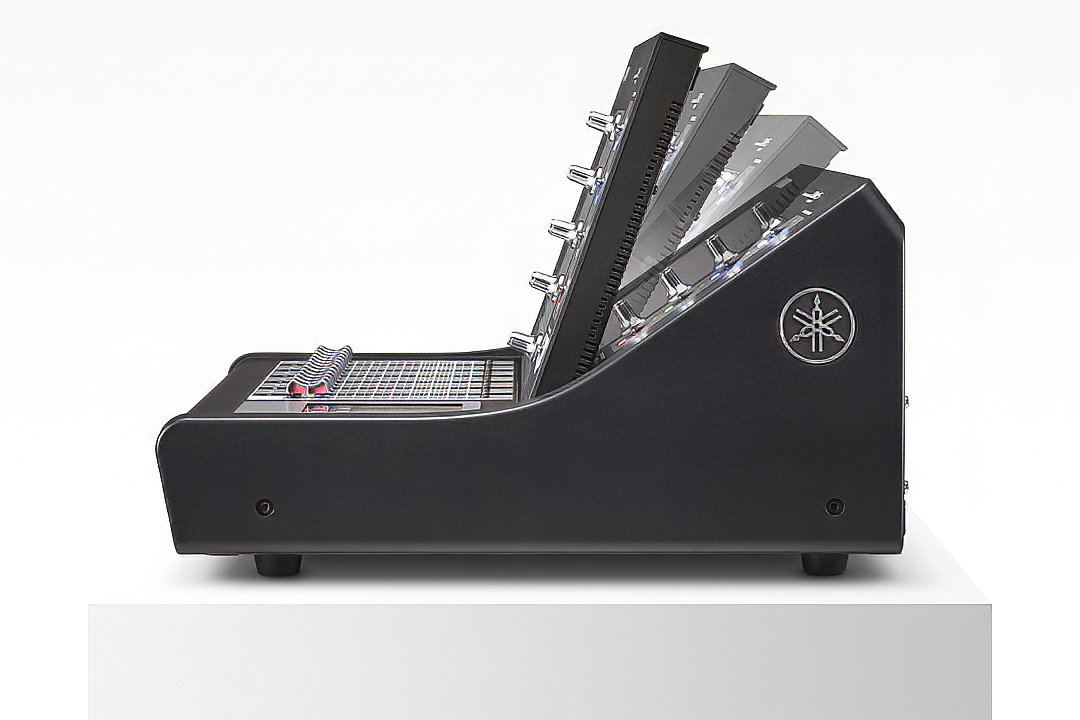
Another distinctive feature of the DM5 consoles is the ability to tilt the main display panel. Ideal for adapting to difficult lighting conditions or to the engineer’s mixing position, whether seated or standing, the display can be adjusted for optimum readability using any of four available viewing angles.
Finally, Yamaha’s Assist functions also help reduce setup time by handling a number of often tedious and repetitive preparation tasks. Depending on the incoming signal, Assist can suggest a channel name, a gain setting and automatic dynamics settings.
Optional packages
With the DM5, customization extends beyond the hardware itself. The DM5 series offers additional options in the form of optional packages that can be purchased and activated through the Yamaha PV Portal application. These licenses can also be transferred between DM5 and DM7 consoles, although naturally each license can only be active on one console at a time.
These packages adapt the DM5 consoles to workflows specific to different professional applications. The Broadcast Package combines seven essential broadcast mixing functions, including the indispensable Mix Minus and Audio Follow Video.
A separate theater package adds immersive functions with AFC Image control, four additional banks of EQ and dynamics, and other features such as an actor library that is particularly useful for managing cast changes in musicals and other live productions.
Finally, the DM5 includes 12 channels of Dugan automatic mixing as standard. With an additional license, this can be expanded to 40 channels on the DM5 Compact and 60 channels on the DM5.
New input/output interfaces
Alongside the DM5 launch, Yamaha is introducing three new I/O interfaces that expand the existing R Series. These three models are compatible with the DM5 consoles as well as the DM7, DM3 and RIVAGE PM. Likewise, all existing R Series interfaces are compatible with the DM5.
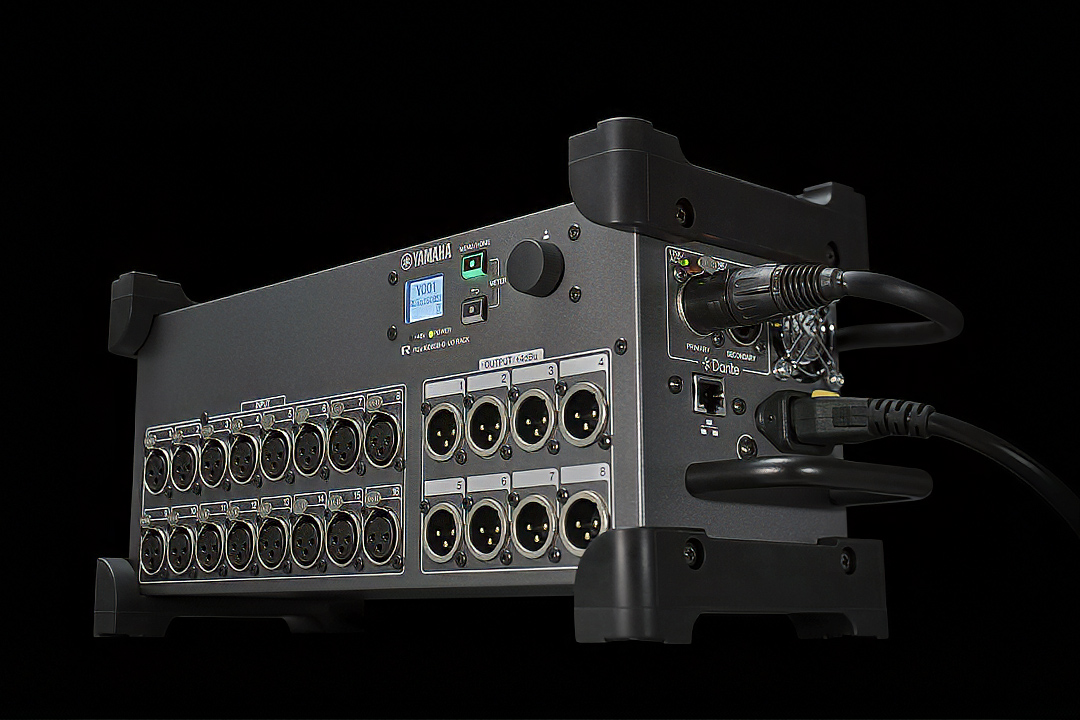
Designed for stage use with rugged rubber feet and an integrated carrying handle, the RUio1608SB-D interface provides 16 analog inputs, 8 analog outputs, and primary and secondary Dante connections. An optional rack-mount kit is also available.
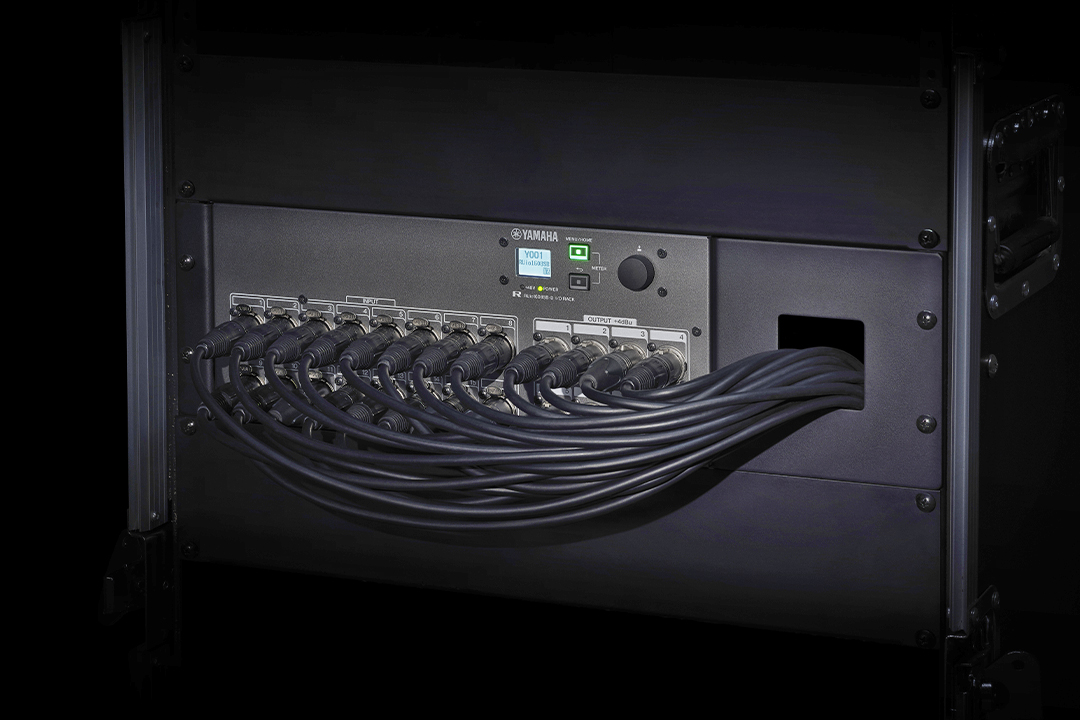
The RUio0804-D is a 1U rackmount interface offering 8 analog inputs, 4 analog outputs, and primary and secondary Dante connections. It is an ideal choice when only a few additional remote inputs and outputs are required.
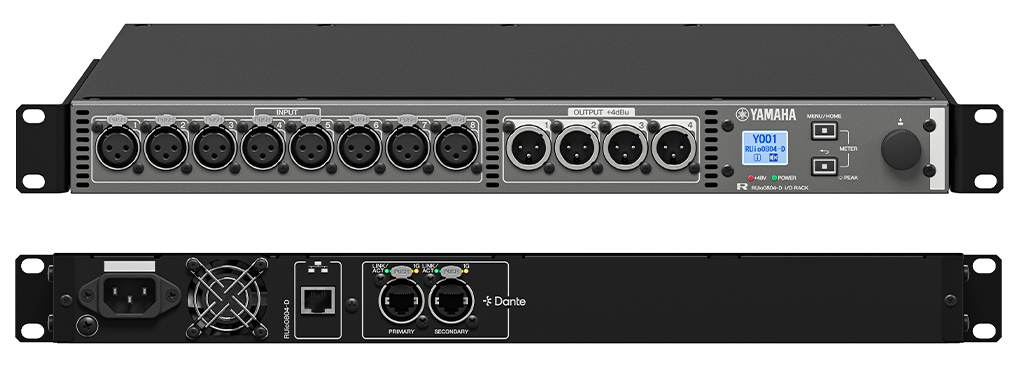
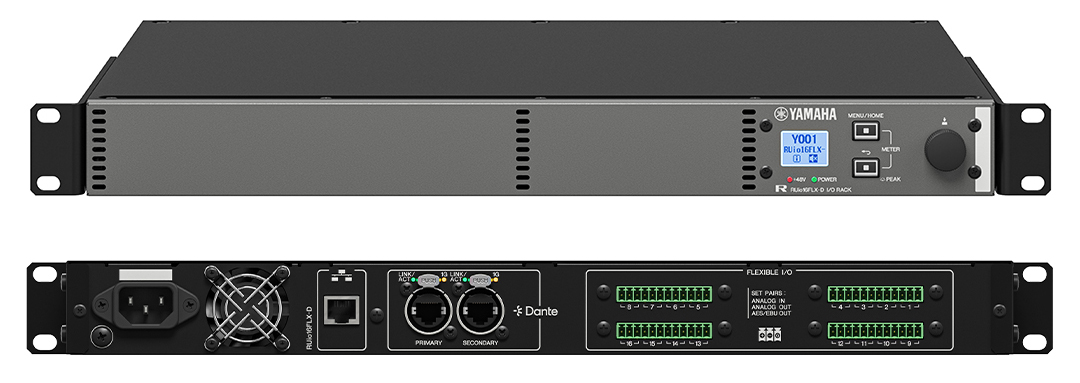
Finally, the RUio16FLX-D provides 16 channels that can be fully configured in pairs as analog mic/line inputs, analog outputs, or AES/EBU outputs, while also providing Dante connectivity. This makes it particularly well suited to scalable audio installations and applications requiring a high degree of configuration flexibility.
New software
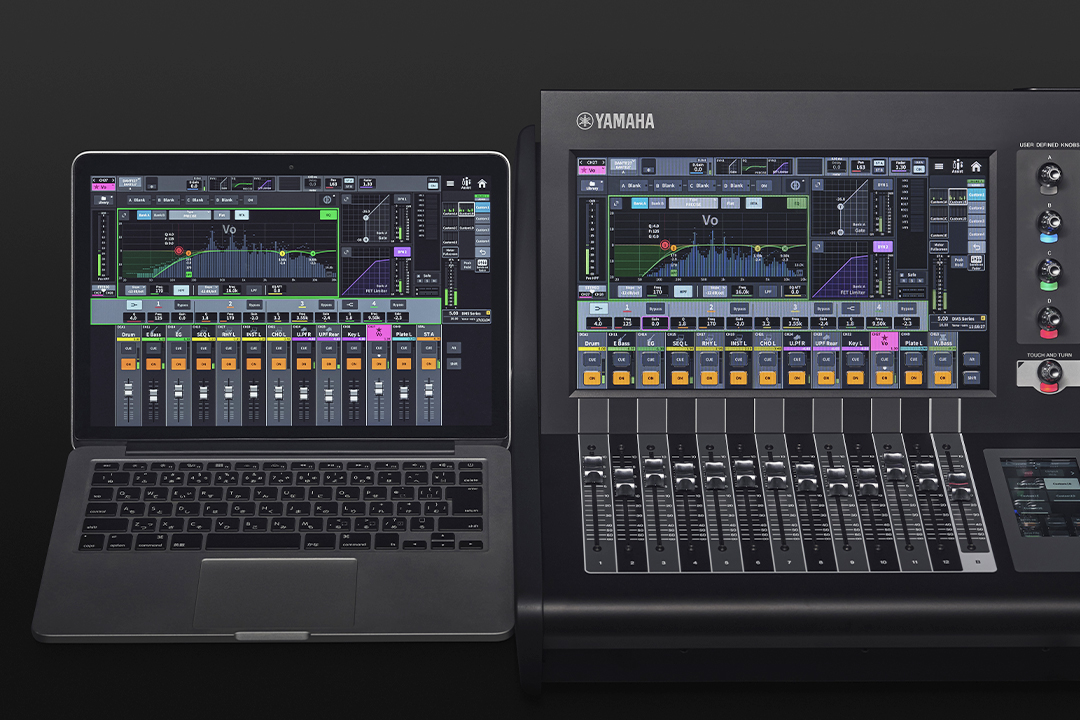
The DM5 launch is accompanied by the new DM Editor application. Available for Windows and macOS, it allows configurations to be prepared and edited offline and also manages backups when the console is connected. Project files are common to the DM5 and DM7 series, allowing data to be exchanged between the different consoles.
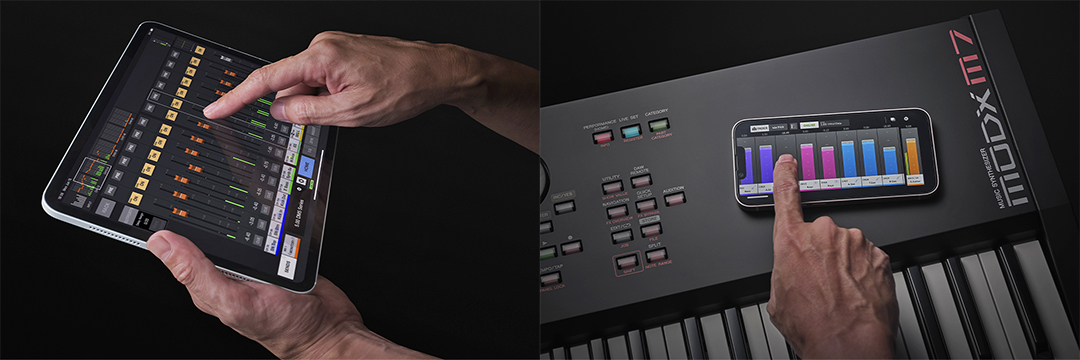
At the same time, the DM StageMix and MonitorMix applications have been updated for the DM5. They provide convenient remote control of the consoles from anywhere in a venue or performance space. DM StageMix is also compatible with DM7 consoles running firmware version 2.0 or later.
The highly flexible ProVisionaire Control Plus solution provides a fully customizable control platform for operating DM5 consoles.
The DM5 also includes DAW Remote control functions, providing tactile control of level settings and the transport functions of a digital audio workstation using the console’s faders, buttons and rotary controls.
We will leave Jonathan Ntoula to conclude this presentation. “The DM5 brings a major evolution of the graphical user interface for Yamaha. We are moving to V2, a version shared by both the DM5 and DM7. The improvement in the responsiveness of the screen graphics engine is significant, and it completely resolves the sluggishness reported by some experienced DM7 users. The plug-in interface is becoming more modern, more dynamic and more colorful, giving it a genuine refresh without changing the sound or the fundamental character of the processing. The DM7 and DM5 series are now future-facing platforms for Yamaha.”
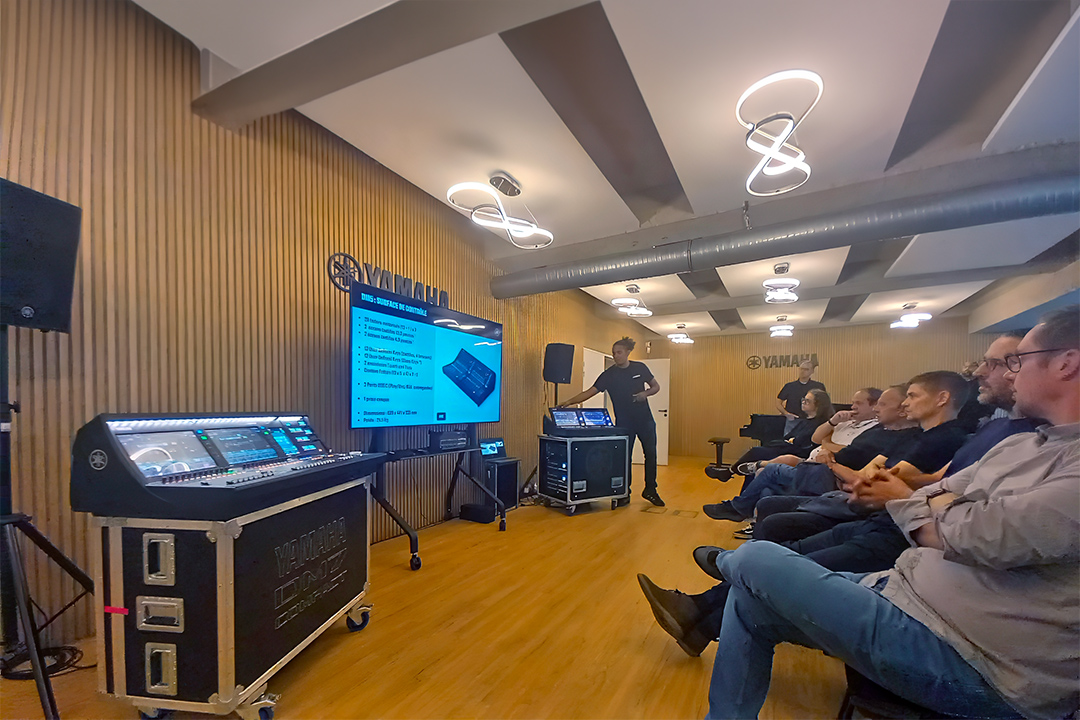
The new DM5 successfully combines, in a compact format, all the strengths that have made Yamaha consoles a leading choice for digital mixing in small- and medium-scale applications. By adding new control innovations that bring welcome simplicity and speed to the Yamaha environment, together with a comprehensive processing suite capable of delivering complete mixes without external equipment, the DM5 provides a mixing solution that appears particularly well matched to today’s demand for innovation while retaining the benefits of the standardized workflow on which sound engineers can rely.
Watch the video
More information on the Yamaha website