
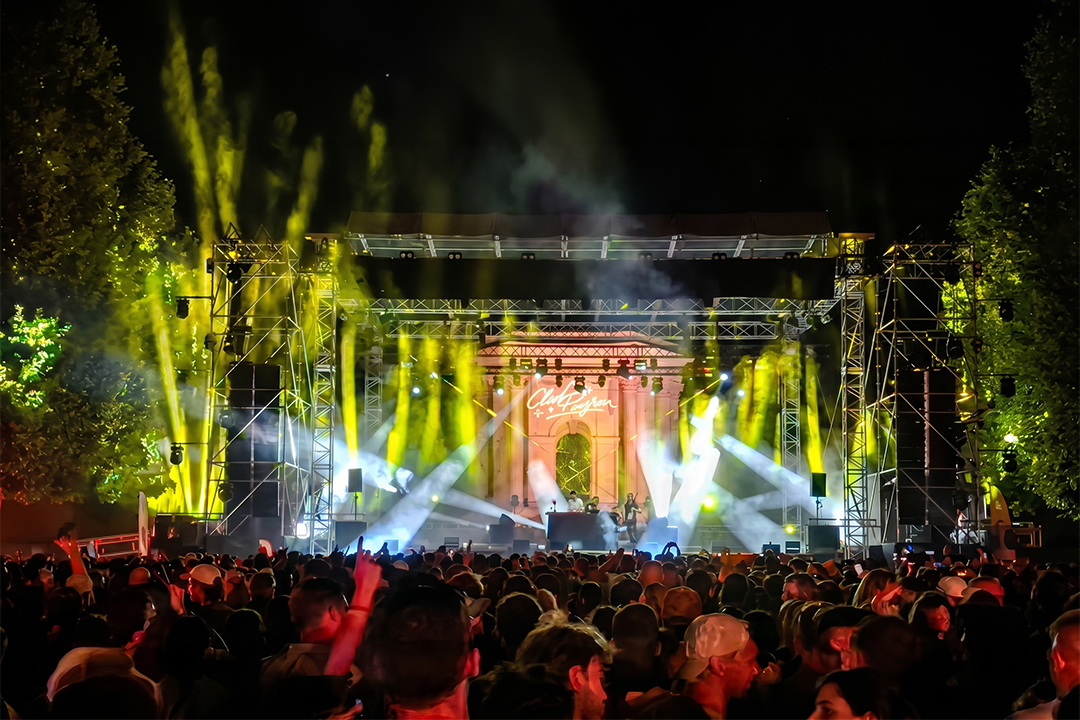
When Montpellier venue Rockstore and the My Life Is A Week End collective launched Club Peyrou last year, a two-day electronic music event on the Place Royale du Peyrou, they turned to long-time partner TEXEN for sound reinforcement.
After a successful debut, the event returned with another exclusive lineup in the same landmark setting. Julien Beffara of TEXEN Vendargues designed an all-NEXO system for 10,000 festivalgoers and explains the technical choices behind it.
SLU : Julien, can you start by describing the site and its main challenges?
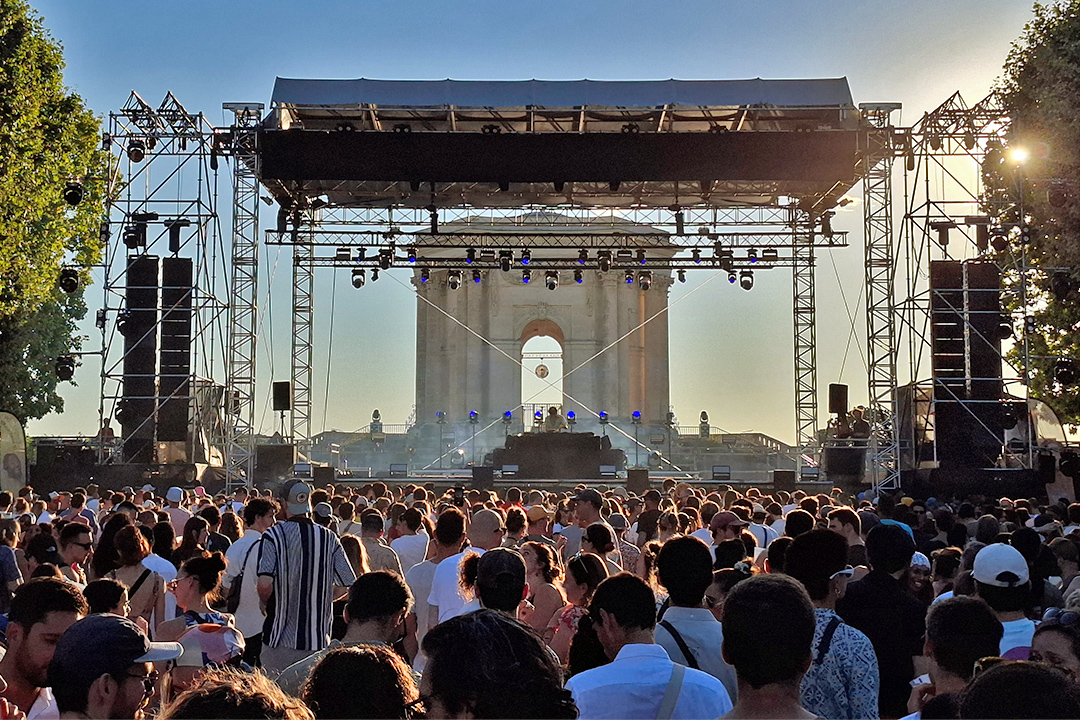
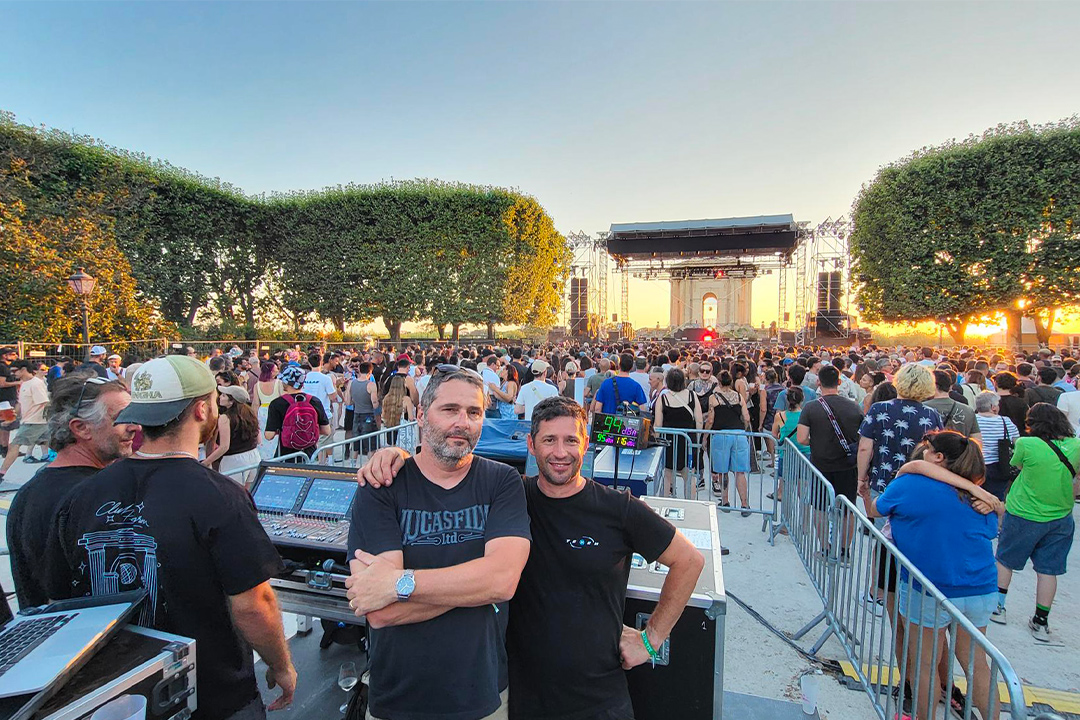
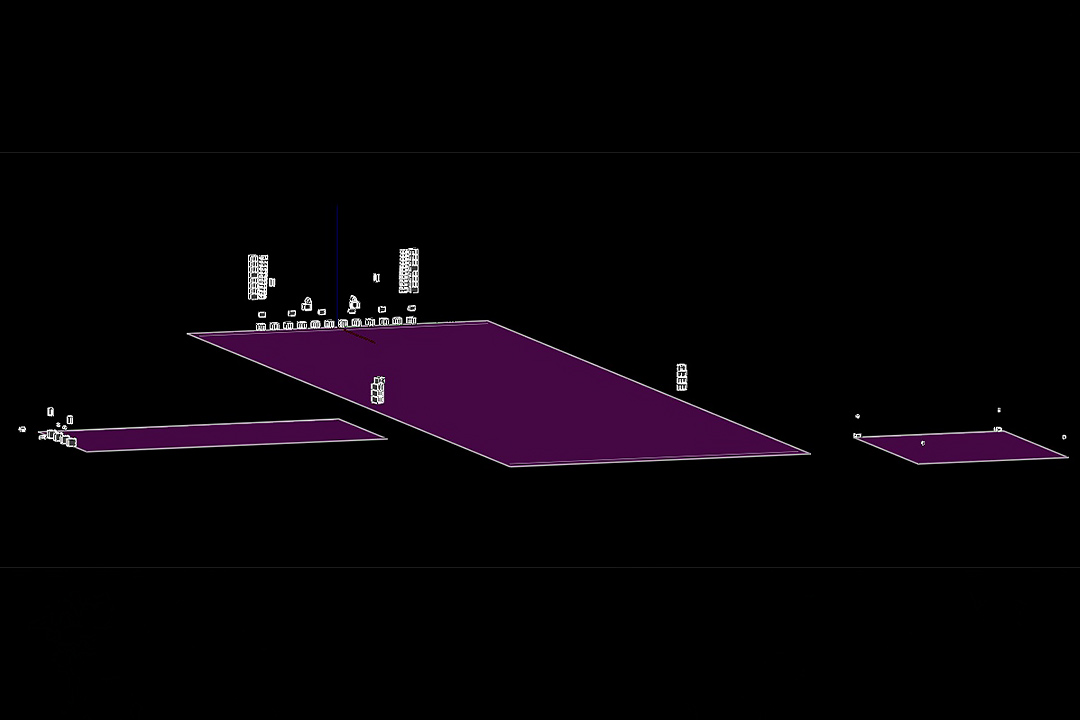
Julien Beffara : For this second edition we handle audio and lighting across the entire site: the main stage, the smaller Club Guinguette stage and a VIP area. It is an outdoor venue with a very deep audience zone, roughly 100 m between the main stage and the bar at the rear. Since the festival is almost entirely DJ sets, with very few live musicians, FOH requirements are relatively limited, so a conventional left/right approach suits the program.
SLU : Is the entire sound system NEXO?
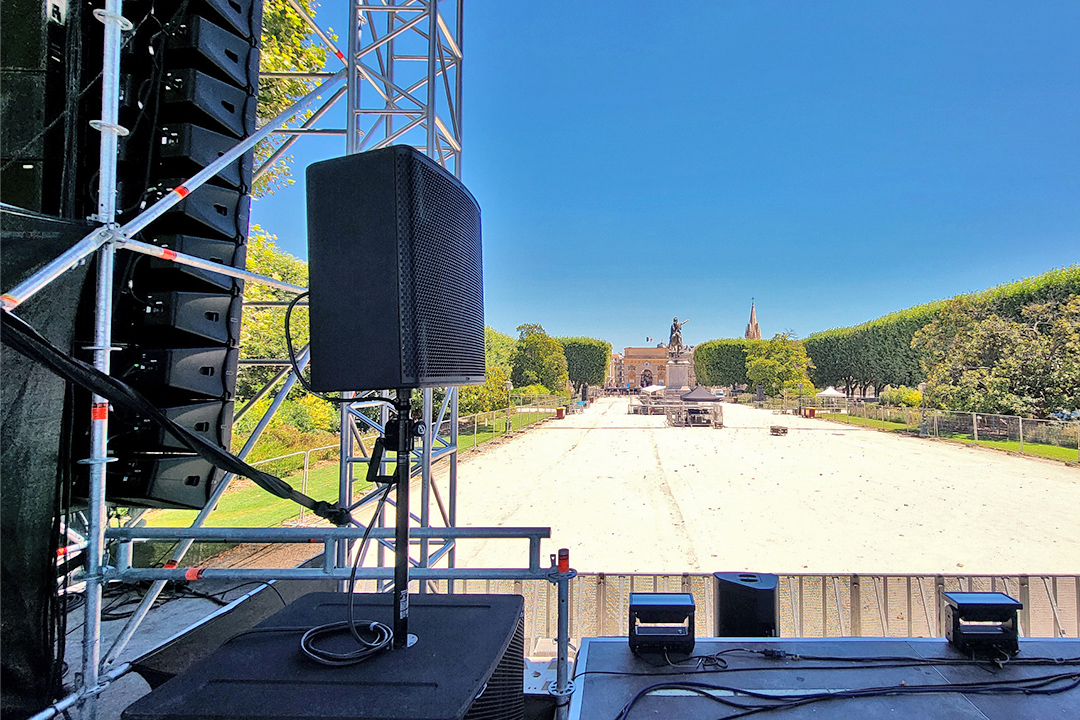
Julien Beffara : We have worked closely with NEXO for many years. Installation is our core business, although we also provide live production for selected clients, and our rental inventory includes GEO M12. NEXO also supplied the brand-new Alpha+, which we were keen to discover. The site was too deep to use it as the main system, so we assigned it to delay duty. Combined with substantial subwoofer capacity at the main stage, that gave us the impact and low-frequency extension electronic music requires across the full audience depth.
SLU : Is that also intended to serve an audience moving around throughout the day?
Julien Beffara : Yes. The open area is large, with food stands and the bar between the two stages. The smaller stage operates early in the evening and during changeovers. The delays therefore carry either stage, maintaining coverage throughout the audience area.
SLU : Let’s look at the main-stage system in detail
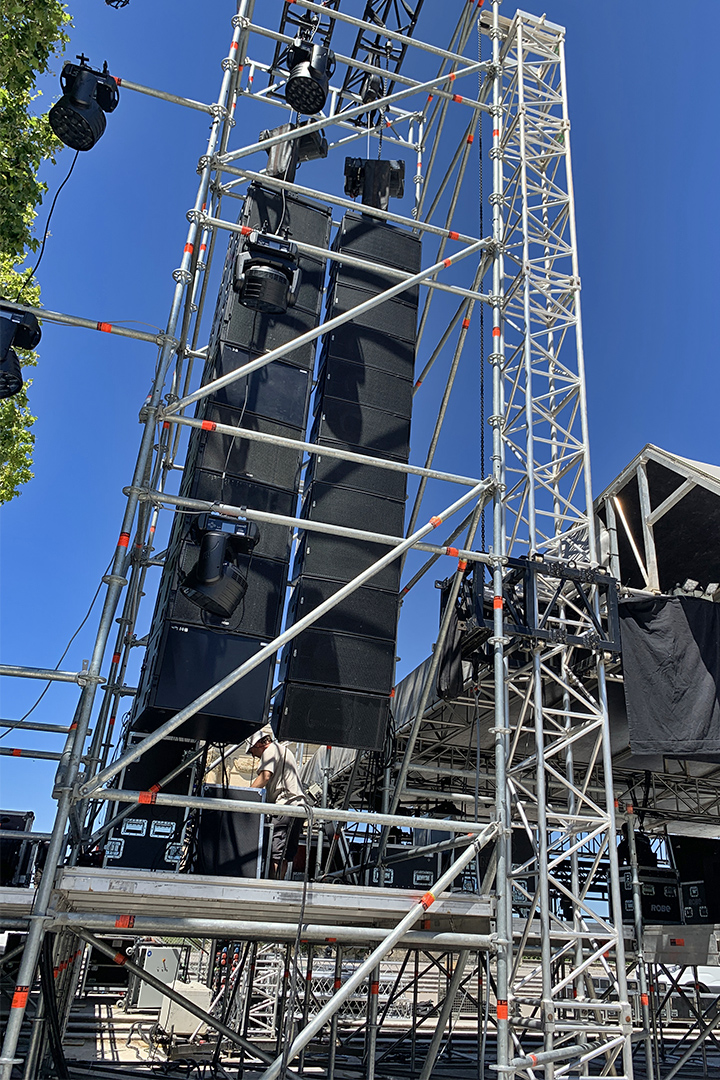
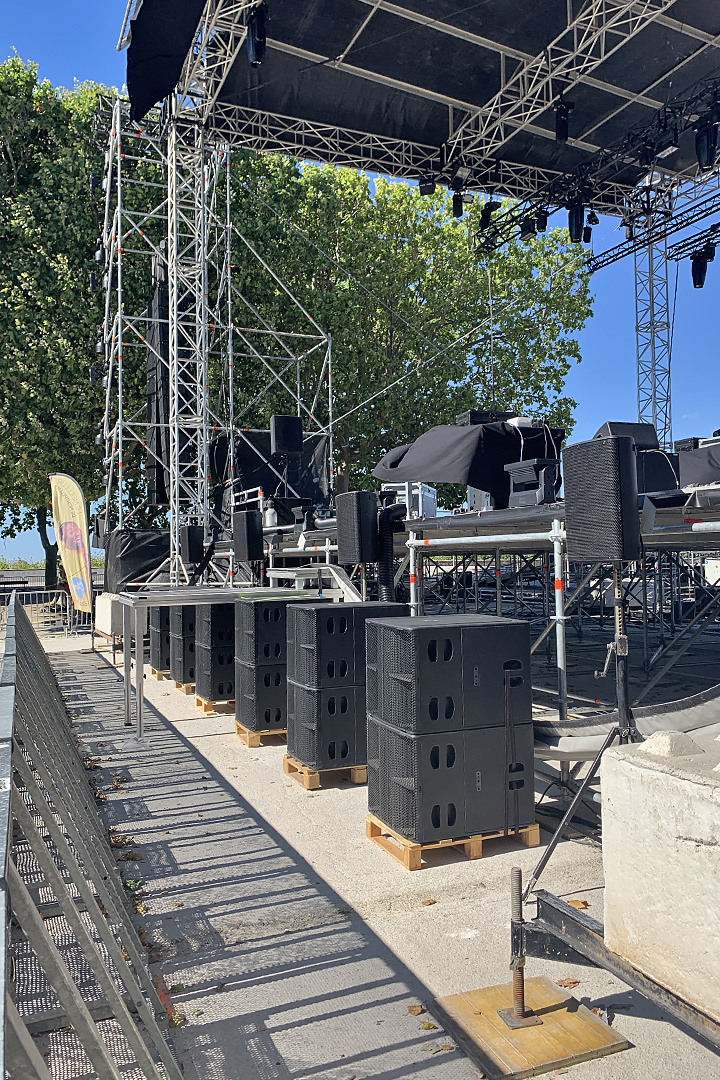
Julien Beffara : : The main system uses two hangs of 12 GEO M1220, with the bottom cabinet set to 120° using its magnetic deflector, plus eight flown MSUB18 per side – six omnidirectional and two cardioid. Twelve L18 subwoofers, paired on the ground, extend the response into the sub-bass, while six P15 provide front fill. Because the audience area is essentially a long corridor, no outfills are needed; we simply moved the two outer P15 slightly outward to broaden front-stage coverage.
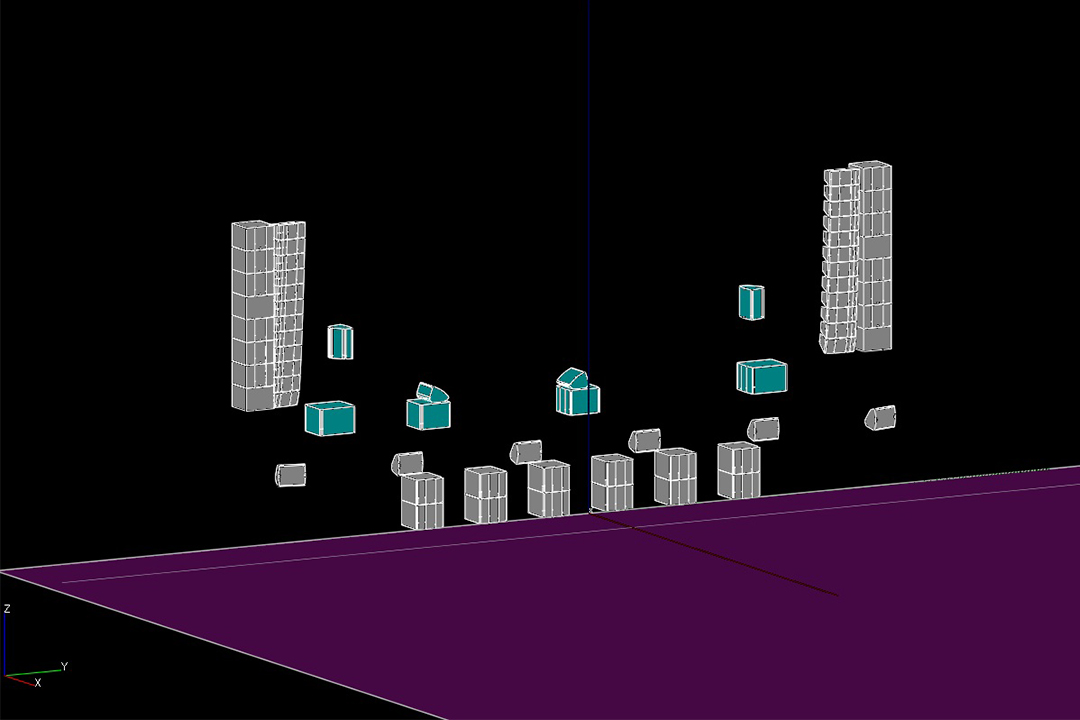
The DJs have a left/right monitor rig with one L18 subwoofer and one P15 per side. Two P18 side fills on L20 subwoofers cover the few sets featuring additional performers.
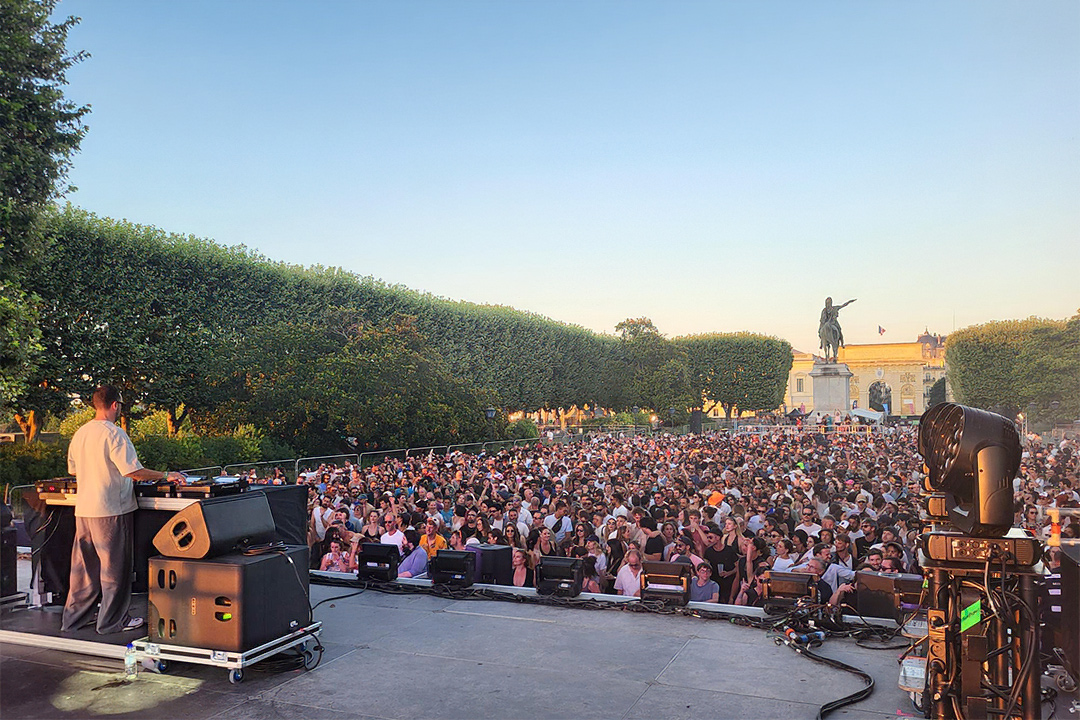
SLU : Was the system prediction based on maximum site occupancy?
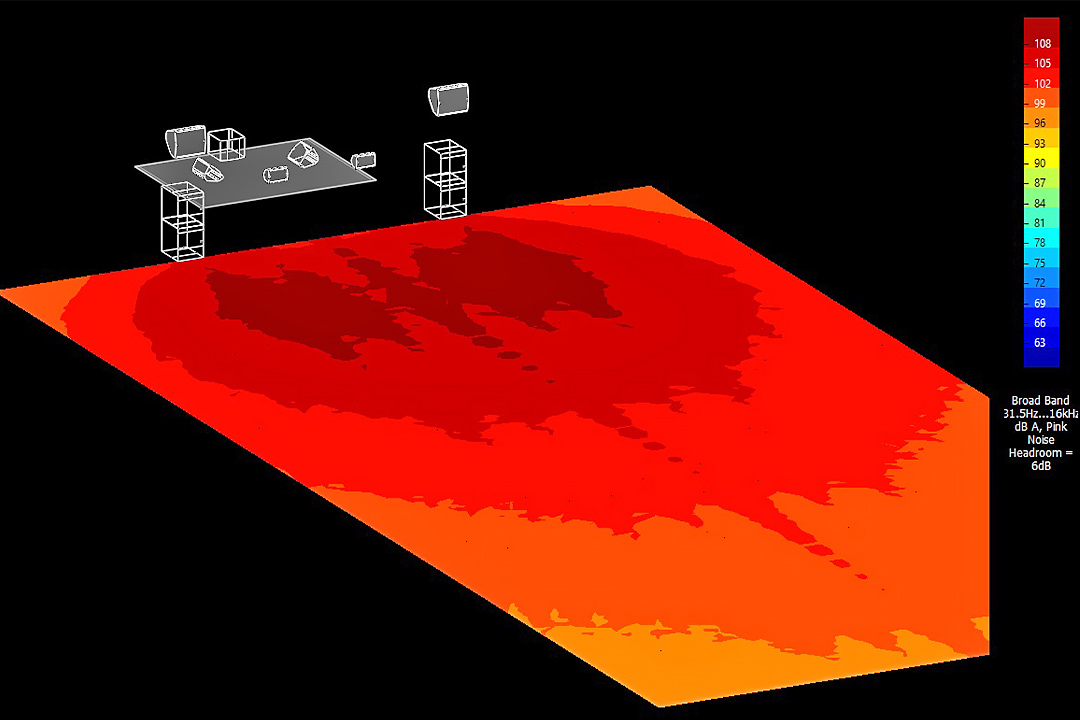
Julien Beffara : Yes. We predicted coverage over a 100 m audience depth, and M12 reaches the far end. The uncertainty was how the crowd would actually distribute itself across such a large site.
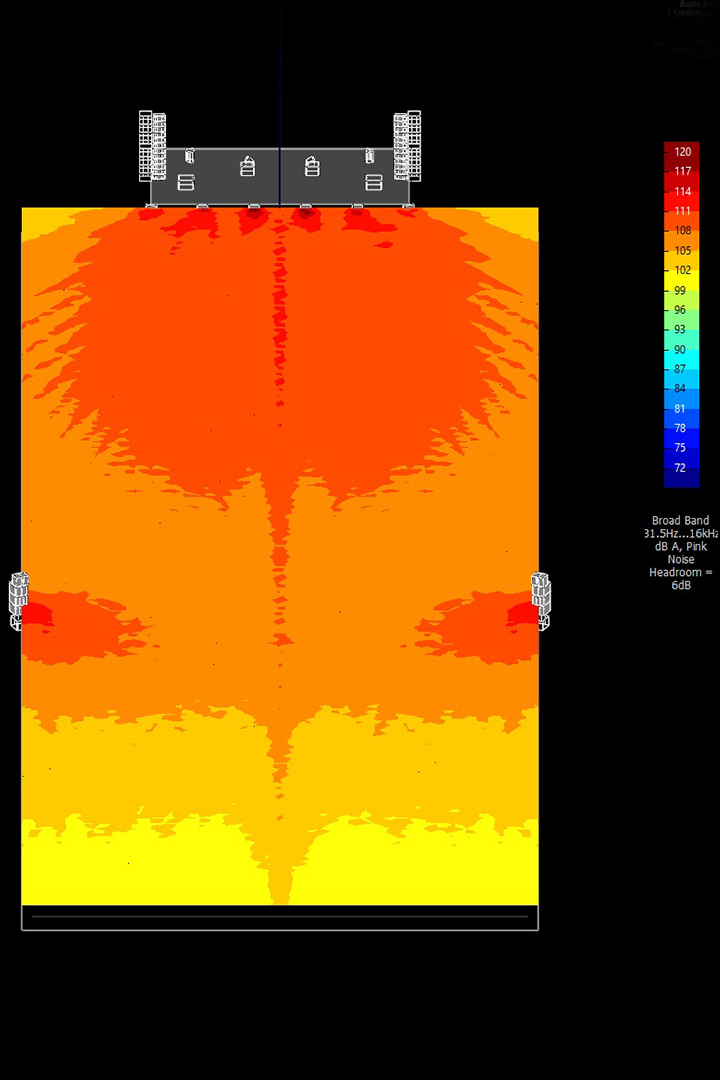
SLU : So Alpha+ was selected to reinforce the far end?
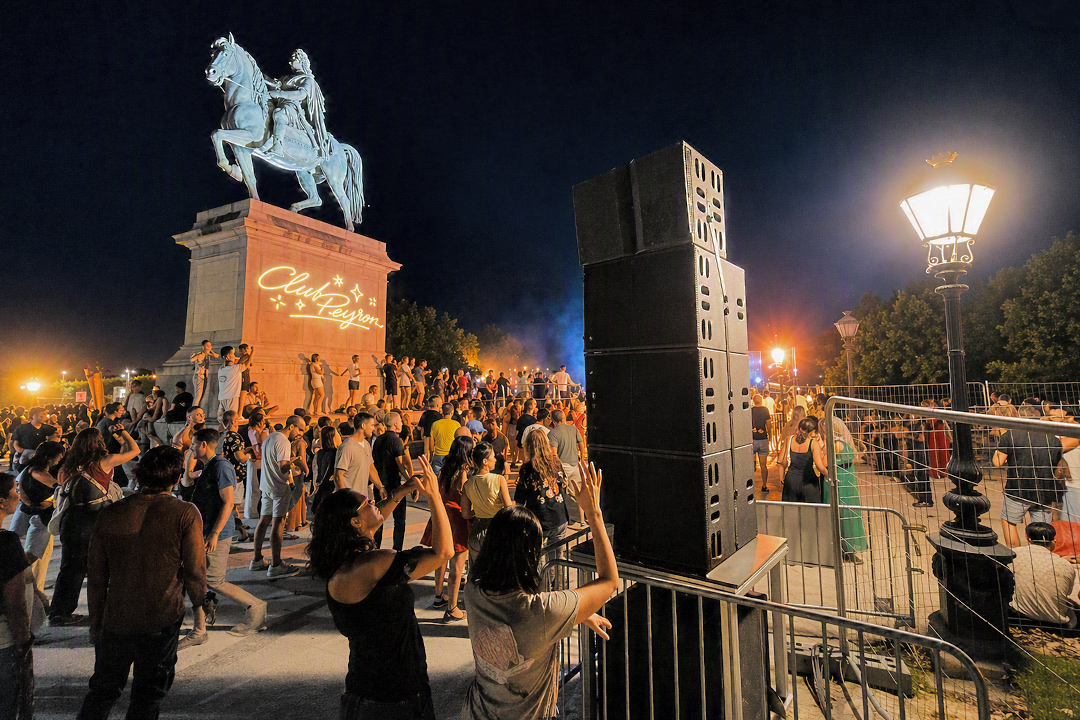
Julien Beffara : Yes, that was the plan from the start. It also met the organizers’ requirement for delays to cover such a deep site efficiently and to carry the smaller stage toward the rear of the main audience and the bar. Each Alpha+ delay stack uses three L20 subwoofers in cardioid configuration to limit rearward LF spill, positioned beneath a B218 bass cabinet and an M210 mid/high module. The two Alpha+ systems are powered by NEXO Universal Amp Rack NUARMK2 racks.
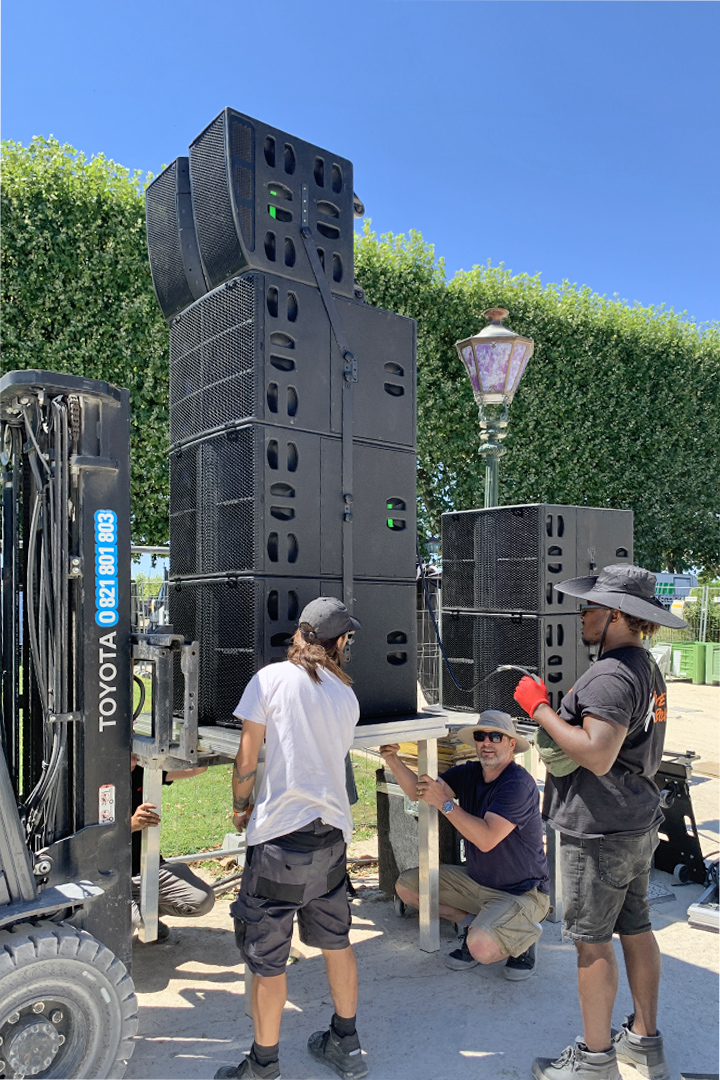
SLU : As usual, did the design evolve once you were on site?
Julien Beffara : Once on site, we moved the delays farther back to secure coverage to the end of the site. When the audience arrived, it became clear they were not occupying the entire predicted area, so we could have shortened the M12 throw slightly for greater efficiency. Even so, the original prediction proved very effective and the organizers were fully satisfied with the coverage.
SLU : Does Alpha+ also improve low-frequency performance at the delay position?
Julien Beffara : Definitely. Alpha+ restored real LF impact at the rear of the audience and in front of the bar, which is especially important with electronic music. Conventional delay systems are often much less effective at the very bottom of the spectrum. Here, Alpha+ regenerated that low-frequency energy and helped us maintain a much more consistent LF contour over the entire depth of the site.
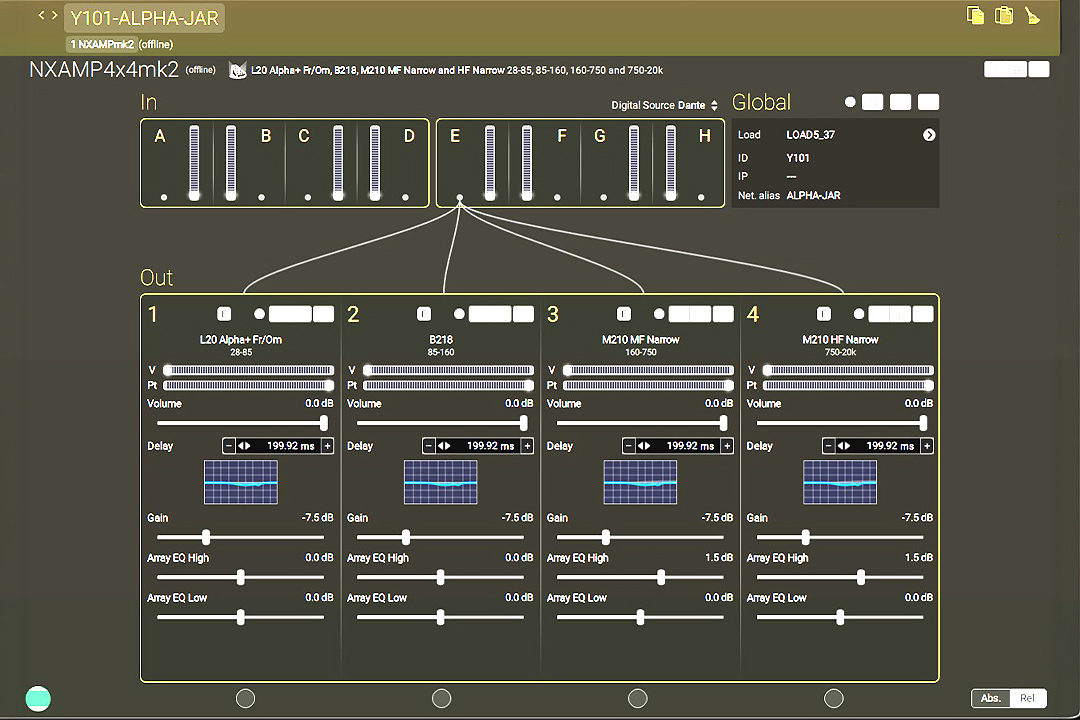
SLU : With cardioid adaptation as well?
Julien Beffara : The Alpha+ stacks sit just behind FOH, so controlling rearward LF radiation was essential. We added only one L20 in cardioid mode to the standard configuration and used the dedicated Alpha+ cardioid presets already available in NeMo, which also controls and monitors the NXAMP powered controllers.
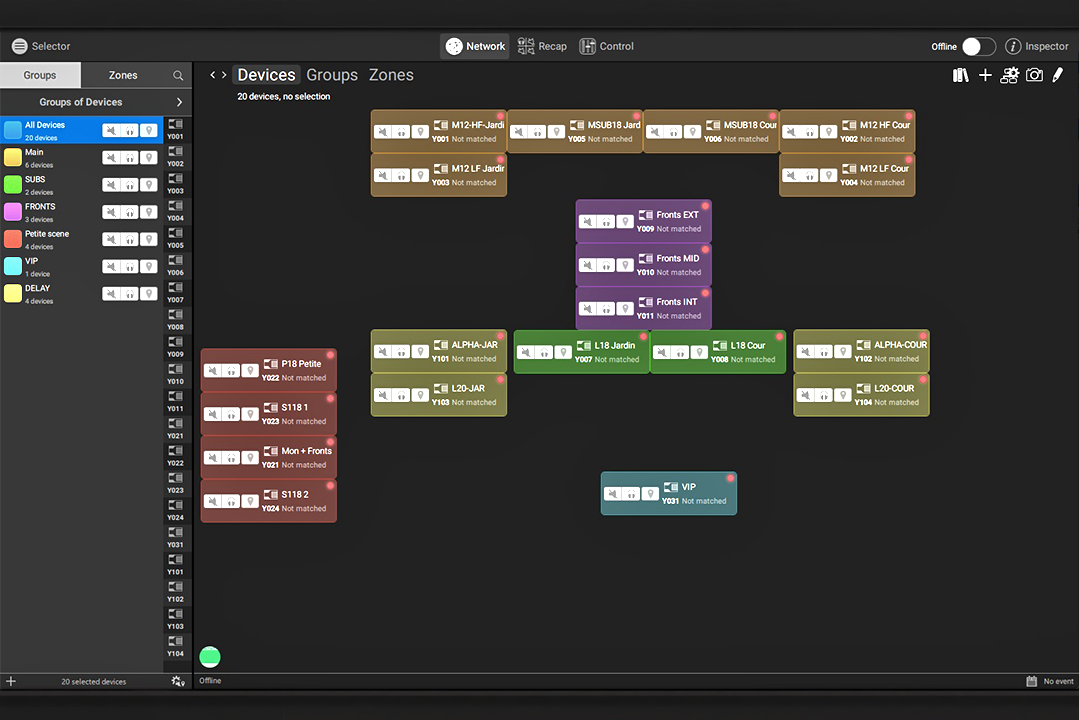 All amplifiers are controlled from NeMo © Texen Julien Beffara
SLU : Since we are talking about NeMo, what amplifier configuration did you use?
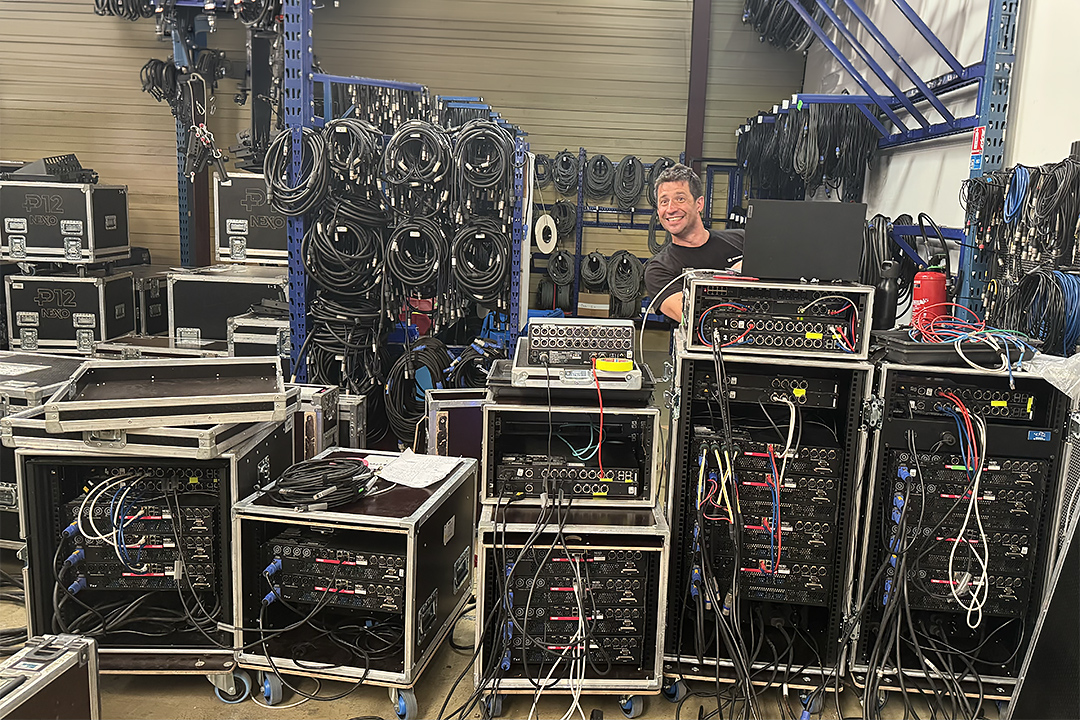
Julien Beffara : The main stage uses two NXAMP4X4MK2 for M12 LF, two NXAMP4X2MK2 for M12 HF, two NXAMP4X4MK2 for the flown MSUB18, two NXAMP4X4MK2 for the ground L18 line and three NXAMP4X2MK2 for the P15 front fills, plus one NXAMP4X2MK2 and one NXAMP4X4MK2 for monitors.
SLU : How did you manage crossover between the different subwoofer systems?
Julien Beffara : The flown MSUB18 and M12 main system cross at 85 Hz with no overlap, while the ground L18 line takes over from 60 Hz and extends the response down to 32 Hz. Flying the MSUB18 projects LF energy without attenuation through the audience, while the ground line adds deeper sub-bass. Together they provide the extended LF contour electronic music requires.
SLU : Was alignment optimized without additional global EQ?
Julien Beffara : Because we handle FOH for all the DJ sets ourselves, we chose to perform the system correction during alignment by optimizing each loudspeaker group individually rather than applying broad global EQ. Even for Kompromat, who brought their own engineer, only minor sub-to-main adjustments were needed to adapt the balance to a more genuinely live performance with a musician on stage.
SLU : Did the acoustic environment create any major problems?
Julien Beffara : There was a strong delayed reflection from the statue in the middle of the audience area, plus the buildings roughly 100 m away. It was clearly audible during alignment because of the long delay, but became much less noticeable once continuous program material was playing.
SLU : Alpha+ is designed as a main PA. Why use it as a delay?
Julien Beffara : We initially considered M10 for the delays, then asked why not use the new Alpha+. Its stackable format simplifies deployment without stands, additional structures or barriers. We and the NEXO team had some reservations because Alpha+ would operate far below its full output capability in this role, but agreed it was worth testing.
SLU : What were your impressions?
Julien Beffara : The result was completely convincing and deployment remarkably easy. Alpha+ covered the final 40 m of the audience area, providing both clean HF relay and generous low-frequency energy. The mid/high module throws a very long way and the system maintains coherent, powerful coverage over considerable distance. We now want to test Alpha+ as a stand-alone main system, perhaps with a rock band in a suitable venue.
SLU : Was load-in difficult during the heat wave?
Julien Beffara : NEXO systems are quick and straightforward to deploy, and the covered stages gave us some shade, but the site is huge, so there was plenty of walking in the sun. Despite the heat, we had no technical issues with the equipment.
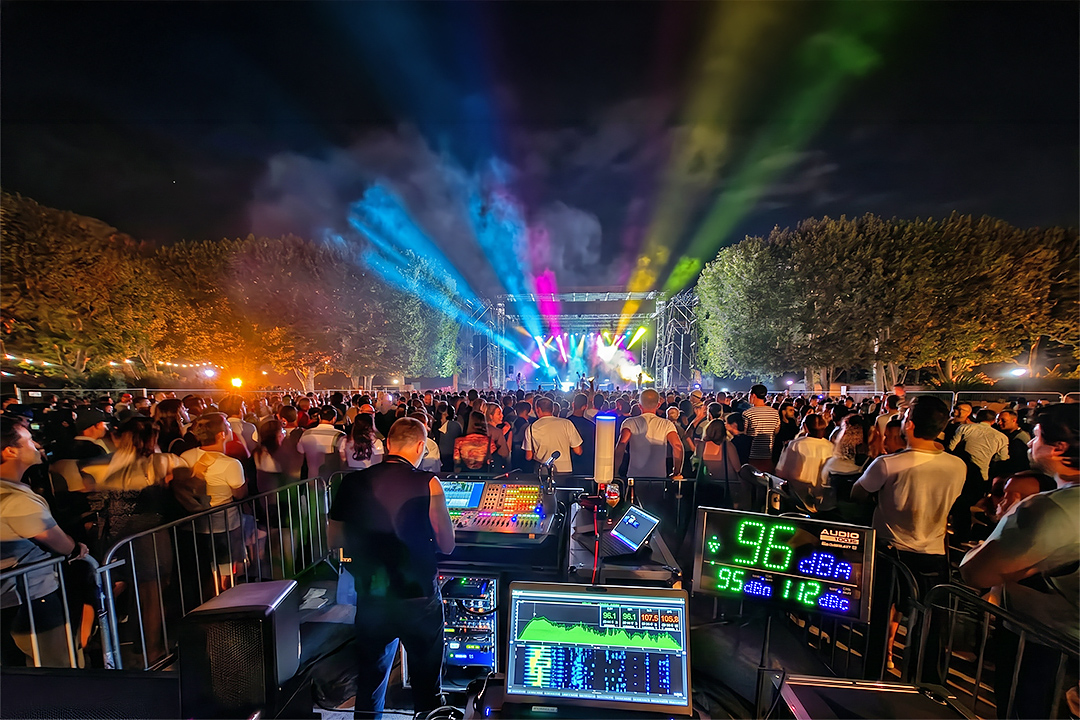
SLU : Did the size of the site determine the signal-distribution architecture?
Julien Beffara : All signal distribution is Dante, centralized at FOH on an AuviTran Toolbox with two secure, independent Dante networks and Yamaha switches. A Yamaha DM7 handles the main stage and a DM3 the smaller stage. Both stage links are fiber; copper Ethernet feeds the delays and VIP area. The network is fully redundant, with two switches per link, one VLAN for system distribution and another for consoles so external equipment cannot interfere with the PA network.
SLU : What about the smaller stage?
Julien Beffara : It is a simpler stage with lower output requirements, but it still needs impact and is also routed through the Alpha+ delays so the main audience can follow it. The main system is two P18 with four S118 subwoofers, giving enough SPL and throw for the area. Two P8 cover front fill, with two P12S and one L15 for monitoring.
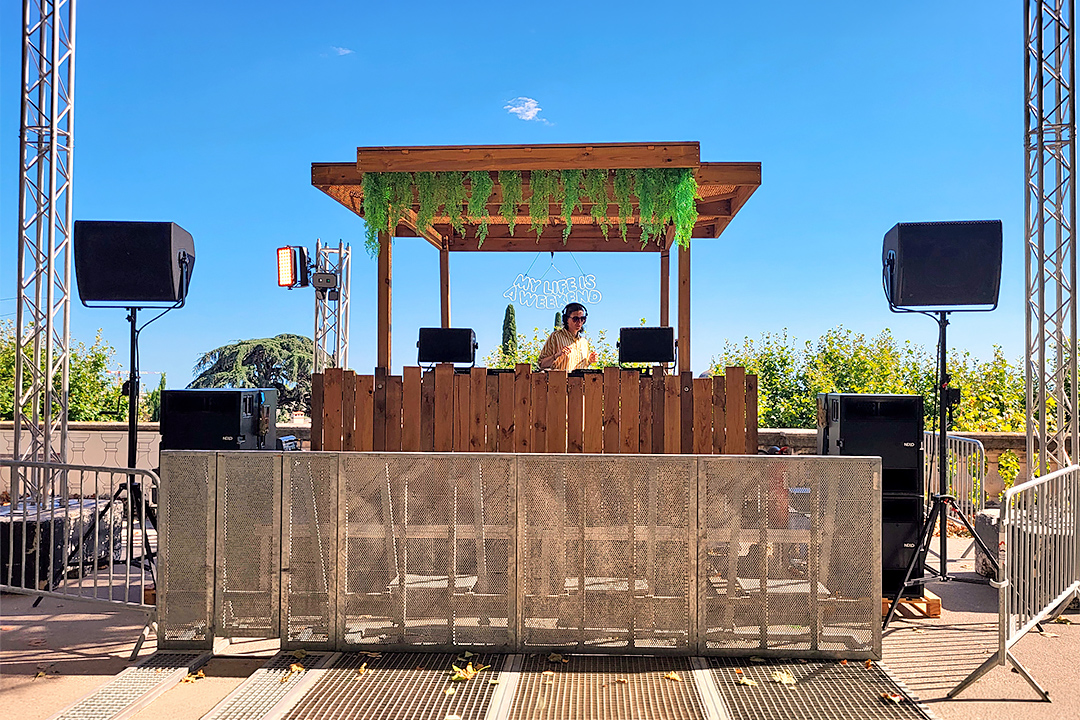
SLU : And the VIP area?
Julien Beffara : It is mainly a meeting and conversation area, so strong musical presence is not required. We cover it discreetly with four ID24 and two IDS110 subwoofers.
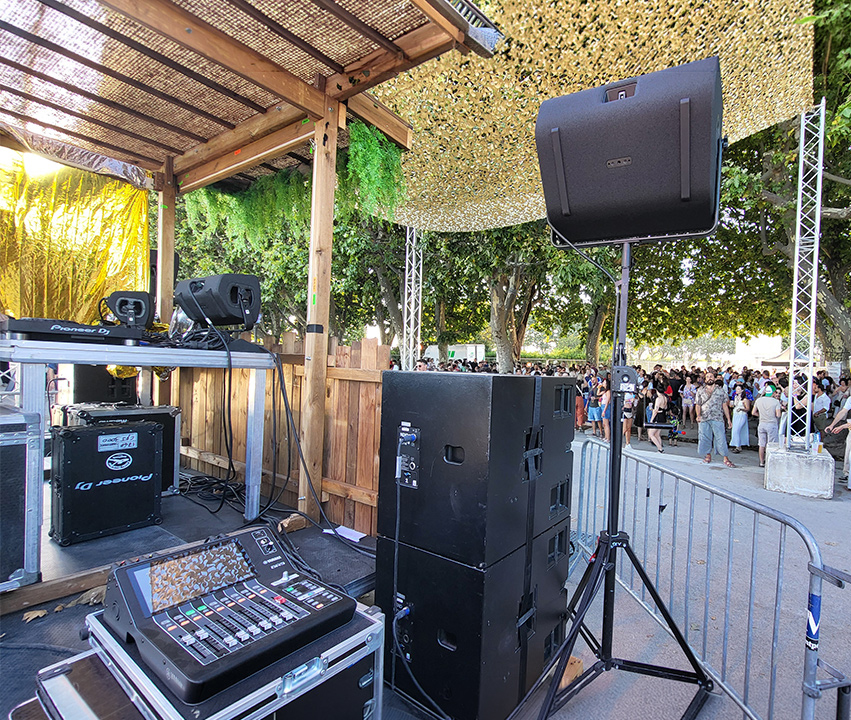
SLU : Is this your first time using Alpha+?
Julien Beffara : Yes. It is physically substantial, but still quick to deploy. For providers with regular live work, it is an interesting option: efficient and far simpler than a line array, which requires prediction, specialist skills, a system engineer, motors and so on. All that carries significant cost. A hybrid system such as Alpha+ can produce balanced sound over good distance very quickly.
We were also struck by the tonal balance immediately after deployment; the overall EQ curve needed almost no correction, showing how thoroughly the system is optimized for fast, high-quality operation.
SLU : And GEO M – a system you know well?
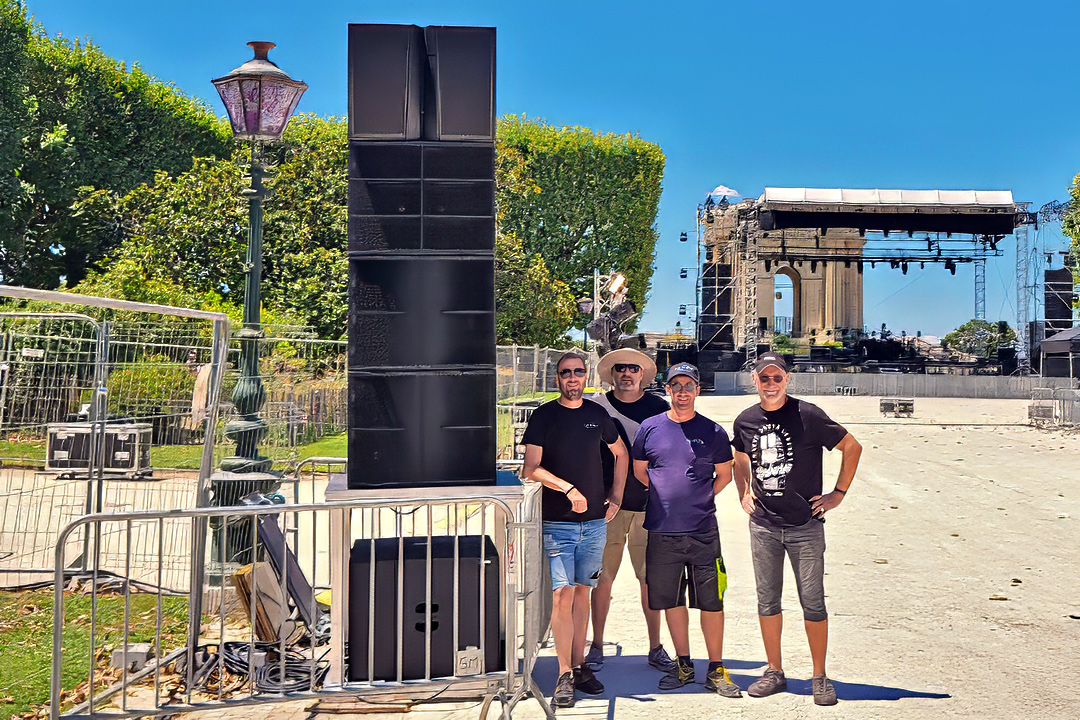
Julien Beffara : We use M12 extensively and value its easy deployment. With MSUB18 it reaches very low and creates a balanced, genuinely wide-band main system. Passive or active operation is another major advantage. In active mode the HF section throws particularly well and retains high-frequency performance over long distances; here we are fully active and GEO remains comfortable out to 100 m. Passive mode can significantly reduce amplifier count for simpler, more economical deployments.
SLU : Was the festival’s technical management happy with the overall system?
Geoffrey Cognet : We were very satisfied with the technical configuration deployed by TEXEN and NEXO and with their full commitment to the project. The GEO main system and Alpha+ delays complemented each other extremely well, keeping the sound homogeneous and clear all along the very deep central aisle. After the first edition, when we had a GEO system with fewer cabinets, we specifically asked for more subwoofers. Headliner Kompromat also wanted substantial low end in the system. With flown subs, ground subs and the Alpha+ stacks, we had all the bass energy required for a festival centered on electronic music.

SLU : And that consistency extended across all areas?
Geoffrey Cognet : Yes. One of the biggest technical successes was consistent, continuous sound across the entire site, with no obvious coverage gaps. The Club Guinguette stage and VIP area were handled just as carefully. TEXEN’s fiber network also contributed: when the main stage was active, its program was relayed through the Guinguette system to keep the food-truck area energized; when the smaller stage was playing, its signal was routed to the main-stage Alpha+ delays near the bar. That created a continuous experience for an audience constantly moving around the festival.
SLU : How did you manage noise restrictions and the surrounding city-center neighborhood?
Geoffrey Cognet : The event takes place in central Montpellier in July, and during the heat wave some nearby residents confirmed that they had been disturbed by noise emissions. Although the sound level never exceeded 98 dBA, the festival site is located on one of the city’s higher points, which does not help contain propagation. With the event now established, the city requires an acoustic impact study for the next edition. Together with TEXEN and NEXO, we will therefore investigate how to optimize coverage and reduce off-site impact while preserving the system’s performance inside the audience area.
TEXEN knows NEXO systems very well and installs many of them in its core business, so the brand is a natural recommendation when clients also ask the company to support off-site events. At Club Peyrou, the challenge was a very large, elongated venue and an audience whose distribution was difficult to predict. The proven GEO M12, combined with the new Alpha+, proved highly effective.
Despite the size of the area, the deployment used a relatively reasonable loudspeaker count while maintaining the low-frequency impact and extended high-frequency consistency essential to electronic music. In this unusual delay role, the hybrid Alpha+ system added a particularly convincing final piece to a successful second edition.
More information with the Texen website and on the NEXO website