
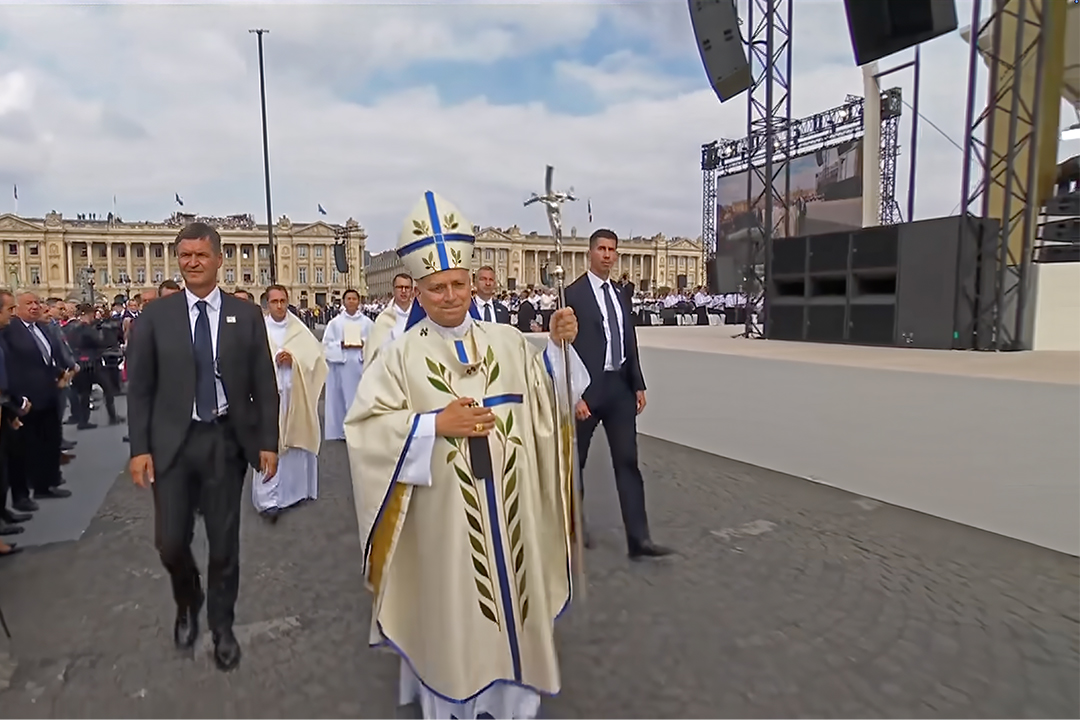
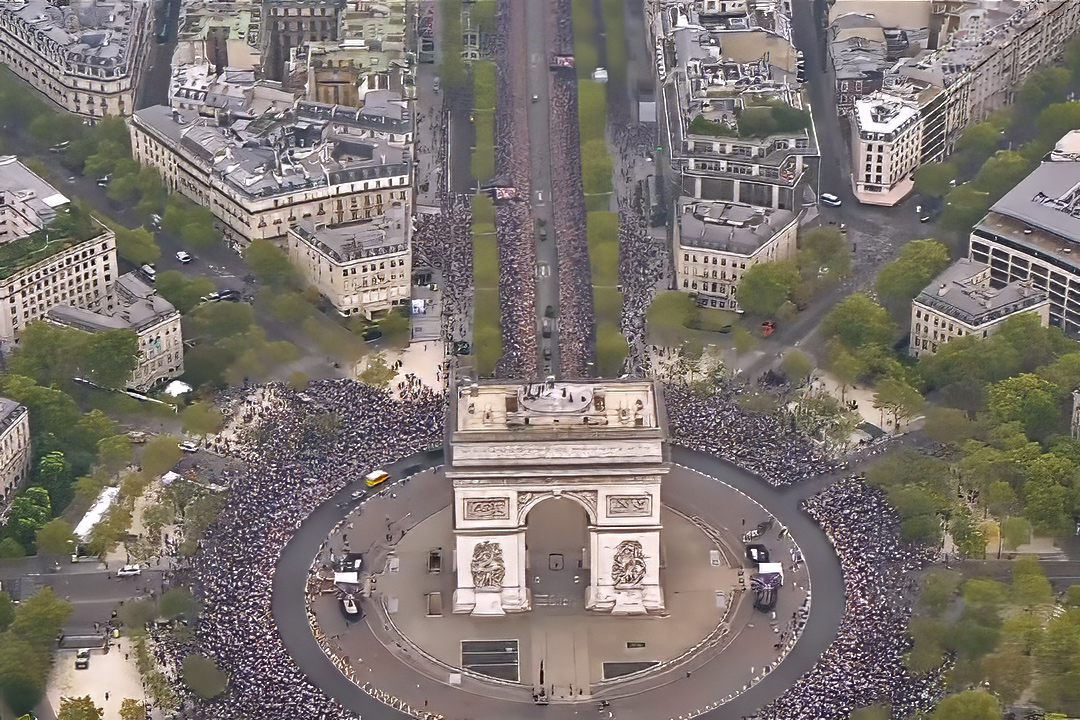
Beyond any spiritual considerations, a papal visit to France, and especially to Paris, is a major event. In 2026, it drew 800,000 people to the capital’s most celebrated avenue and to Place de la Concorde and Place de l’Étoile. Above all, it presented a formidable technical challenge, met by GL events and some of France’s finest technicians.
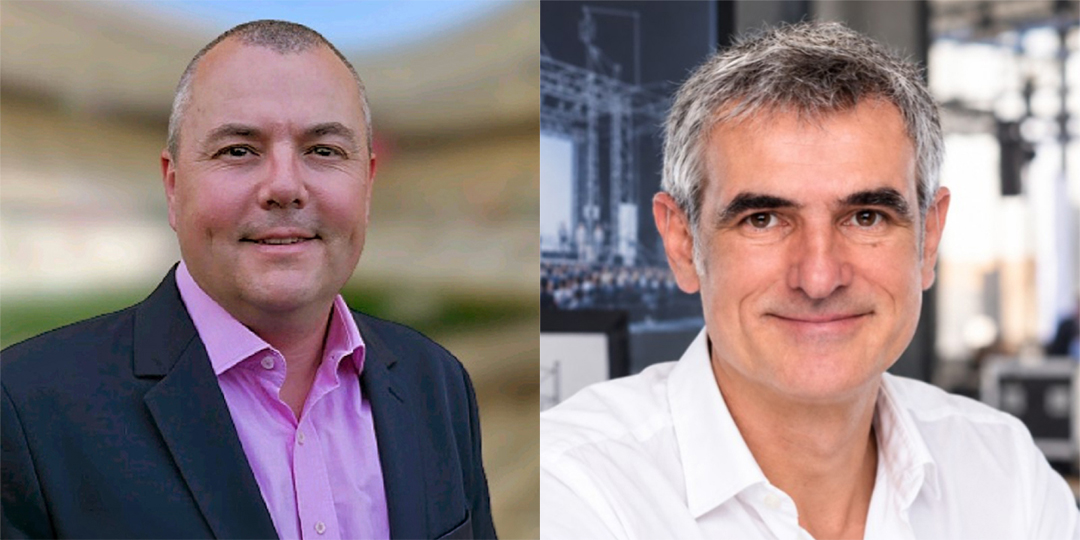
Thanks to Maxime Menelec’s drive and energy, we gathered his account alongside those of Jean Lyonnet and Nicolas d’Amato, plus a remarkable collection of diagrams and photographs. The Mass may be over, but your journey into the technology behind this extraordinary event starts here. It’s a dense, detailed, fascinating story that, more than anything, showcases the excellence of French technicians, manufacturers, and service providers. Their skill and dedication deserve recognition, especially when the event is global and time is short.
Before handing over to Max, Jean, and Nico each of whom built a key part of the system and helped steer the sound on September 26 let’s briefly look at how the project came together, and who made it happen.
Max Menelec : GL events acted as producer, bringing in several companies and freelance technicians to deliver the operation. Its in-house management team was led by David Ries, Operations Manager at GL events Audiovisual & Power, supported by Cyril Prat on technical direction, Thomas Herbin on video, and Josselin Mansuy on audio. Overall technical direction went to Charles Pavie and his Kick Off Event team a strategic role given the breadth of the disciplines involved and the need to coordinate continuously with GL and the Diocese.
FL Structure engineered, supplied, and erected the entire Concorde stage and all the PA positions along the Champs-Élysées. My company, Audisia, finalized the sound-system specification, installed and tuned the PA, and operated it. Jérémy Czaicki’s company, Scaled Up, handled network distribution, while Orange installed the fiber infrastructure.
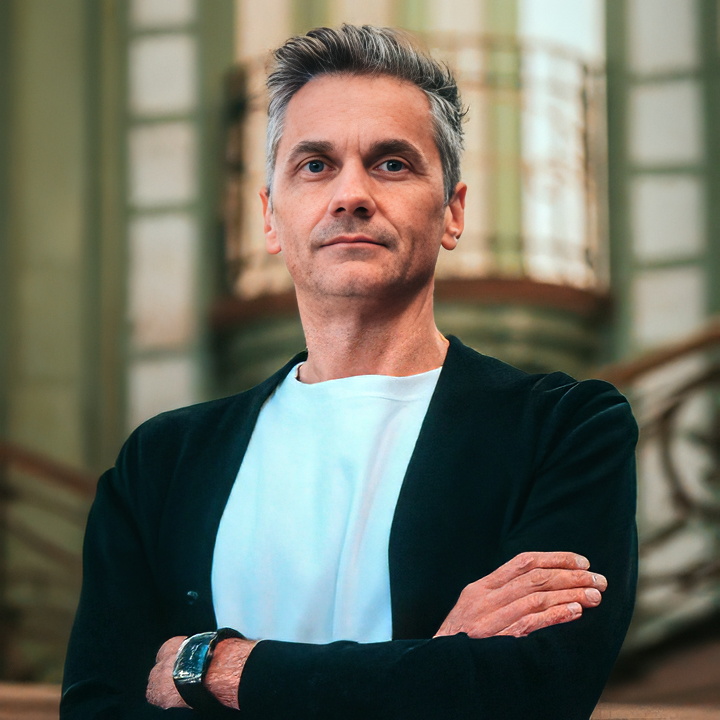
SLU : Let’s go back a few weeks. How did the Menelec, Lyonnet, and d’Amato trio come together?
Max Menelec : At the very start, GL’s Josselin Mansuy contacted Yoan Corchia and Julien Vouillon. Yoan was to draft the initial audio infrastructure, from microphones to loudspeakers, while Julien would assemble the best possible audio crew and lay the technical groundwork for monitors.
For various reasons, neither could take on the job, so they recommended the people best qualified to pick it up and see it through.
Part 1 – Max Menelec / Audisia: PA coverage from Concorde to Étoile
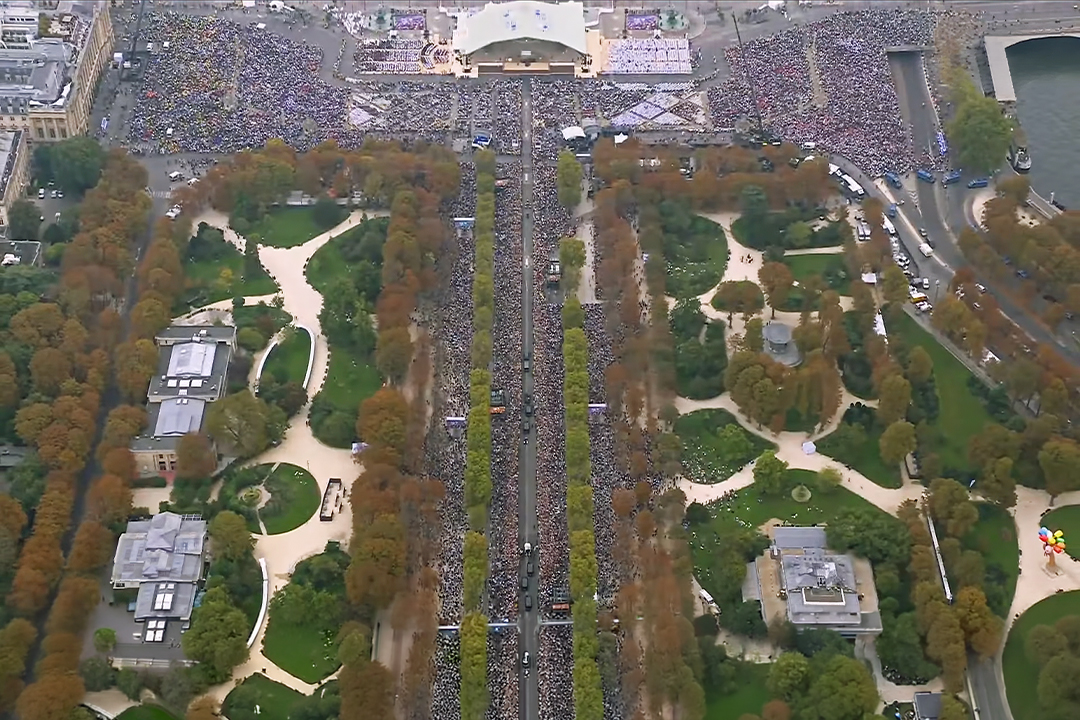
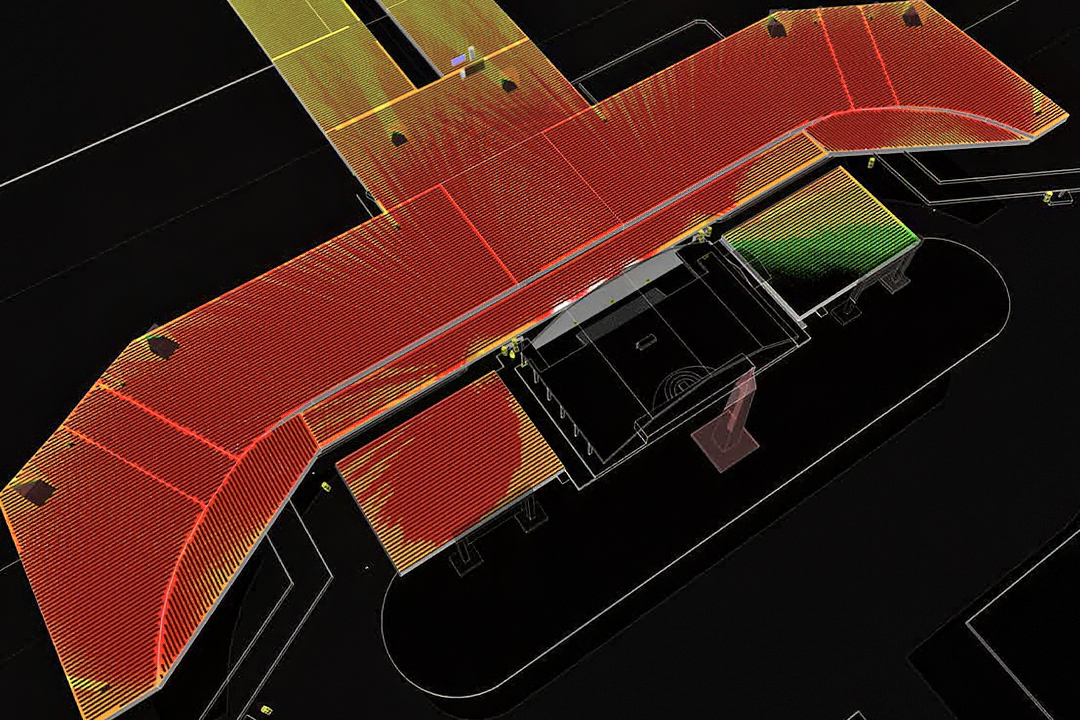
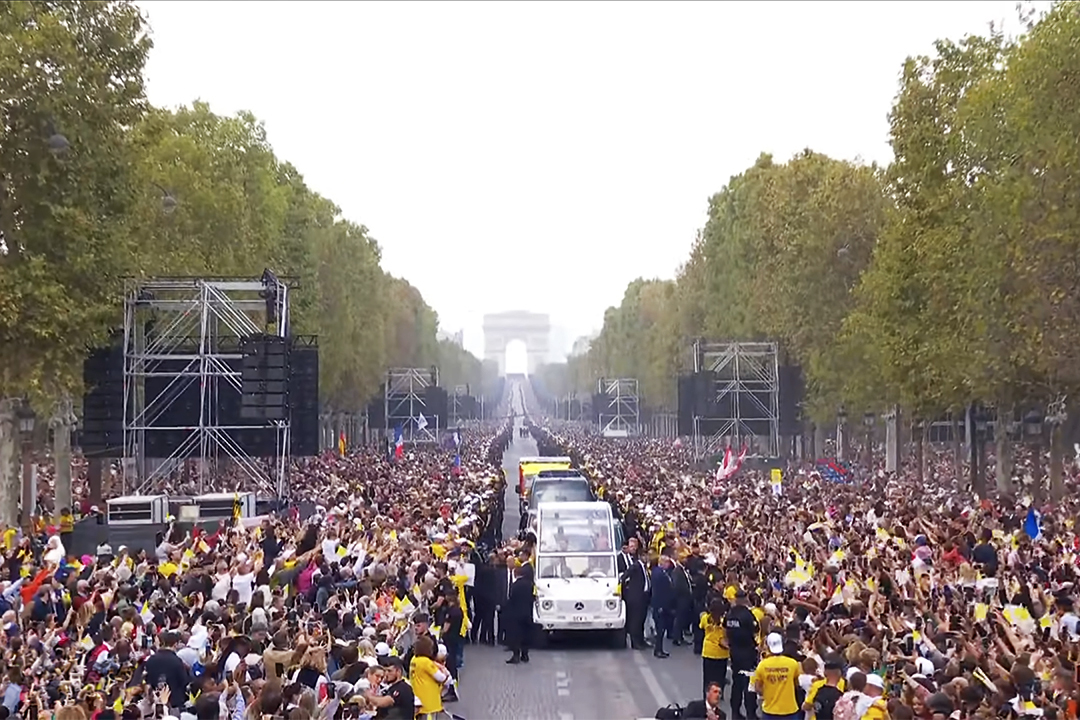
Place de la Concorde and the Champs-Élysées present almost opposite challenges. At Concorde, the system must cover a very wide area. Along the avenue, it must extend nearly two kilometers, using towers whose positions are dictated by the city layout, trees, video screens, and public access zones. Much of the PA was therefore designed in Soundvision before being adapted to the realities on site.
SLU : Did you start with an AutoCAD file and begin drawing the system?
Max Menelec : Yes. I built a fairly basic Soundvision model initially, then refined it extensively with L-Acoustics. David Ly, who heads up 3D modeling, and Léa Tintignac, who works on architecture and large spaces, were a huge help. They added trees, buildings, everything needed to make the model truly reflect the location. Trees really matter here.
When you’re placing a tower on the Champs, you can’t just decide, “I’ll put a delay every 90 meters.” It doesn’t work that way. You have to see where you can fit them, where the screens, branches, and obstacles are. So sometimes towers were 80 meters apart, sometimes 90, sometimes 100. They did tremendous work.
SLU : The towers alternate from one side of the avenue to the other, in a staggered layout. Was that dictated by those constraints?
Max Menelec : Absolutely. The towers are staggered because the available positions are staggered. We had to work with the city as it is. FL Structure built all the towers, bleachers, and liturgical stage; our PA design then had to fit those positions. On the lower Champs, you’re still largely surrounded by green spaces. The buildings really begin around the Rond-Point. That changes the acoustic environment somewhat, but it wasn’t a problem for us.
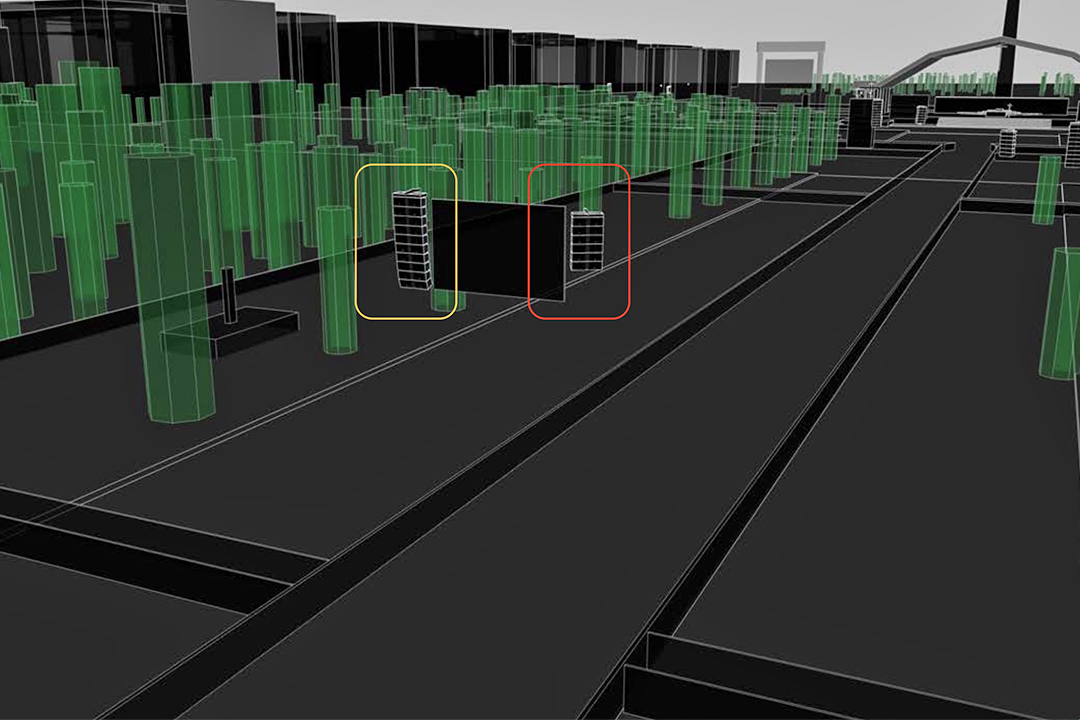
K2: a main and an outfill at every position
SLU : Was K2 your choice of full-range loudspeaker for the Champs?
Max Menelec : No, Yoan Corchia originally chose it, and I was perfectly happy with that. GL is a major company and an L-Acoustics Certified Provider, but I had to insist on keeping the entire system Made in Marcoussis, with Kara at Place de l’Étoile and L2 at Concorde. When people hire Audisia, they know we’ll recommend this brand, but another consultant might well have mixed two systems across the Champs delay positions to make sourcing the boxes easier. Finding that many K2s was difficult, but I held firm, and I’m glad I did. The sound exceeded my expectations.
SLU : SWhat was the PA configuration on a typical tower?
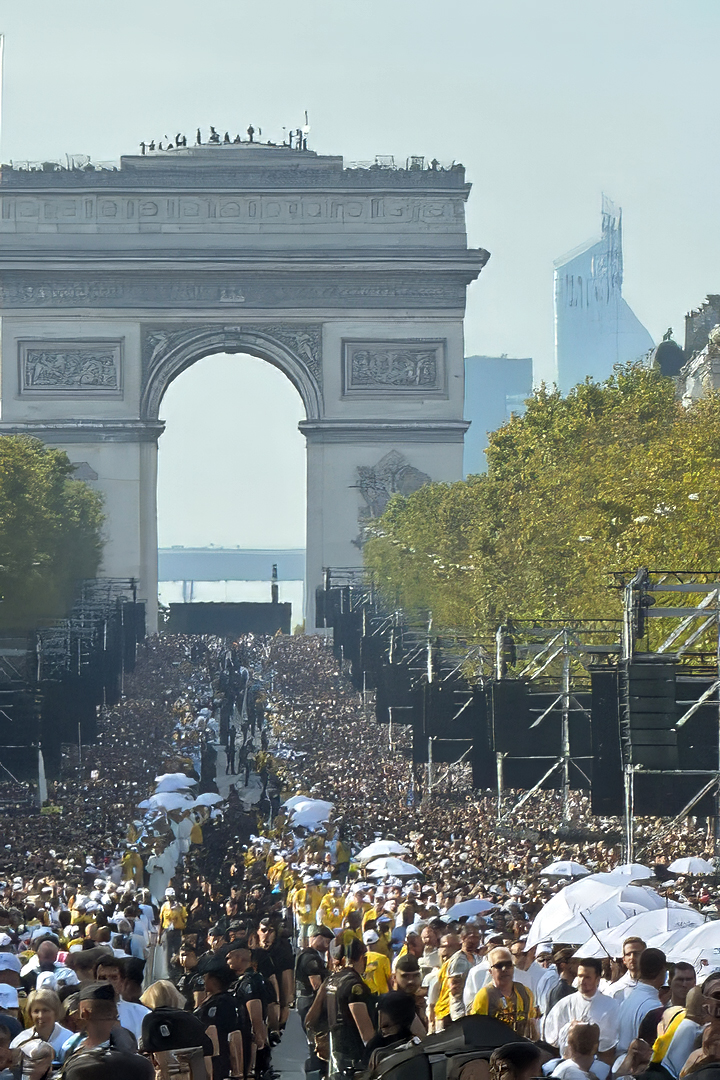
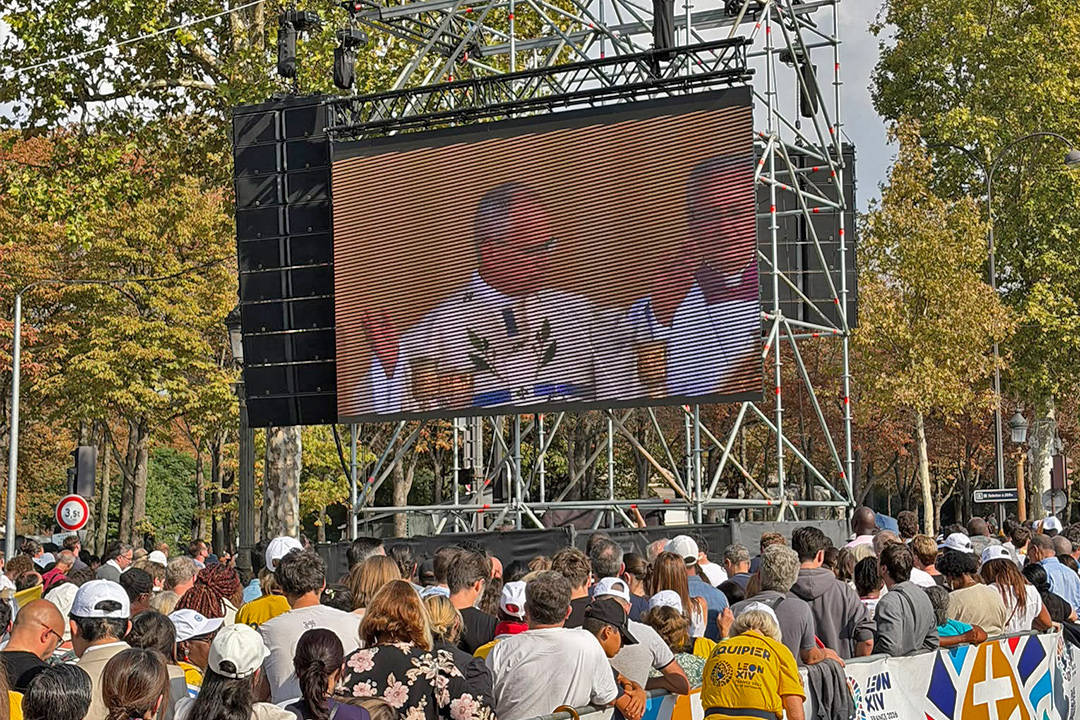
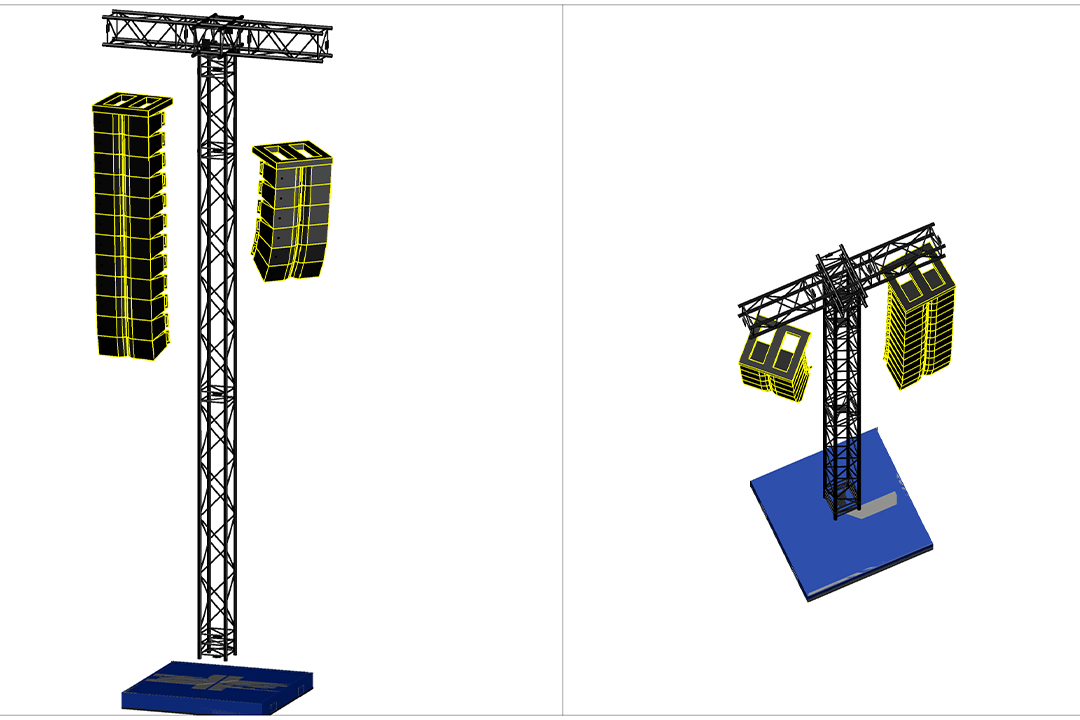
Max Menelec : Pretty standard. I had a K2 main array for throw, with a smaller array alongside as an outfill. The main covered 80, 90, or 100 meters, while the smaller system widened coverage, reached people across the avenue, or got underneath the foliage. The other advantage was being able to adjust things on site. You can draw everything in advance, but you’ll always come across a bus shelter, a press kiosk, or some detail that has changed. With the outfill, I could still aim the system by eye and reach a particular area.
SLU : You kept the main fairly narrow?
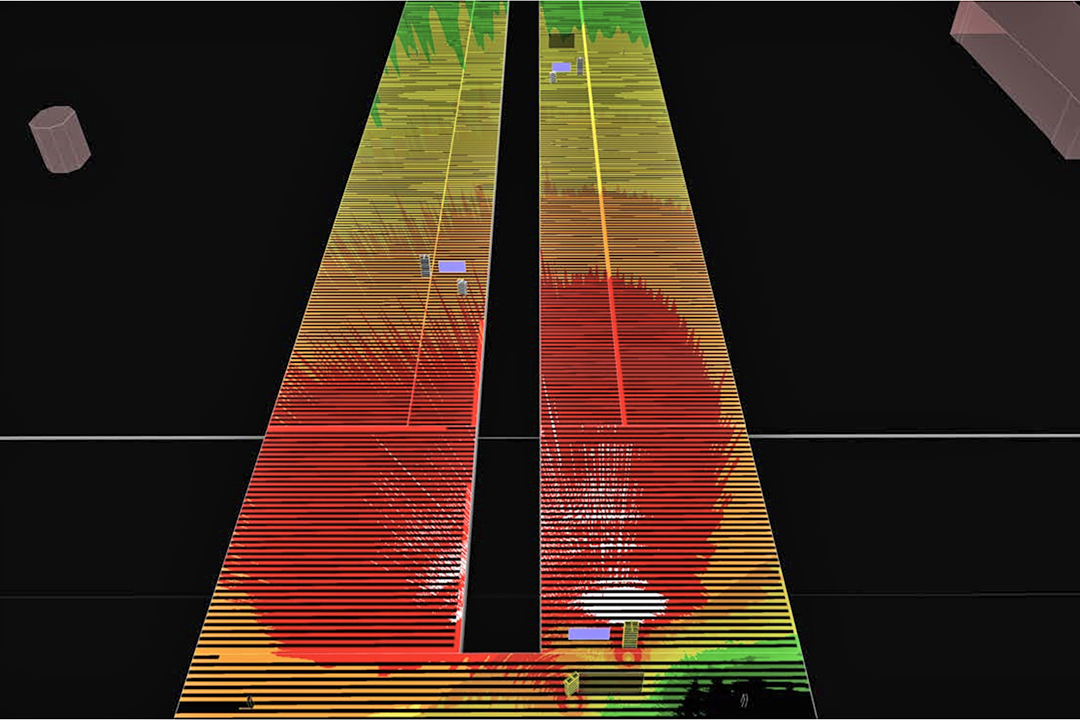
Max Menelec : Yes, 70° almost everywhere. I didn’t want to open it up unnecessarily. The outfill finished the coverage. The riggers were also extremely precise about the spacing between main and outfill on every tower. That let me calculate a frequency-stable transition between the two and reproduce it across all the positions.
SLU : Initially, I thought you’d designed an almost custom array for each tower
Max Menelec : That’s how I started! I had different splay angles depending on distance. Then I looked at the statistics, identified the angles that came up most often, and averaged them across the 23 towers. You can’t reasonably have 23 completely different array geometries. Change every angle and you have to retune everything differently, while Network Manager sessions become huge.
So I ended up with almost identical angles, EQ, and AutoFIR settings everywhere. It was only higher up toward the Arc de Triomphe, where the slope becomes pronounced, that we altered the vertical aiming more substantially.
SLU : And the results remained consistent despite the changing throw distances?
Max Menelec : Yes. With K2, some calculations showed only about 1.5 dB of loss at 100 meters, so that was excellent. What really mattered was that once every position had been delayed, each stack had roughly the same sonic footprint. You could walk along without hearing a change in tonal balance, dead zones, or intelligibility. That’s exactly what I wanted.
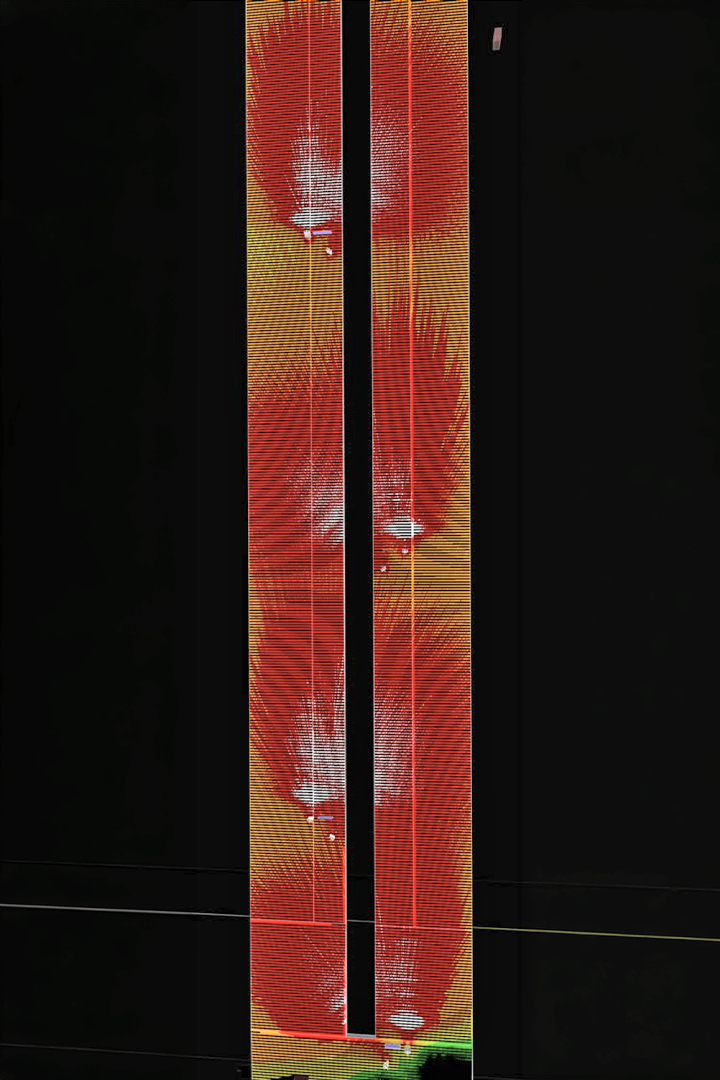
4,653 ms of delay
SLU : Did you calculate the delays mainly in Soundvision?
Max Menelec : Yes. For some time now, even on stadium projects, I’ve preferred optimizing much of the delay timing in Soundvision rather than relying only on microphone measurements. The software lets you examine the overlap zone: where one system’s SPL tails off, where the next begins, and how they interact. To me, that’s far more accurate than a single measurement position. But you need extremely accurate XYZ loudspeaker coordinates. Today’s distance-measurement tools make that possible. I’d say 90% of the delay values for this project were prepared in Soundvision.
SLU : And that’s when you realized your delay values were moving well beyond the usual range…
Max Menelec : Exactly. When I saw 4,653 ms for the last delay, I laughed, then thought, “Okay, how do we do this?” I had 1,000 ms available in the amplifiers and 2,000 ms in the P1. I called Marc Bénard at L-Acoustics, and we looked at how to extend that. We found a way to create a group in the P1 with another 2,000 ms of delay. That gave us 4,000 ms in the processor, with the remainder in the amps.
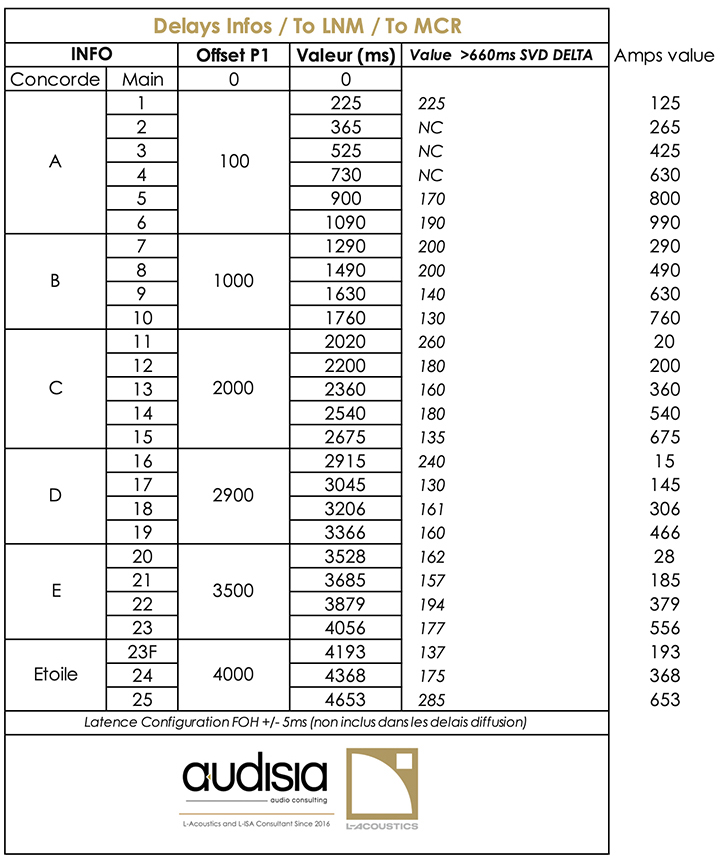
SLU : So a spreadsheet becomes almost essential.
Max Menelec : Oh, absolutely! You can’t do that in your head. I had a dynamic spreadsheet showing each position’s delay, what was assigned to the P1s, and what remained in the amplifiers. Once you’re handling four seconds of delay and need precise timing at every crossover between positions, you can’t afford to read the wrong row. Especially since SVD itself won’t go beyond 1,000 ms, so you have to use the spreadsheet and transfer the values afterward.
SLU : And an error in the Soundvision position inevitably becomes a timing error.
Max Menelec : Exactly. That’s why I insist on accurate array placement in Soundvision. That’s where errors originate. Everything looks neat on the drawing. But on site, if a tower shifts 1.5 meters because of a sidewalk or obstacle and you don’t update the model correctly, that nice theoretical value is no longer right.
An all-AVB network
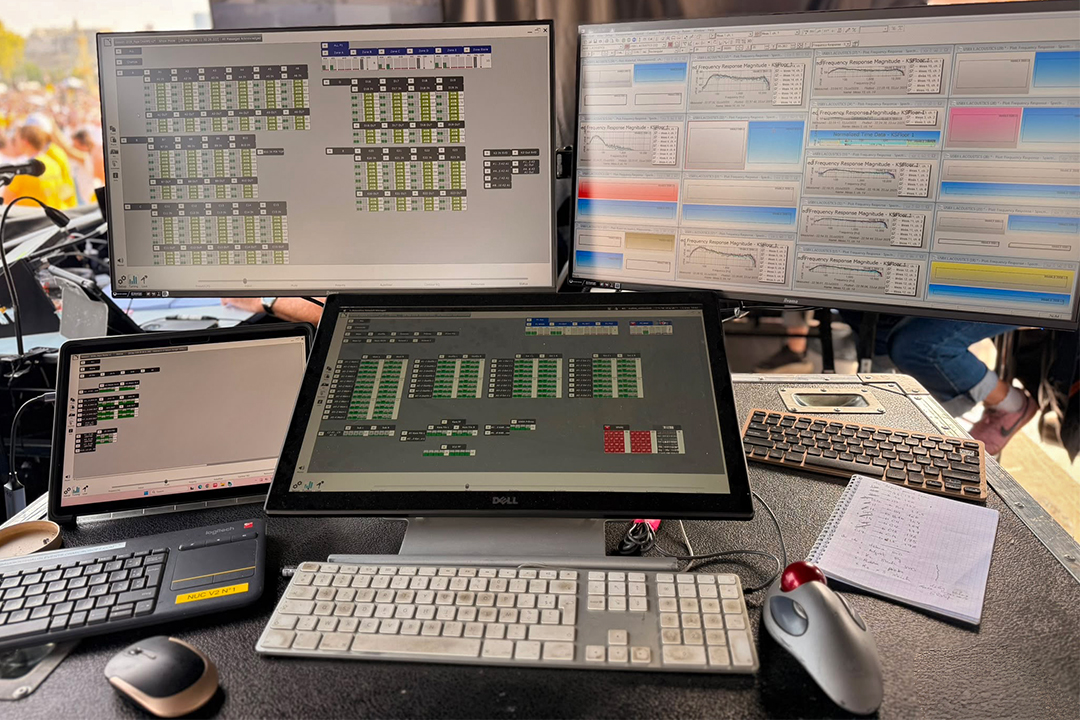
The site’s sheer size made signal transport as important as the PA itself. Orange deployed the physical fiber infrastructure. Scaled Up, founded by Jérémy Czaicki, handled overall primary and secondary network distribution.
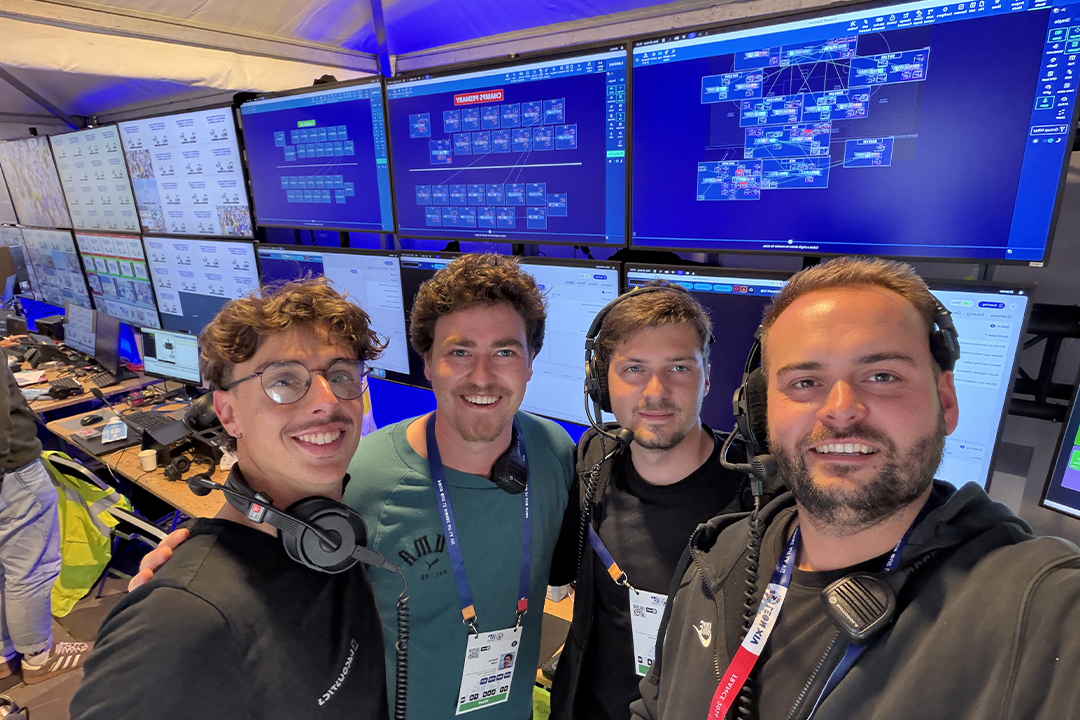
SLU : For the L-Acoustics portion, you wanted AVB all the way.
Max Menelec : Yes, full AVB throughout. I definitely didn’t want to introduce other conversions, especially Dante. Given our delay values, I wanted the most direct and consistent signal path possible. That’s when Benjamin Finot and Théo Thomassin joined Audisia’s team. To me, Ben is THE person who best understands this type of infrastructure. We work together a lot, and I call on him because I trust him completely. He supported Audisia through the planning meetings and coordinated everything with Jérémy Czaicki.
On site, Théo managed the L-Acoustics network in coordination with Scaled Up. Their team provided the primary and secondary Luminex AVB paths, and Théo configured the LS10 switches, I think we had about 150, from memory, and took AVB through to the LA-RAK II AVB racks and amplifiers. He did an enormous job, and put up with me all week, which is no small feat given my limited patience. He also worked very long hours. Théo wasn’t just handling the network: he was everywhere, with incredible energy.
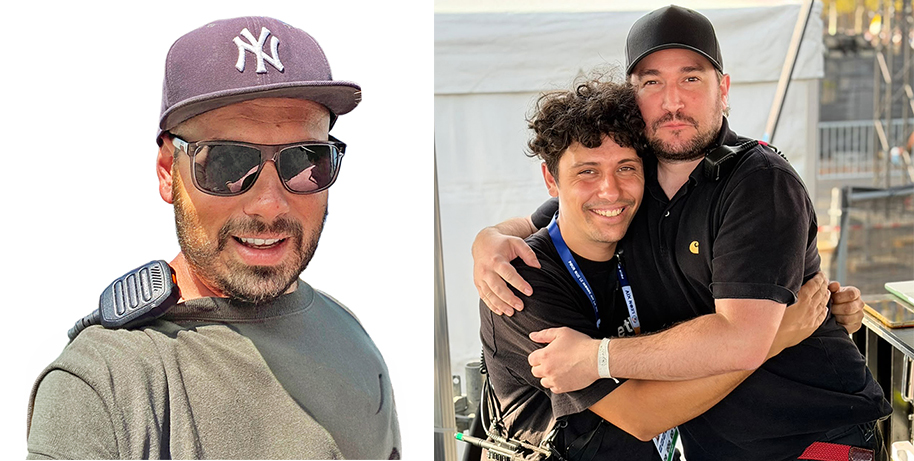
SLU : Despite the scale, no unpleasant network surprises?
Max Menelec : NNone, and they deserve credit. They did a fantastic job. We weren’t the only users: video, intercom, lighting… A lot was traveling over that infrastructure, and it all worked flawlessly.
Concorde: eight L2 arrays
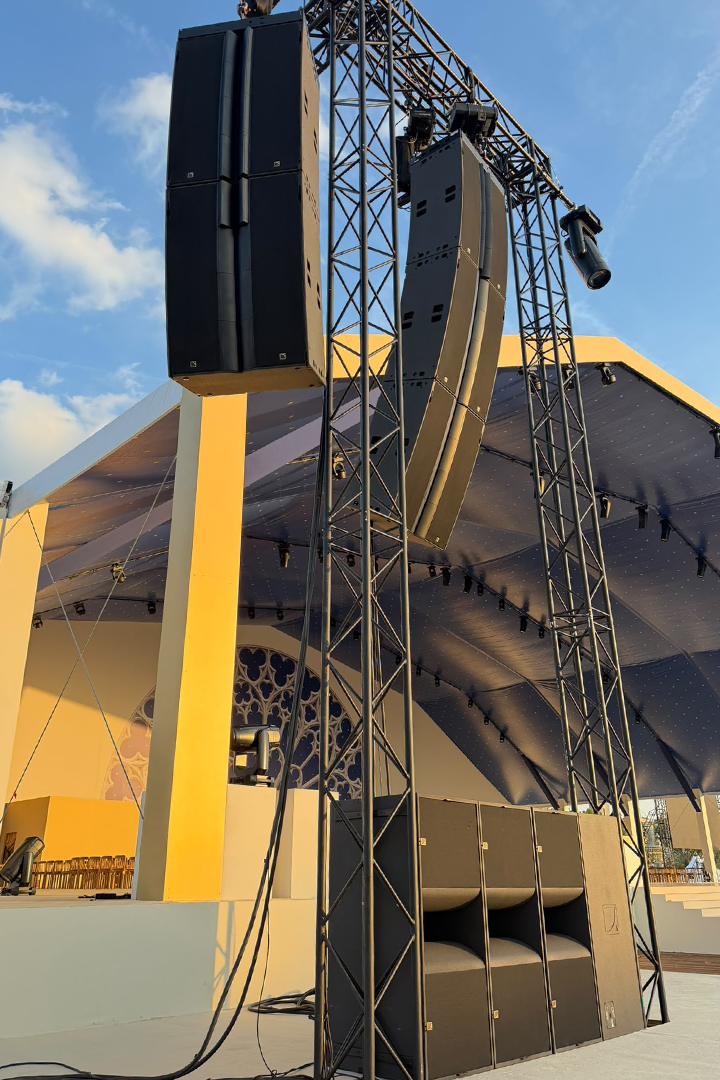
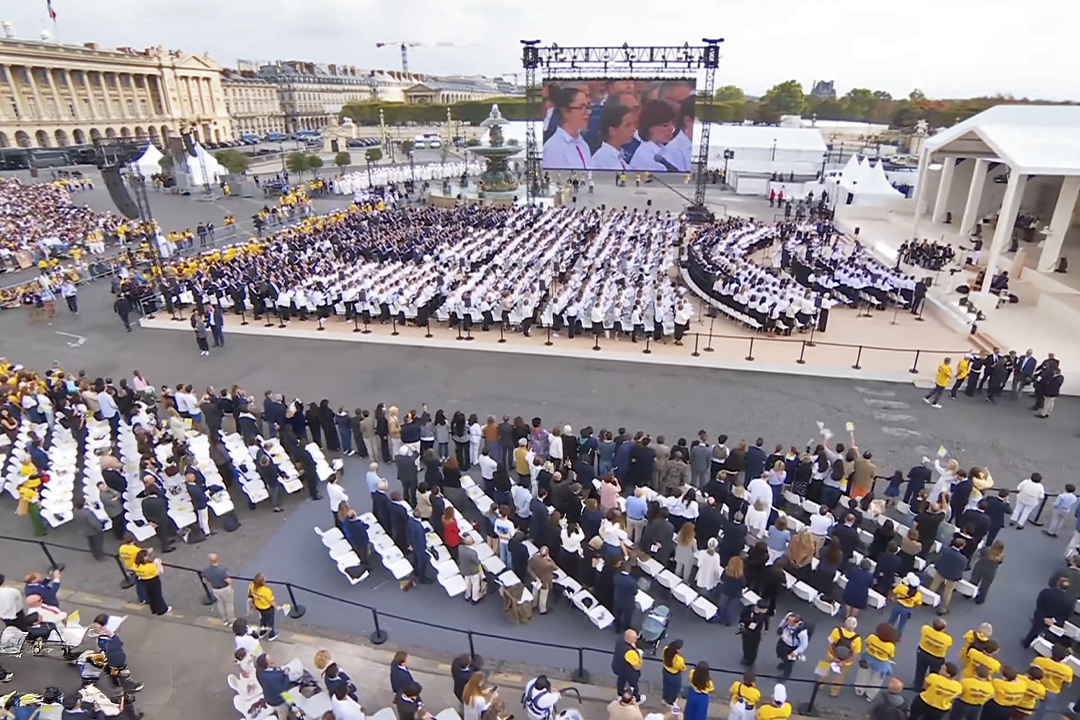
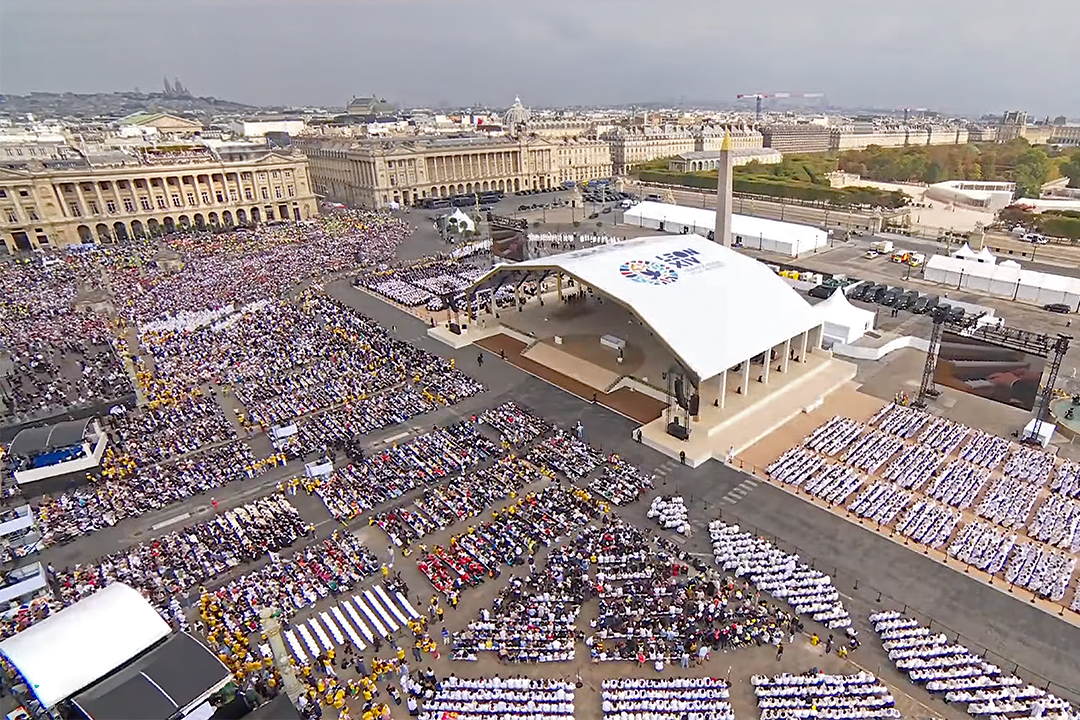
At Concorde, the priorities shift. Throw is no longer the main concern; width is. The system comprises eight L2 arrays: Main L/R, Main Out L/R, Extension 1 L/R, and Extension 2 L/R.
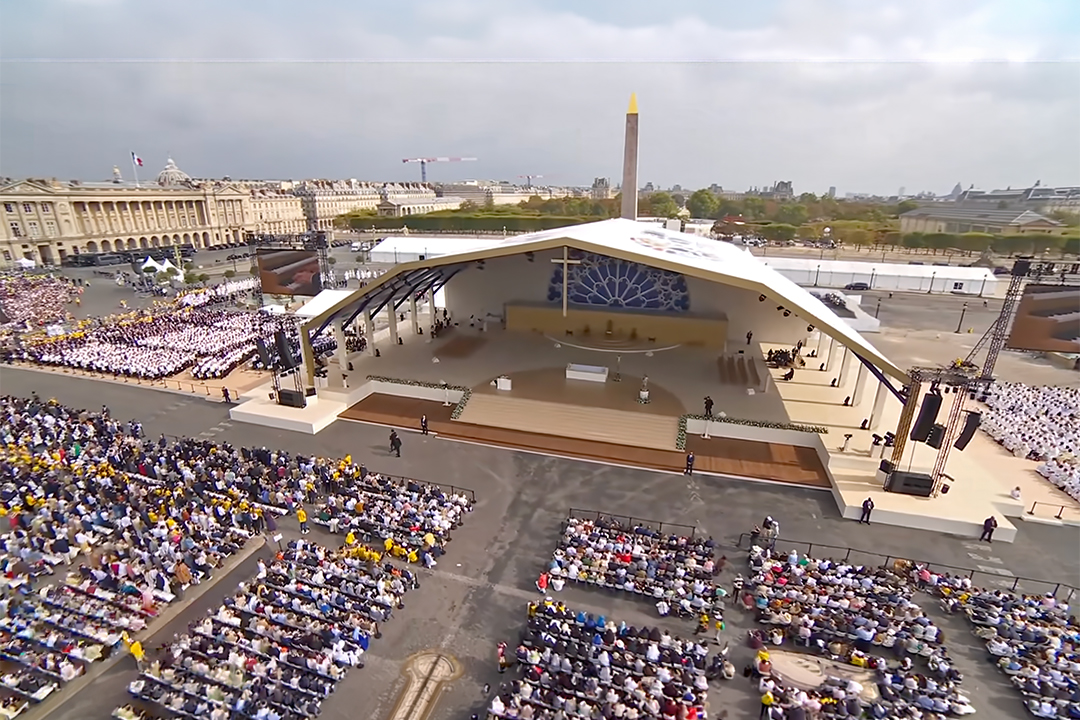
SLU : The Main Out is effectively your large outfill.
Max Menelec : Exactly. Main and Main Out are on the primary left and right towers. Then I have Extension 1 and Extension 2, also left and right. Eight L2 arrays in total.
SLU : But you didn’t necessarily put L2D at the bottom of every array.
Max Menelec : No. It depended on the coverage requirements. L2D widens the coverage at the bottom. With the stage main, there was nobody directly in front because of security zones and vehicle access. Putting L2D there would have sent SPL onto the ground and farther behind, where I didn’t want it. So I moved the L2D elements to the extensions, where people really were close to the arrays.
SLU : At Concorde, you added subwoofers.
Max Menelec : Yes. Four KS28s per side beneath the mains, eight in all, in a cardioid configuration. On the Champs, K2 goes down to 35 Hz. Frankly, I didn’t need anything else. At Concorde, L2 rolls off at 60 Hz, and we had an orchestra and an organ. It made sense to have the full low end. Not for an electronic music show, just to provide the foundation that was missing.
SLU : You kept the contour fairly restrained.
Max Menelec : 8 dB. I might use 12 dB on other shows, but 8 dB was right here. We needed a warm, pleasant, yet intelligible voice, with the orchestra and choirs behind it.
I had almost the same tonal footprint at Concorde and along the Champs. That helped considerably as you moved between areas. A small adjustment around 180 Hz further evened out the sound between the two zones.
Étoile uses Kara
SLU : It’s easy to forget that at the far end of the Champs you still had to cover the whole of Place de l’Étoile.
Max Menelec : Yes! And, truth be told, we had run out of K2. So I switched to Kara. We had stacks of twelve Kara and around 60 Kara in total. Obviously, the aim wasn’t to blast the middle of the square but to cover the audience areas around the Arc de Triomphe. We used the same principle—main, extension, lateral coverage—but with geometry tailored to the square.
SLU : In the end, what took the most time wasn’t tuning individual boxes, but making all the transitions between positions work.
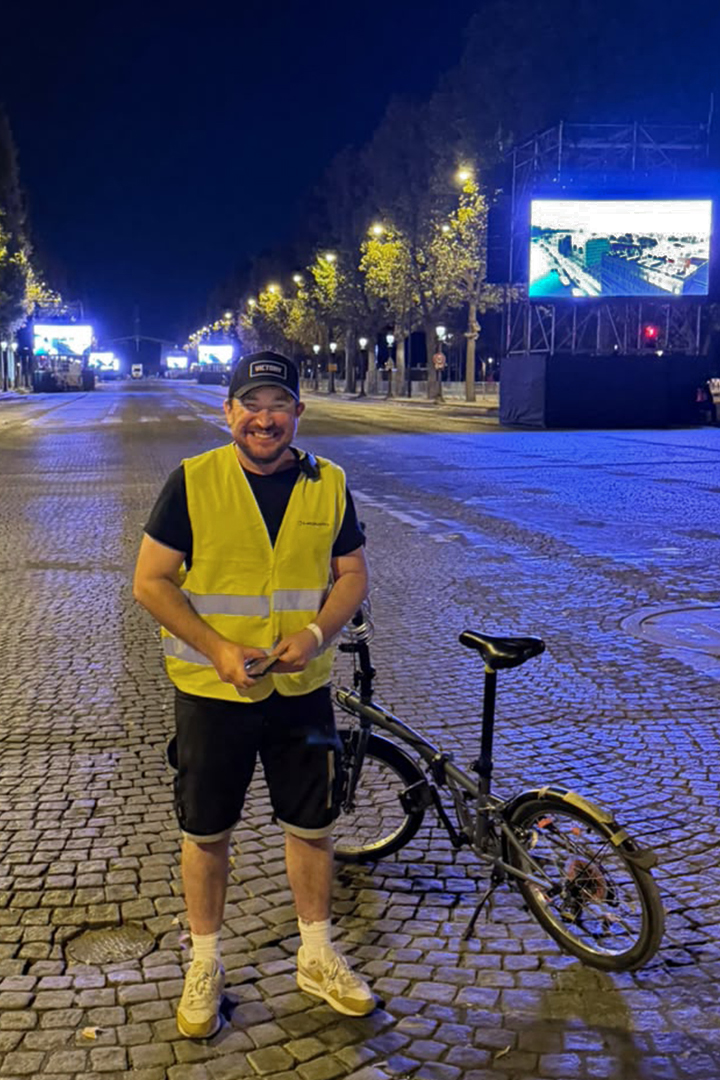
Max Menelec : Completely. You’re optimizing SPL, coverage, and timing between towers. Then you walk, listen, head back up, come down again… Although in this case, we did most of that on bikes!
Part 2 – Jean Lyonnet at front of house
Yoan Corchia produced the first technical version of the audio plan. It established the basic choices, redundancy, and initial signal-flow diagrams. So the architecture was already in place when Jean Lyonnet joined the project, but all the microphone and mixing work still had to be built out.
SLU : Were you alone at FOH, or had you split the orchestra, choirs, and final mix?
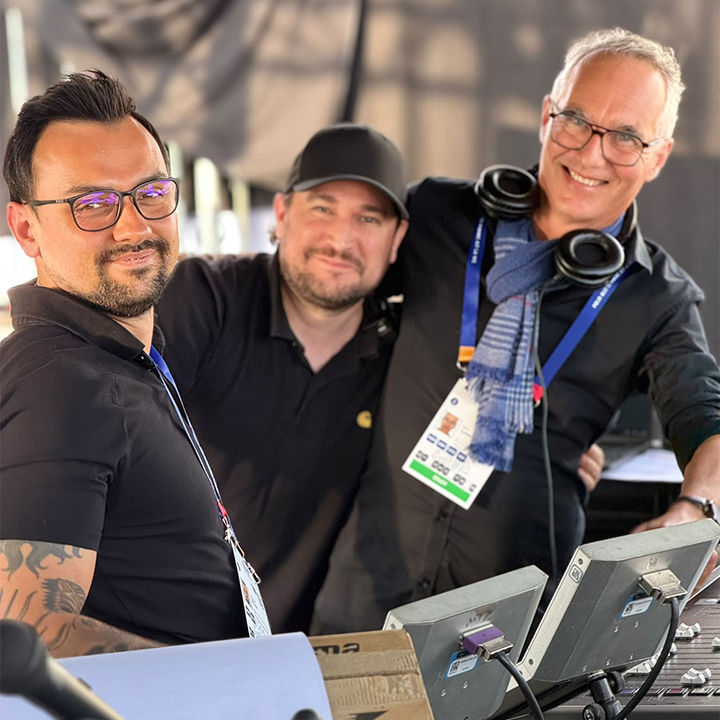
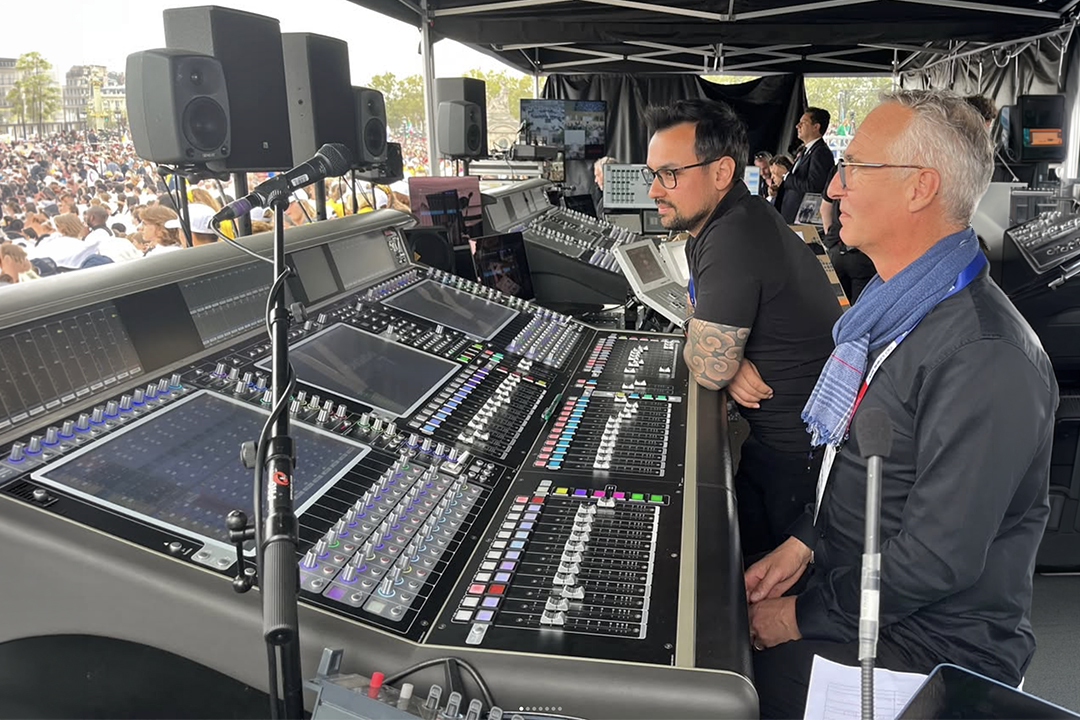
Jean Lyonnet : I handled all the stage microphones myself at FOH. Of course, I had a FOH assistant, Vincent Bezault, who was a tremendous help with cues, communication with the master control room, configuration, and everything surrounding the mix.
SLU : So you received the liturgical microphones, the Pope, choirs, brass, and organ. No premix elsewhere?
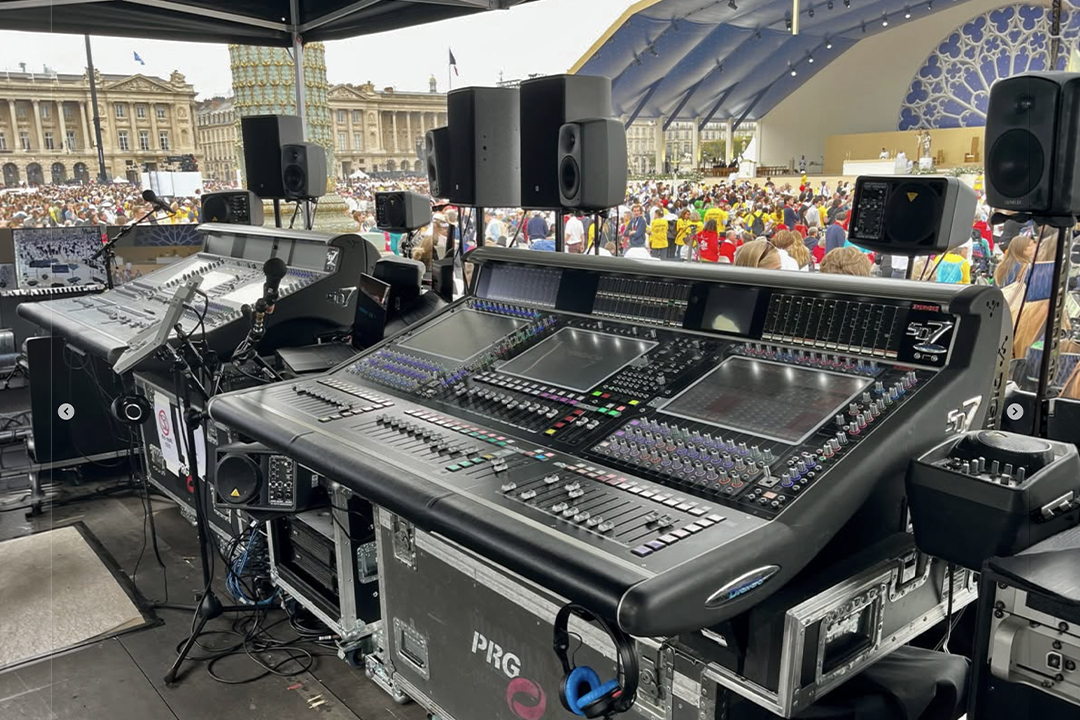
Jean Lyonnet : No. Everything came to me. I also prepared stems for broadcast, but everything heard through the main PA was mixed on my console.
Keeping the broadcast mix independent of FOH
SLU : You didn’t simply send your L/R mix to television.
Jean Lyonnet: Absolutely not. I sent stems, especially for the choirs, and they also received split feeds from the liturgical area. The idea is simple: if I make a mistake on a fader, there’s no reason for it to go out on television too. The signal benefits from my processing, but it’s sent pre-fader.
The broadcast engineer therefore gets a processed source but sets his own level and balance and adds ambience. If I slip up at FOH, he doesn’t automatically inherit my mistake. Audio and video are combined in the broadcast truck before the signal goes to the broadcasters, who add commentary and their own presentation elements.
No snapshots
SLU : A Mass follows a very strict sequence, so you could have prepared dozens of snapshots.
Jean Lyonnet : Yes, but I didn’t want to. Snapshots were out of the question for this job, and I didn’t want lots of mutes or faders fully closed either. A Mass follows a strict protocol. Normally, nobody starts speaking at the wrong time over someone else. I preferred to watch what was happening and keep my sources available. We also had a cue caller announcing the different stages.
SLU : So your priority was preventing unwanted sound from coming through while the microphones remained open.
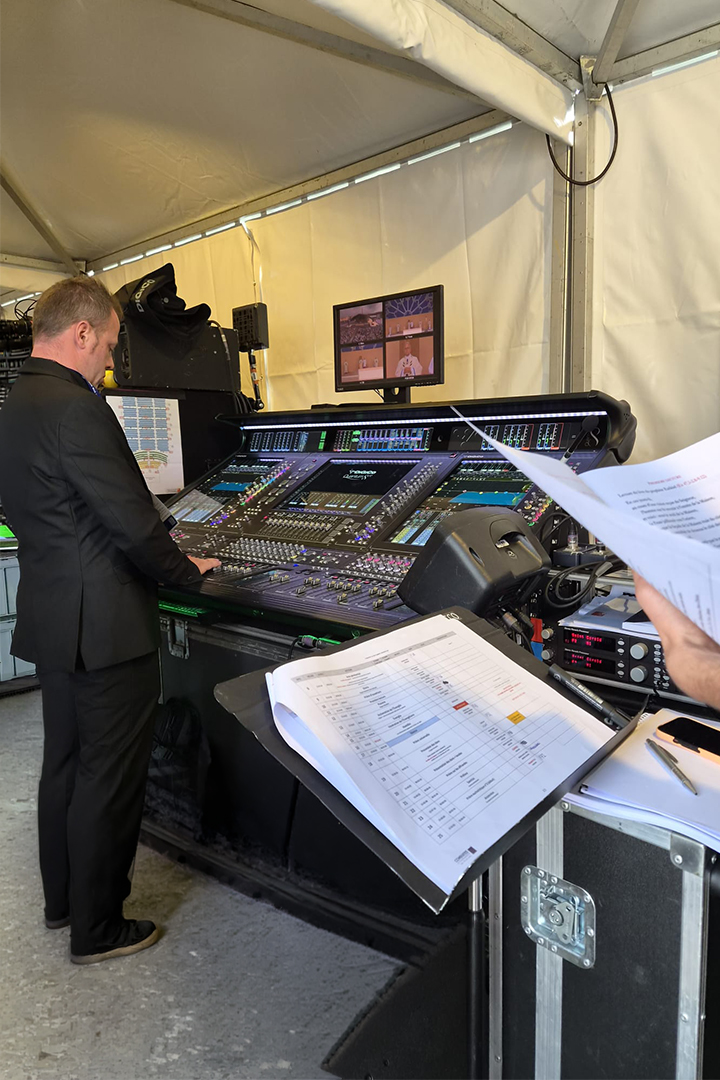
Jean Lyonnet : Exactly. We made extensive use of DiGiCo Quantum’s Mustard processing, especially the MSE, along with an external plugin chain.
De-Feedback, Soothe 3, and four M4 Pro MacBooks
The insert chain deserves a closer look, not least because it uses no dedicated audio plugin servers. Jean and Vincent Bezault ran four M4 Pro MacBooks with 32 GB RAM, one main and one spare per Quantum 7. Each computer was connected to an RME MADIface USB and ran SuperRack Performer. Thirteen processing chains, each combining Alpha Labs’ De-Feedback and oeksound’s Soothe 3, ran on every machine.
SLU : So no Waves server. Was that deliberate?
Jean Lyonnet : Yes. We needed four setups, and we wanted something simple, effective, and easy to source. Vincent often works without a dedicated external server. I told him what I wanted to do, and he calculated what kind of computer we’d need to run the plugins. In the end, CPU usage was around 18%. We used all four setups all day, every day, for two weeks without a problem.
SLU : But you had planned for failures.
Jean Lyonnet : Of course. One main Mac and one spare per console, plus macros to bypass the inserts immediately if a computer crashed. That never happened. And since I wasn’t using snapshots during the ceremony, I didn’t need ProLink to control plugin changes either.
SLU : Soothe becomes particularly interesting here with version 3.
Jean Lyonnet : Yes. It offers a 1 ms low-latency mode. Before that, with around 15 ms, it was much less practical for live work, apart from the Live version integrated into the S6L ecosystem. This really changes things.
SLU : You were using a 256-sample buffer?
Jean Lyonnet : Yes. The measured latency of the entire insert was 6.88 ms. We also measured 5.5 ms at 192 samples and 4.21 ms at 128, but 256 worked perfectly. De-Feedback VST3 specifies 0 ms, Soothe 3 adds 1 ms, and the DiGiCo channel itself is around 0.96 ms. At FOH, absolute latency wasn’t our issue. What mattered was everything arriving together.
SLU : So you realigned the groups before the Concorde and Champs matrices.
Jean Lyonnet : Yes. Some channels and groups had inserts, while others didn’t. We aligned the latencies so everything reached the matrices at the same time.
De-Feedback mainly on the liturgical microphones
SLU : Initially, you also had De-Feedback on the choir groups.
Jean Lyonnet : Yes, but I removed it. To preserve everything a choir was singing, I had to turn the amount of processing down so far that it barely made a difference. I kept it on the liturgical-area microphones, though. It worked very well there.
SLU : And after that, you continued with Mustard processing.
Jean Lyonnet : On every group, yes. I used Classic, Optical Compressor, and MSE. MSE is an expander: below a threshold, it gradually reduces gain. It’s somewhat like a gate, but much gentler. I used it a lot at the end of the chain for noise reduction. It works very well on voice.
The Pope, with no soundcheck
Leo XIV’s voice was naturally the system’s most high-profile source. The Vatican did not want wireless microphones. The reference mic was a wired Shure KSM8 on a gooseneck. We identified it in footage of the Pope’s previous appearances and obtained the same stainless-steel KSM8 to prepare the signal chain and serve as a spare.
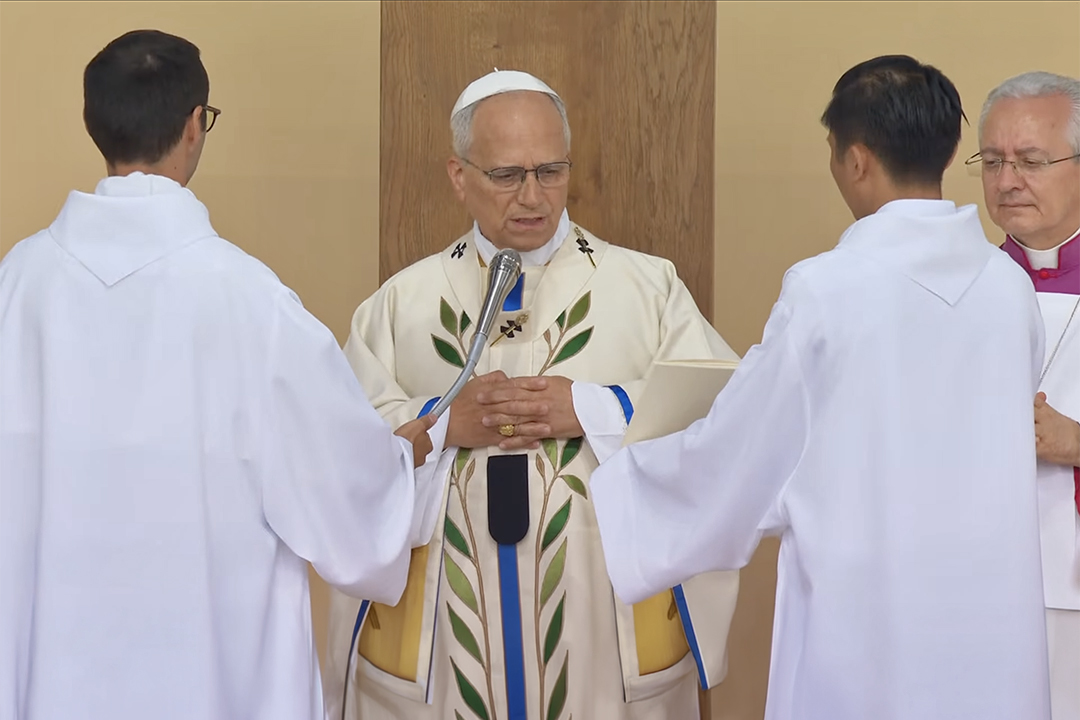
SLU : The one thing you didn’t have was his voice.
Jean Lyonnet : Exactly. Obviously, there’s no soundcheck with the Pope. We tested everything using our own voices.
SLU : Yet you still had to set the compressors, dynamic EQs, and deal with possible sibilance and plosives…
Jean Lyonnet : Yes. You prepare a chain able to handle several scenarios. On the Pope’s channel, I had multiple stages of compression, from the input channel through to the stem, plus parallel compression. Everything was set up in advance. When he reached the mic and spoke his first word, I brought the fader to unity. I didn’t touch it again until the end.
SLU : You got the gain exactly right?
Jean Lyonnet : Yes, spot-on with the predictions. And he has a good voice, with plenty of level. That helps, obviously.
SLU : Nobody had provided a dry recording of his voice beforehand?
Jean Lyonnet : No. That would be a good idea, but we received nothing, and nobody asked us for one afterward either. They make their own recordings, but I didn’t have a dry recording of the Pope.
78 + 150 + 1,000 singers
Three very different vocal ensembles occupied the stage. It would be tempting to treat them as a single mass. Jean did exactly the opposite.
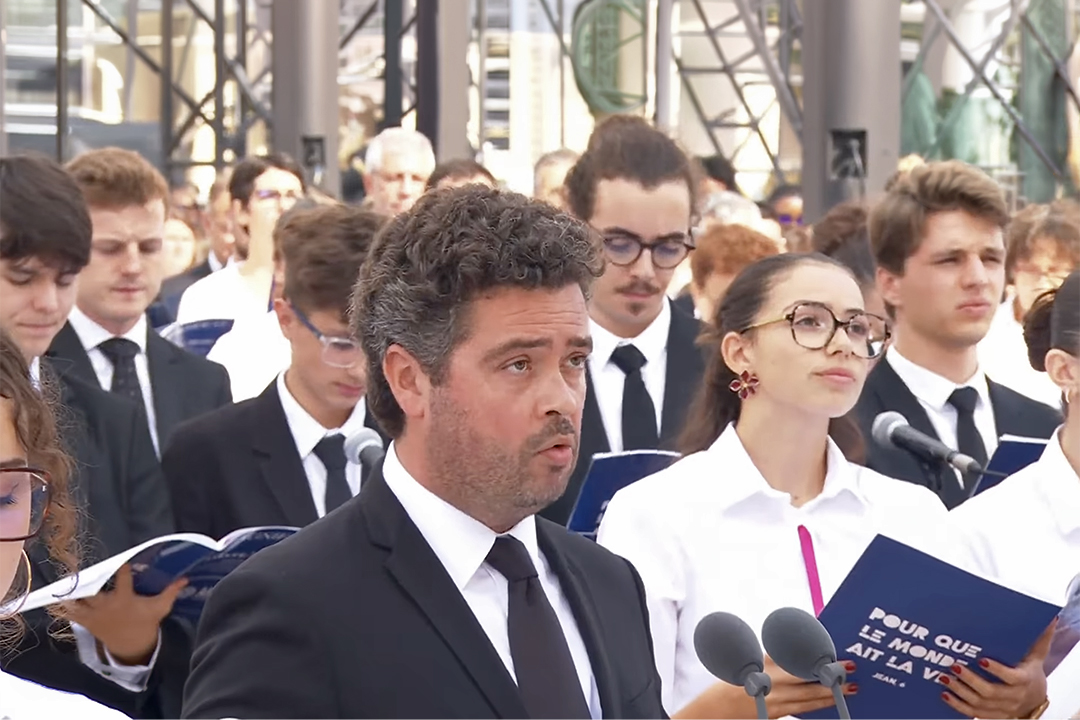
SLU : You considered the lead choir the most important one.
Jean Lyonnet : Yes. That’s La Maîtrise de Sainte-Anne-d’Auray, about 78 singers. It’s the choir that needs clarity in the lyrics, the musical lines, and countermelodies. I needed to work on all that in detail. So I went for close miking, one mic for every two singers. That gave me control over the different vocal ranges and much more detail in the mix.
SLU : You miked the polyphonic choir behind it more conventionally.
Jean Lyonnet : Yes, although with quite a few microphones. There were about 150 singers, and I had sixteen Schoeps CMC 6s.
SLU : And the thousand singers in the assembly choir were mainly there to provide scale.
Jean Lyonnet : Exactly. For them I worked in sections with elevated stereo pairs. We had about forty microphones for a thousand people. That’s clearly a very different ratio from the lead choir, but the objective isn’t the same.
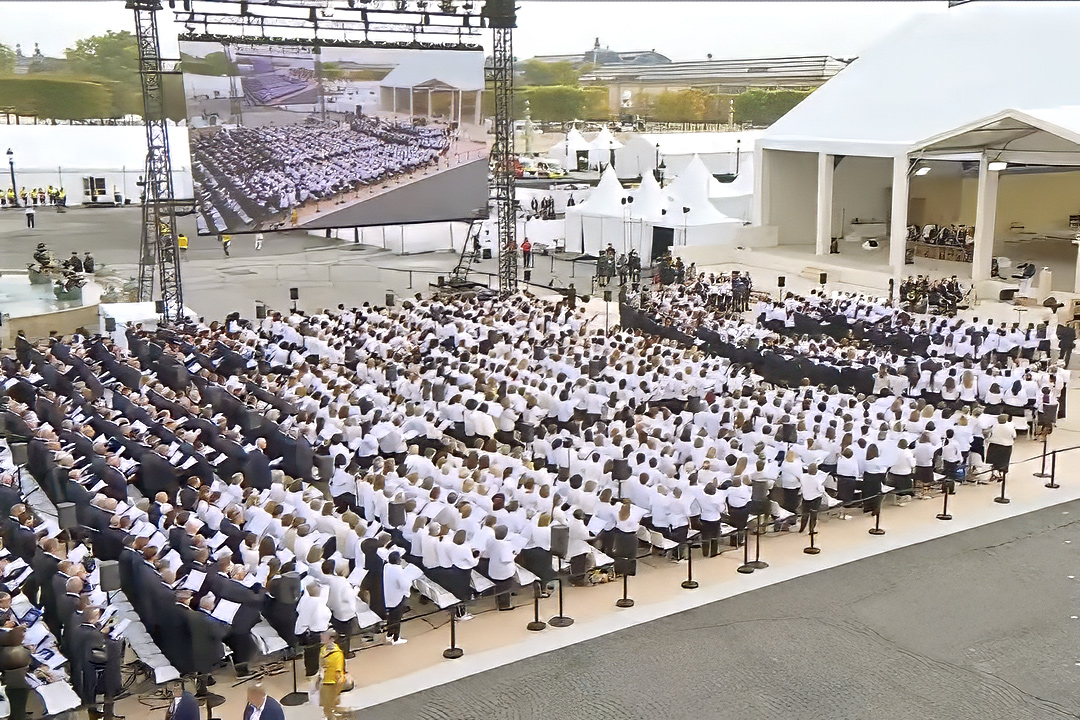
SLU : Ultimately, you can build precision at the front, then use the other choirs for breadth and weight.
Jean Lyonnet : Yes, and it worked extremely well. The choir directors were a little concerned at first. They asked whether they could work with me. I told them, “As soon as I have a mix that’s good enough to show you, come to the console.” And that’s what we did. We worked on dynamics together, brought out countermelodies, and refined details. It was really interesting.
“We had a church sound”
SLU : Outdoors, of course, you’re missing the acoustics in which this music would normally be performed.
Jean Lyonnet : I spent a lot of time on reverberation, especially the reverb tails. We eventually achieved a real church sound at Concorde. It was remarkable: you’re outdoors, yet the organ, brass, and choirs took on that kind of dimension.
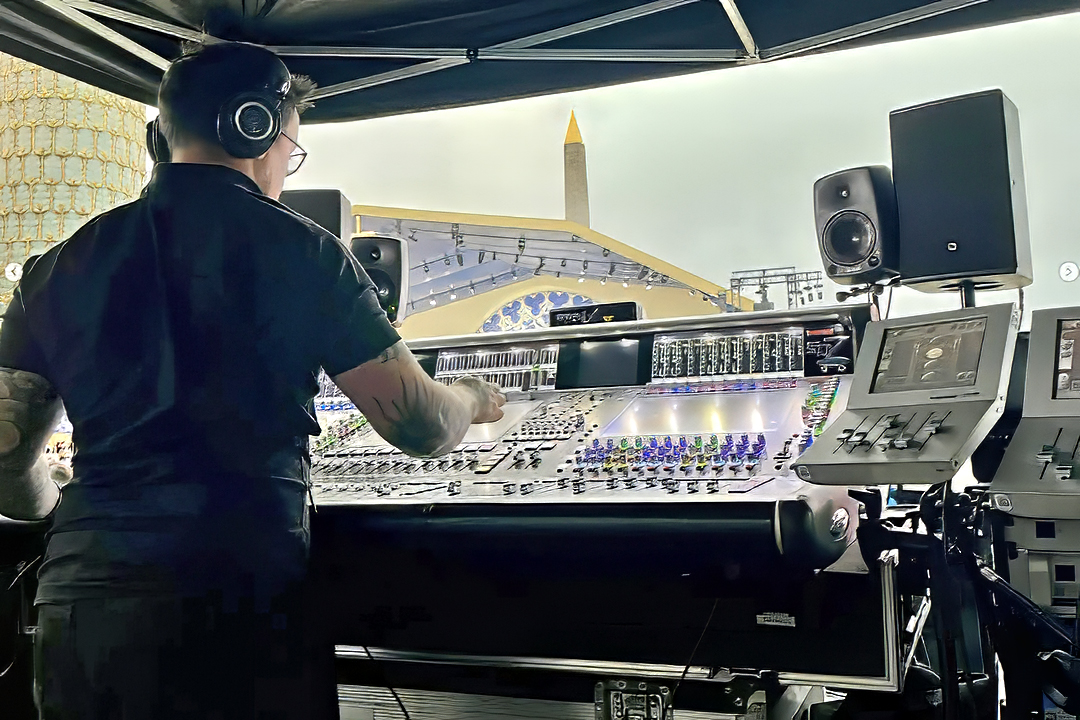
SLU : You chose two TC Electronic 6000 units.
Jean Lyonnet : Yes, two units, eight engines in total. I used four, and the second unit was a complete spare. I could just as easily have used a 480L; I would have been happy with that too. But with the System 6000 and a second full machine as backup, I knew I was covered.
SLU : What SPL did you run during the Mass?
Jean Lyonnet : Levels stayed fairly restrained given the scale of the site: around 96–97 dBA, with some musical fortissimos approaching 99 dBA. There was definitely level, but the Pope’s voice had plenty of level too. That’s important: it stayed out front without needing to make everything else huge.
DiGiCo consoles, Optocore, MacBooks, and stage racks: serious redundancy
FOH redundancy was designed into Yoan Corchia’s original version and retained: two Quantum 7 consoles, four MacBooks, two Optocore loops, and duplicated stage racks for the different microphone areas.
Alongside that hardware redundancy was Vincent Bezault, who had been sufficiently involved in preparing both systems to take over the mix if a problem prevented Jean Lyonnet from operating the console himself.
Part 3 – Nicolas d’Amato on monitors
At monitors, the first challenge isn’t available SPL but time. The assembly choir stretched nearly 50 meters from front to back. A powerful system placed farther away would solve nothing: it would deliver level, but not at the right time.
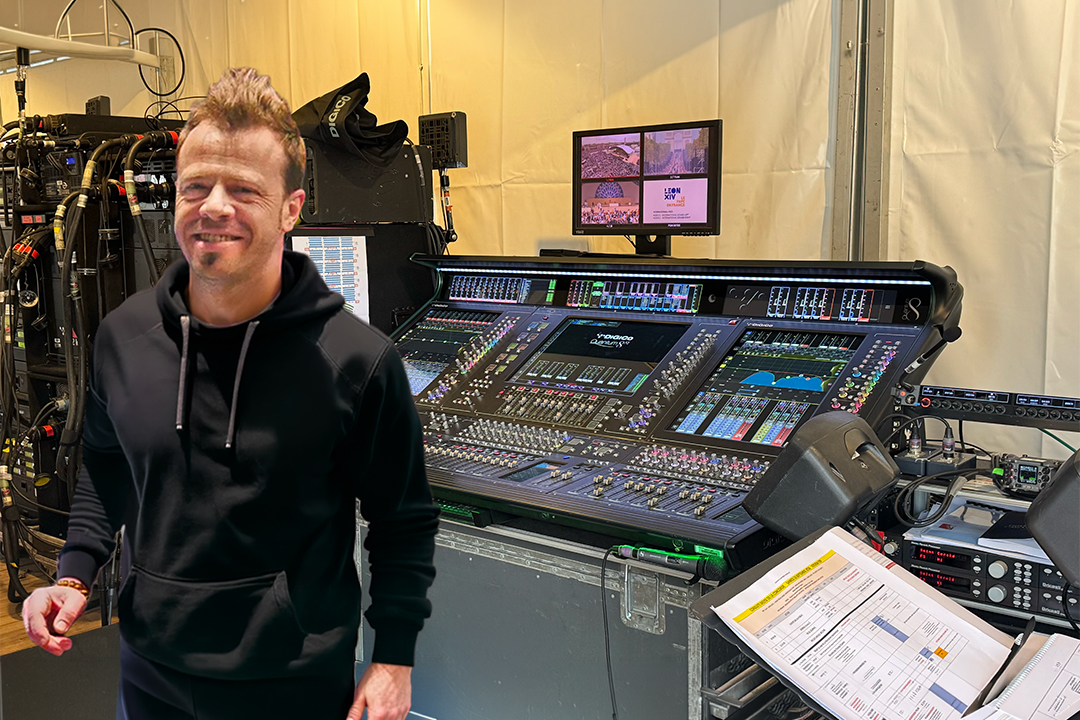
SLU : Flying a system in front of the choirs and covering everyone from there wasn’t an option because of the distances…
Nicolas d’Amato : No. Someone 50 meters away won’t keep time with someone standing right at the front. They’d hear something, but not at the right moment. It was obvious to me that we needed lots of small, close-range speaker positions.
SLU : You chose X8.
Nicolas d’Amato : Yes. I could have considered X5, but we’d have needed even more, and there wasn’t room among the singers. For the 1,000-person assembly choir, I used 45 X8s on stands, split across three mixes, broadly one mix per row. I had left on one side, right on the other, and something more mono down the middle.
SLU : The loudspeakers were positioned fairly low.
Nicolas d’Amato : About 1.8 meters. The microphones were higher, around 2.5 meters. The idea behind all these little speakers was to get precision without making every singer feel as though there were a wedge right in their face. I wanted them to be immersed in the sound.
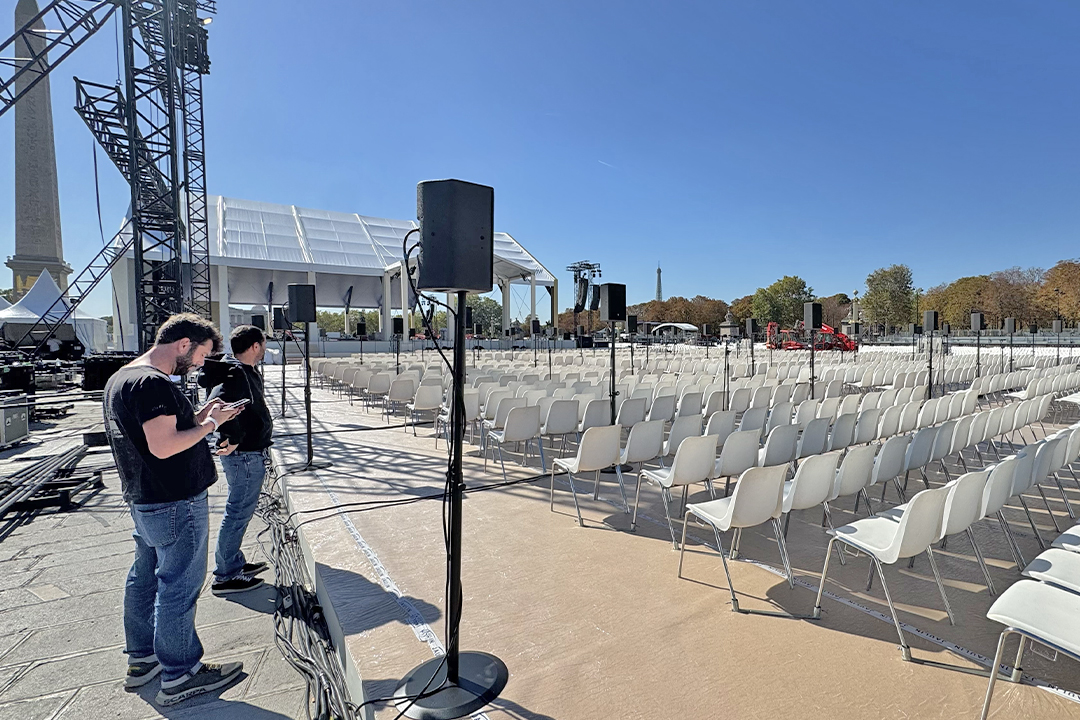
“My Bricasti M7 was my church”
SLU : And to create that acoustic space, you used almost a single piece of outboard gear.
Nicolas d’Amato : Yes, a Bricasti M7. That was my church. I sent varying amounts of the instruments, choirs, and other sources into it, then fed it back to the choirs and liturgical area. Not too much. You can’t distract the singers, but you need just enough so they don’t feel they’re working in a completely dry space.
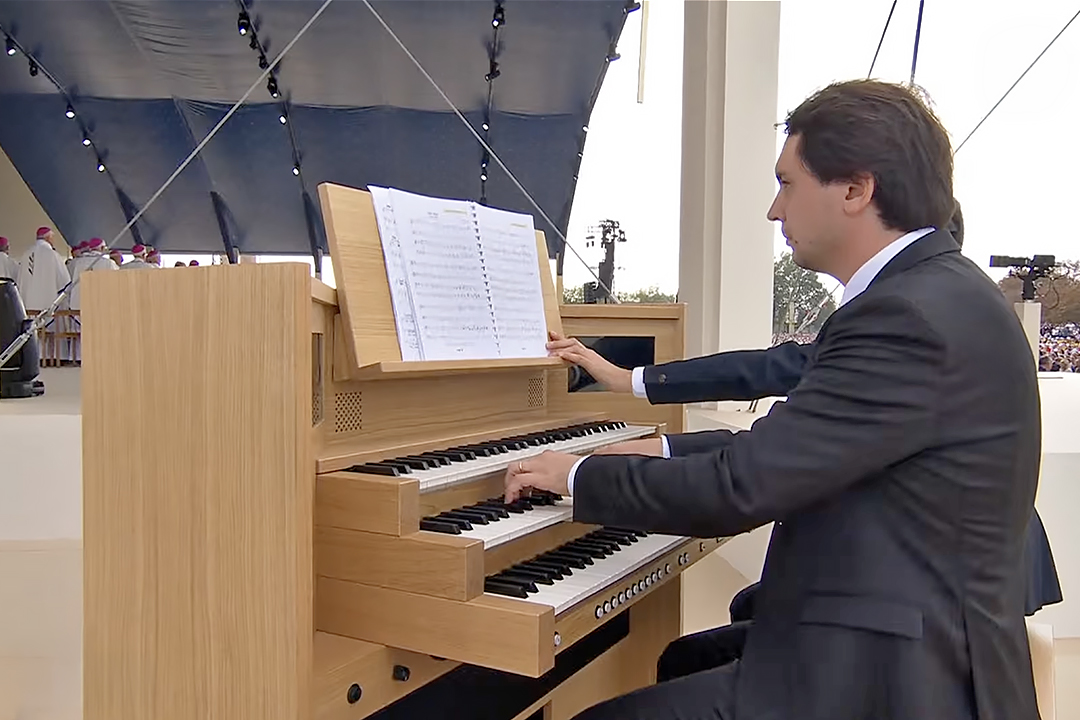
SLU : The organist wanted a lot more, though.
Nicolas d’Amato : Oh yes! He had two X12s in stereo and wanted plenty of level. When you play organ in a church, you’re used to a huge sense of sound around you. His instrument was incredible, by the way, with organ sounds captured in churches and the ability to recall different acoustics.
We asked him not to use his own reverbs, so we could control exactly what went into the PA and monitors.
The lead choir as the reference
SLU : You didn’t treat the three choirs the same way in the monitor mixes.
Nicolas d’Amato : No. The lead choir, as the name implies, needed to be heard by the others.
I sent it to the polyphonic choir and the assembly choir. Beyond that I worked extensively with mix-minus feeds. I don’t send the lead choir back to the lead choir just for the sake of it.
SLU : And the thousand voices at the back?
Nicolas d’Amato : Very little. Just enough to add some weight and give the lead choir wings, but certainly not enough to let the assembly choir become the timing reference. The guide stays at the front.
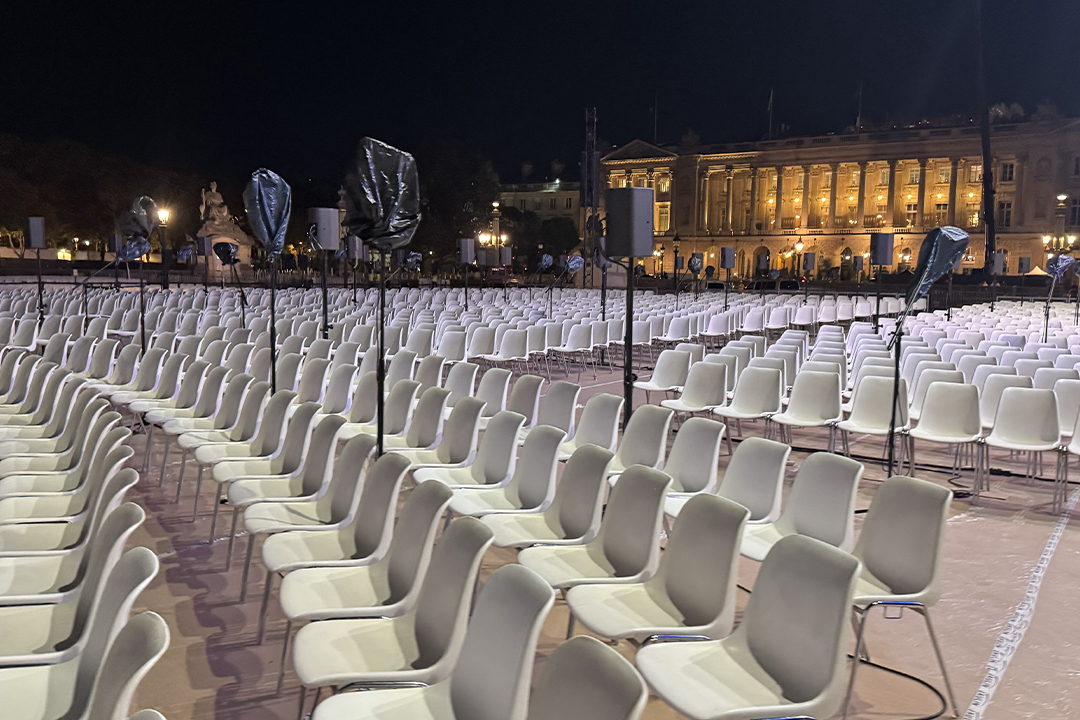
X15 HiQ across a 50-meter stage
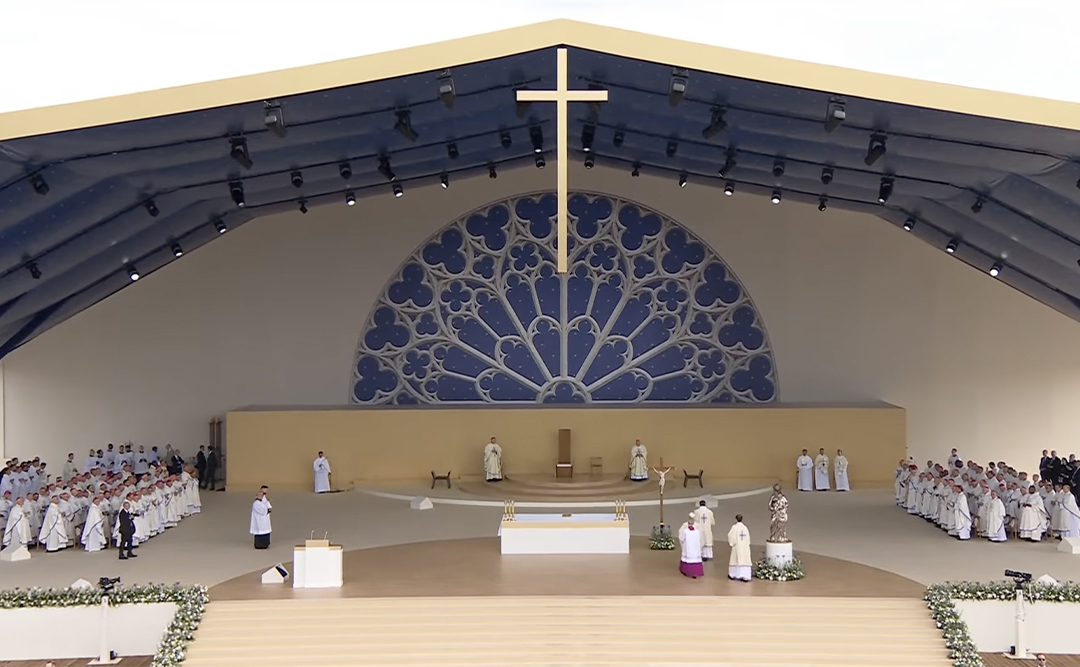
The constraints around the liturgical area were different. Positions had to be approved by the organizers, some areas around the altar had to remain clear, and the loudspeakers needed to be as discreet as possible on camera.
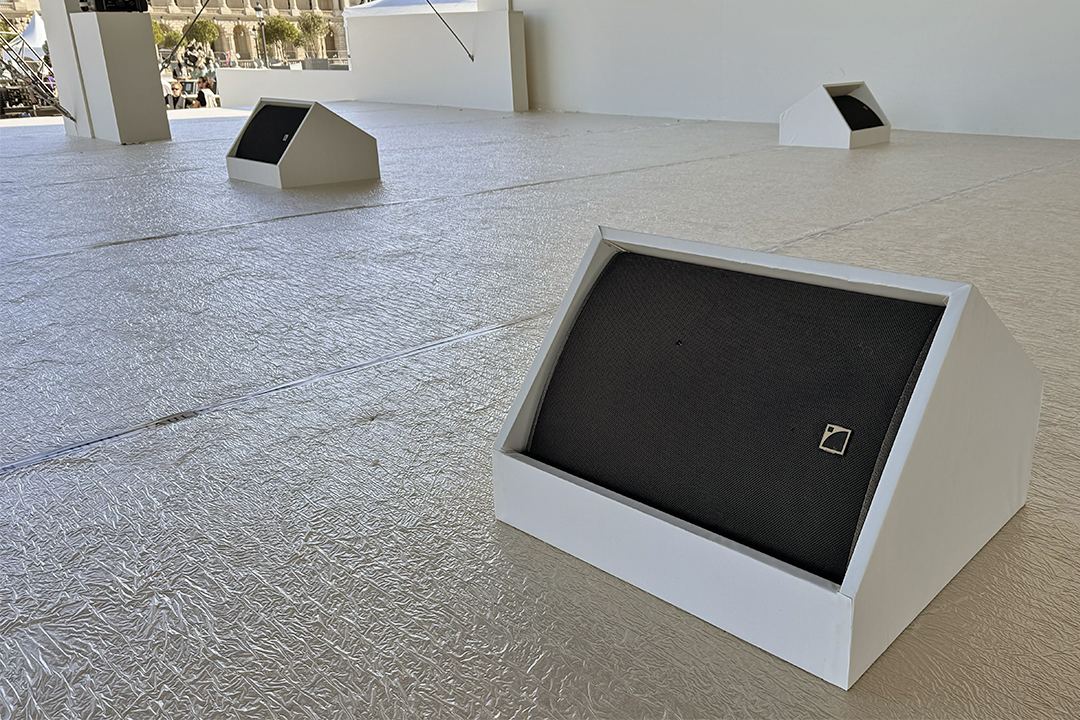
SLU : There was pressure to use smaller boxes, though.
Nicolas d’Amato : X12 is a good box, but it’s passive and, for this application, I felt it didn’t have the same bite as X15.
On paper, there’s only 2 dB difference in maximum SPL: 136 dB for X12 and 138 dB for X15 HiQ. But it isn’t just about the numbers. X15 is an active two-way box with greater dynamics, and it was the right tool for this stage. Custom white covers were made to keep the wedges discreet on camera.
No big sidefills, but their purpose remains
SLU : Obviously, you weren’t going to put two huge sidefills around the liturgical area.
Nicolas d’Amato : No! Visually, that would have made no sense. And I had lots of sensitive microphones: if I started blasting a big sidefill straight into them, Jean wouldn’t have been happy. So I used two more outward-facing wedges to cover a slightly wider area. It was a kind of discreet sidefill. The goal was to put some sound back into the space, make it feel coherent and, once again, get something approaching a cathedral acoustic. The other mixes were distributed around the areas occupied by the cardinals and other participants, without interfering with the liturgical processional routes.
“The main PA was absolutely pristine”
SLU : Which mix did you use as your reference at monitor world?
Nicolas d’Amato : The Pope’s. That’s the one I listened to. I believe that from his seat he should be able to hear any speaker, musician, or chorister.
SLU : Yet he hadn’t made any specific requests.
Nicolas d’Amato : None. No soundcheck, no requests. So I prepared what seemed logical: music, the liturgical area, and his own voice. When you’re standing behind a PA whose sound continues down the Champs-Élysées for several more seconds, you still need to hear locally what you’re doing.
He needs to feel that his voice carries, but above all he must hear what he’s saying. The only unknown was how loudly he’d speak, how far he’d stand from the mic, and what his voice would sound like. I’d prepared a setup designed to work immediately.
“The main PA was absolutely pristine”
During the interview, Max Menelec takes the opportunity to ask Nicolas what he actually heard from the main PA behind him.
Max Menelec : So, seriously, how much of our PA were you hearing back on stage?
Nicolas d’Amato : It was absolutely pristine. I’m not going to say there was nothing, of course. I heard some lovely reverberation, a little distant slapback that might have come from the Grand Palais, but nothing troublesome. No unpleasant reflections. And the program helped: organ, choirs, long, harmonic sounds. This wasn’t Tower of Power with big, punchy brass hits. The rear radiation of the PA didn’t bother me at all. Quite the opposite; it was part of the sound. When the PA is well tuned and the FOH mix is good, monitors benefit too.
Analog outputs remain the choice
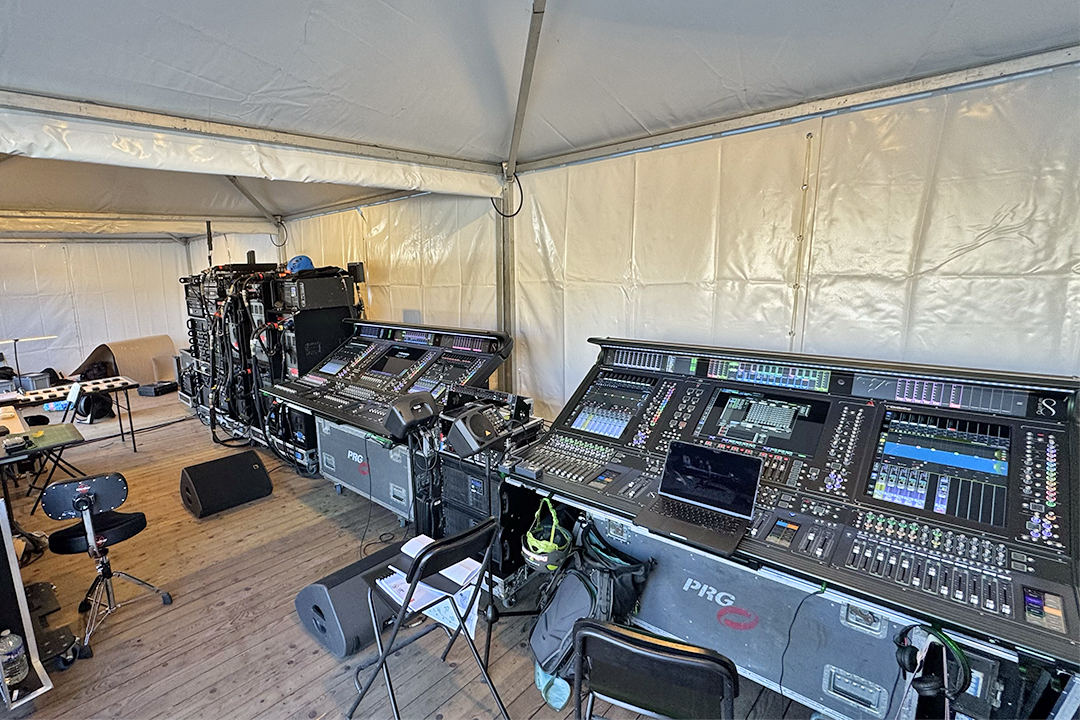
Monitor redundancy followed the project’s overall approach: two Quantum 852 consoles, two separate loops, and signal chains able to operate independently. Nicolas deliberately chose analog outputs from the stage racks to the amplifiers, however.
SLU : So all your amplifiers received analog signals.
Nicolas d’Amato : Yes. I took analog outs straight from the stage racks. I saw no point in adding a box, converting back, and then going into AVB again. I wanted a genuinely independent backup path. If you have two loops but they both ultimately pass through the same digital system, you’ve lost some of the value of redundancy, as far as I’m concerned. Here, the outputs and fan-outs were ready, and if we needed to switch over, we’d change the Harting and Socapex connections. You know an analog connection will work immediately: no clocking, no network to reboot, no synchronization to recover. Those familiar stage “Socas” were therefore a very real part of the redundancy. A spare amplifier was also ready to be patched in.
Remote control? Not for Nicolas
SLU : To tune monitors across fifty meters of choirs, surely you walked around with an iPad.
Nicolas d’Amato : Hang on! I know it’s very handy, but I can’t really work that way. More importantly, I couldn’t access Mustard EQ from the iPad, and I’d used Mustard everywhere. So I could adjust levels, but I couldn’t truly do my job. I quickly abandoned it and went back to the console. For his own monitoring, Nicolas configured two solo buses, one to his in-ears and another to his wedges. He ended up working through most of the ceremony on wedges, with the Pope’s mix remaining his reference.
300, 150, 100, 50, 10 meters
On the day of the Mass, the crew was told how far the Popemobile was from the stage. The countdown wasn’t in seconds anymore, but meters.
SLU : Is that when the pressure really starts to build?
Nicolas d’Amato : Yes. We got: 300 meters, 150, 100, 50, 10… And then you know he’s about to arrive. Once he starts speaking, you’re immediately back in work mode. You have to listen to the sound. I must hear whether the words are intelligible, but I mustn’t listen to what he’s saying. I don’t want to get caught up in the meaning of the sentence. I’m listening to the sound of the words, and that’s what matters most to me.
Three mix positions, three approaches to time
Ultimately, the three mix positions address very different problems. Max Menelec designed a PA that extends along the Champs to more than four and a half seconds of delay at the top of Étoile, maintaining level, tonal balance, and consistency from tower to tower—with excellent results.
Jean Lyonnet, by contrast, had to preserve time alignment between sources and groups, including their inserts, before feeding the different matrices.
Nicolas d’Amato did almost the reverse: for the singers, musicians, and Pope, all that distance had to disappear. Their reference needed to remain local and immediate.
The rest came down to each engineer’s decisions: standardizing systems rather than multiplying exceptions, keeping microphones open rather than recalling snapshots, or choosing analog when a simple backup path was preferable to yet another digital layer.
Conclusion, and then “ite, missa est”
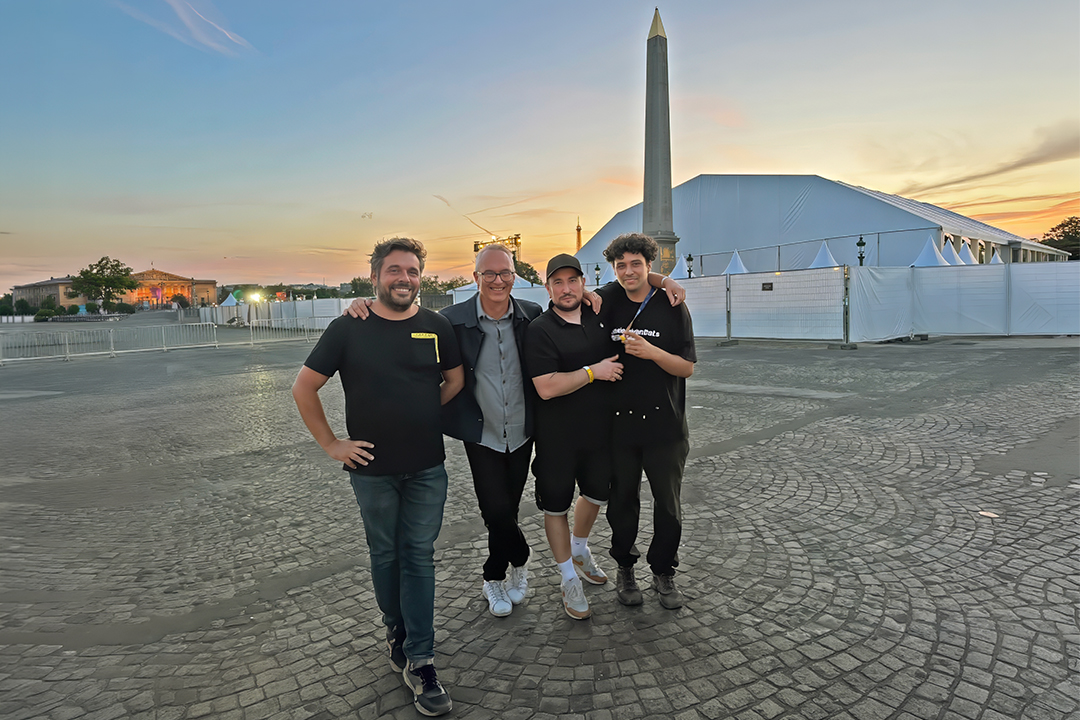
If you know SoundLightUp, you know how close we are to both the technicians and the people who design their tools. This report is no exception. France is fortunate to have women and men who do the live entertainment and events industries and the technology itself proud.
Delivering the Pope’s voice with flawless intelligibility, consistent SPL and coverage, excellent tonal quality, and a silent noise floor over such distances, using 376 K2, 18 L2, 63 Kara, and 59 LA-RAK II and III racks, deserves recognition. All the more so because the devotion of so many worshippers was expressed with extraordinary restraint: the slightest stray noise would have sounded deafening. Well done, Max.
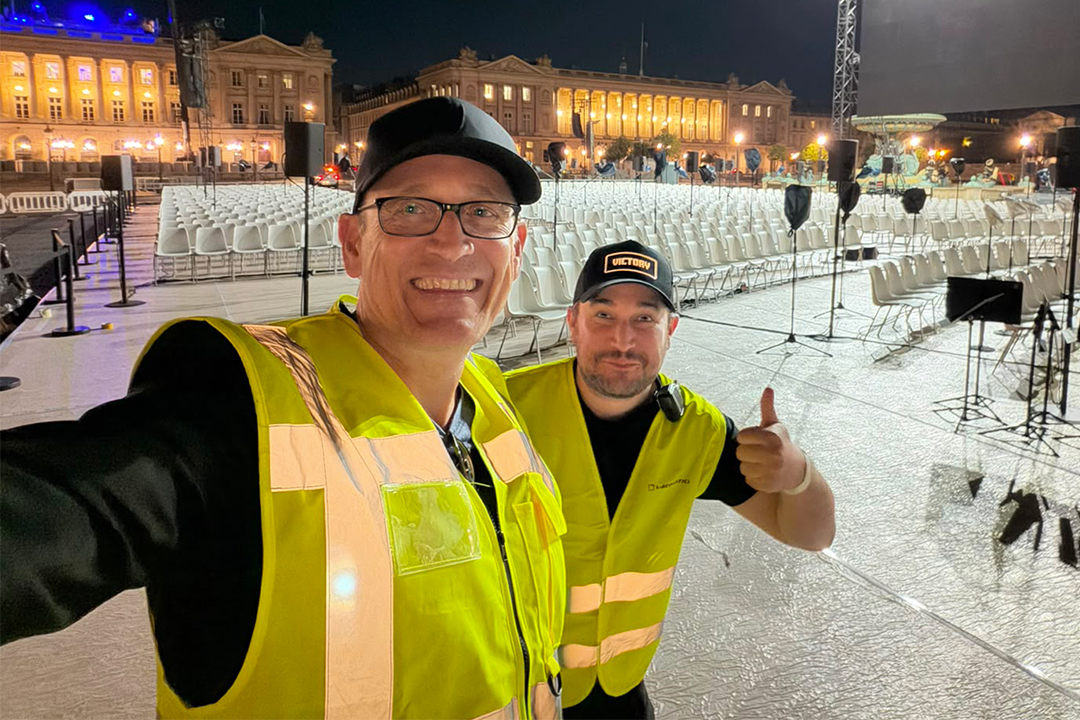
Hats off to Jean as well for the Pope’s impeccably reproduced voice and his precise, crystal-clear, beautifully reverberant mix of the choirs and orchestra. Even on replay, heavily data-compressed, it retains impressive scale and sound quality. And thanks to Nico for remaining unnoticed while serving the choirs, musicians, and liturgical area so well. Congratulations, finally, to all the women and men on the technical crews who made this event possible.
One final word for Leo XIV. A Pope has a unique spiritual mission, but he’s still a human being like anyone else. We wish him a speedy recovery.
Place de la Concorde – PA / Stage Crew
Vincent Bezault
Yoann Donati
Joris Valet
Eric Bridon
Jean Marie Soler
Bastien Frisquet
Mika Gardret
Alexi Poirier
Gwen Dommenget
Champs-Élysées – PA Crew
Matthieu Rodes
Julien Offrete
Nathan Manceau
Thibault Fontanive
Baptiste Pinon
Yann Chollet
Nicolas Cezac
Julien Nicolet
Vincent Pruvost
Marius Nau
Adrien Companio
Corentin Duminy
Enzo Gomez
Arnaud Fernandes
Frantz Domoison
Network Distribution Crew
Thomas Herbin
Jérémy Czaicki
Pierre Ulian
Baptiste Coin
Alexis Delpech
Lexis Delpech
Gwenn Kerneur
Eric Quillot
Kevin Dupont
Théophile Thomassin