
Projency is the bold bet of Terry Di Isernia, former product manager at Robe and Avolites. He tells us about his departure, his first projects, and why AI is about to shake up our entire industry.
Projency is a new company specialising in design and artistic coordination (the name is a play on “agency” and “project”). Founded by Terry Di Isernia, formerly product manager at Robe and Avolites, it aims to carve out a market segment built on innovative solutions that make use of the latest tools on the market, including those driven by AI. He tells us more in a video interview.
SLU : Won’t it be difficult to get back to the technical side after seven years away, given that you were most recently focused on technical sales at Robe?
Terry Di Isernia : Whether at Innport or at Robe, I never fully let go of the field. I kept working on small events at weekends or during my holidays. As I turned down more and more projects, I eventually had to make a choice, and I went back to the idea of building a skilled, tight-knit team and adding an artistic design layer on top. The company is called Projency, a play on “agency” and “project”. The idea is simple: it’s a design and artistic coordination company.
SLU : What do you offer that other design companies don’t?
Terry : Our goal is to run a project that goes smoothly across live shows, corporate events and festivals. We focus on the visual side, meaning lighting, video, special effects and lasers, so we can deliver a complete picture in which all of these elements are properly synchronised, thanks to the creative and preparatory work done upstream. What’s more, achieving a coherent result that lives up to today’s expectations is difficult when schedules are tight and you don’t know the crew. For me, the chemistry between the operator and the designer is central, and it’s what allows us to deliver a high level of quality.
SLU : How did you come to this idea?
Terry Di Isernia : When I started out in the technical field as an intermittent du spectacle (a freelance performing-arts technician), we talked about setting up a company with colleagues, after noticing that a small, well-drilled team of three to five people was more efficient than a group of professionals meeting for the first time that same morning. In the end, whatever the size of the project, being used to working together year-round, getting along, and sharing common processes lets you move faster and communicate with little more than a glance. That synergy saves us time and energy and lets us get the same result with a smaller crew.
SLU : What are the stages that structure your relationship with clients?
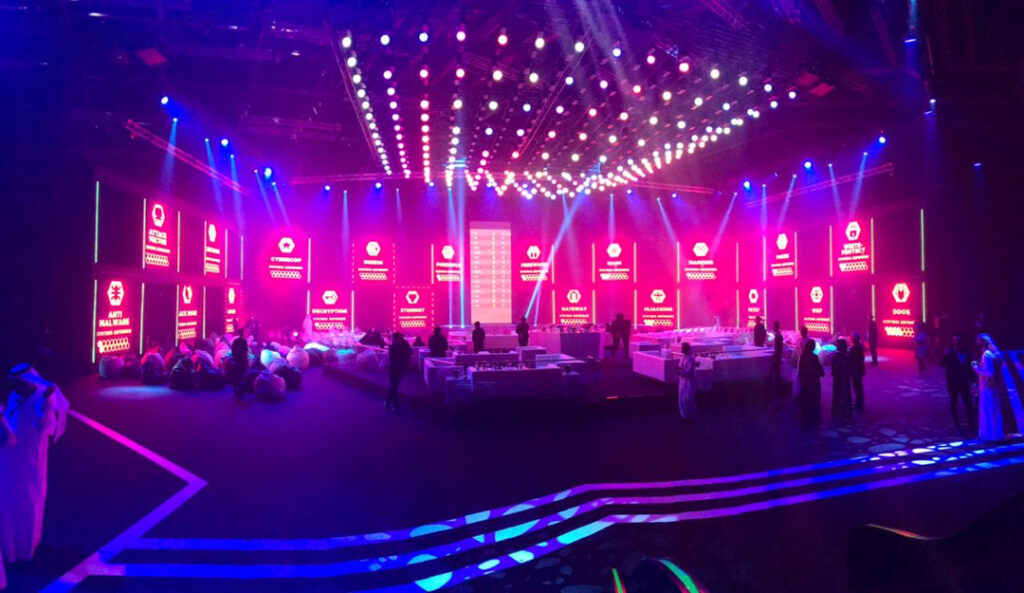
Terry Di Isernia : Traditionally, we start by gathering the objectives and vision of the team bringing us the project. We then develop a design, including the layout of fixtures, video and so on, to work out the lighting for a first look. Once that work is approved by our client (the production company or the rental supplier, depending on the situation), we start on the 2D plans and the 3D visualisation. From there we move on to lighting and video programming, right through to the on-site install, where our crew makes sure everything runs correctly, all the way to the show itself and the strike. Staying until the very end matters to us.
SLU : Is your remit also meant to cover technical direction on projects?
Terry Di Isernia : It’s an approach I’ve considered, and while some members of the team do have those skills, it remains a complex discipline. I’d rather we concentrate on the artistic side and rely on professional technical directors to sign off the plans. That said, the fact that we’re trained in those areas will make things easier.
From festivals to video mapping integration, Projency is racking up the projects
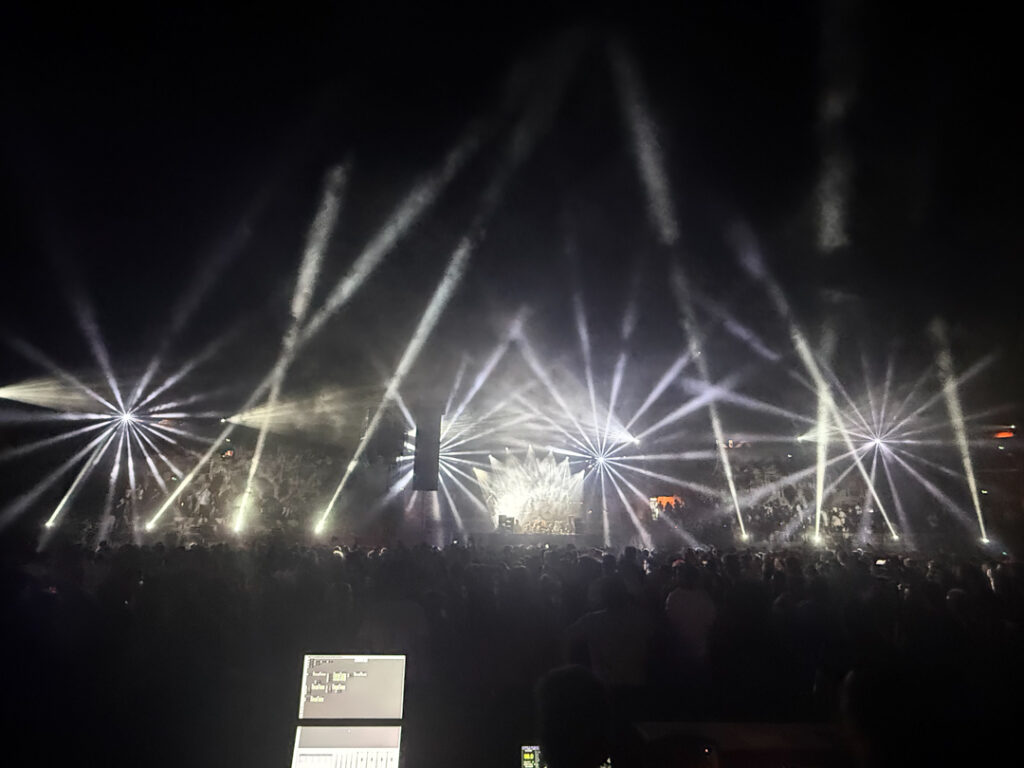
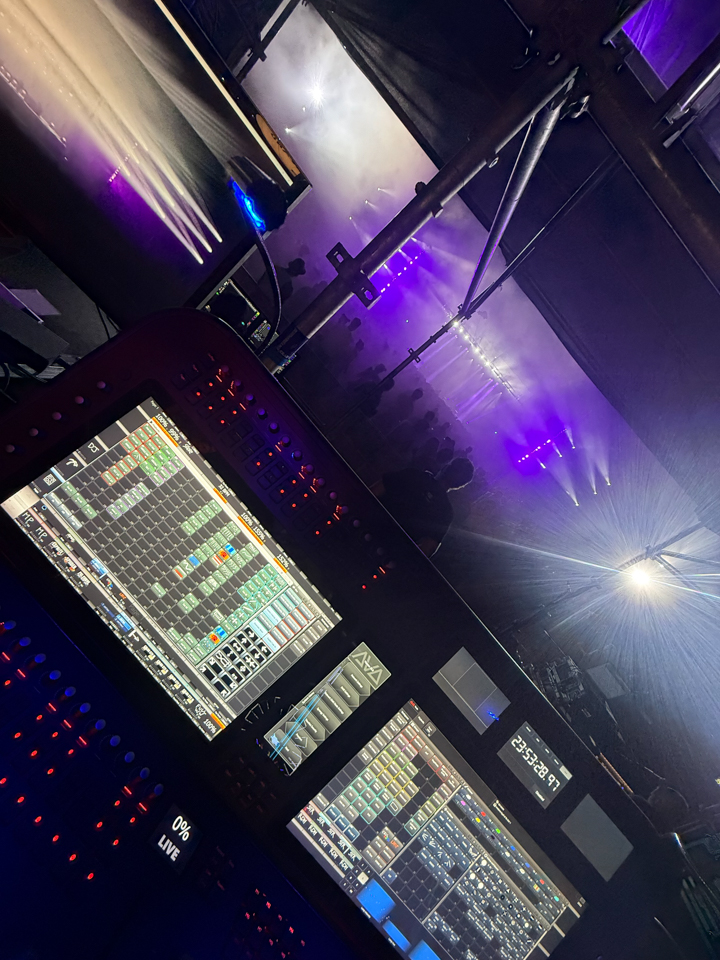
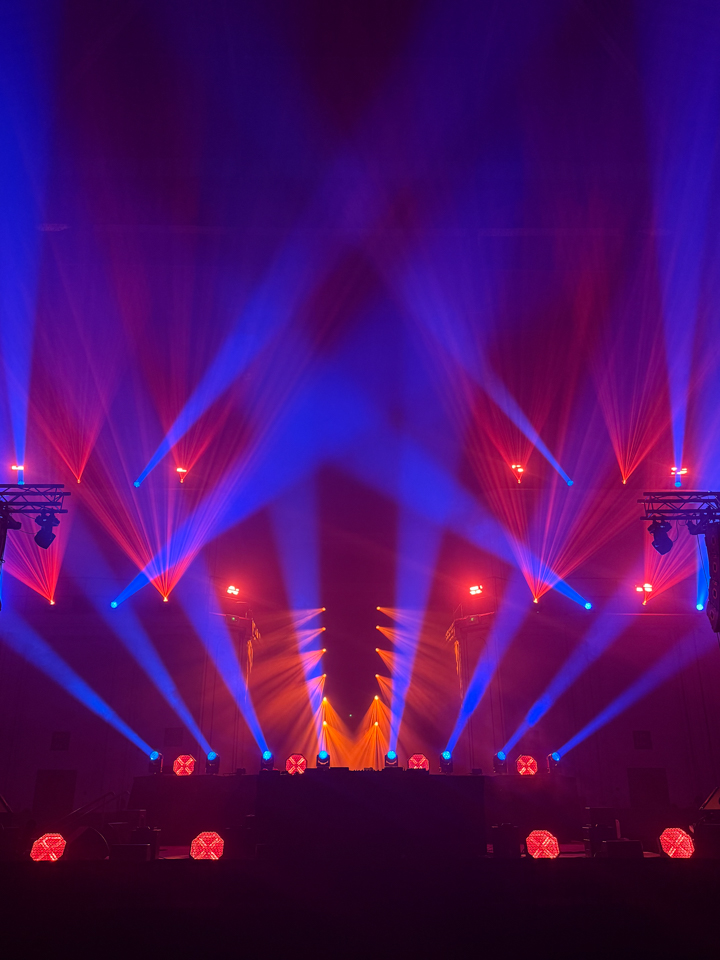
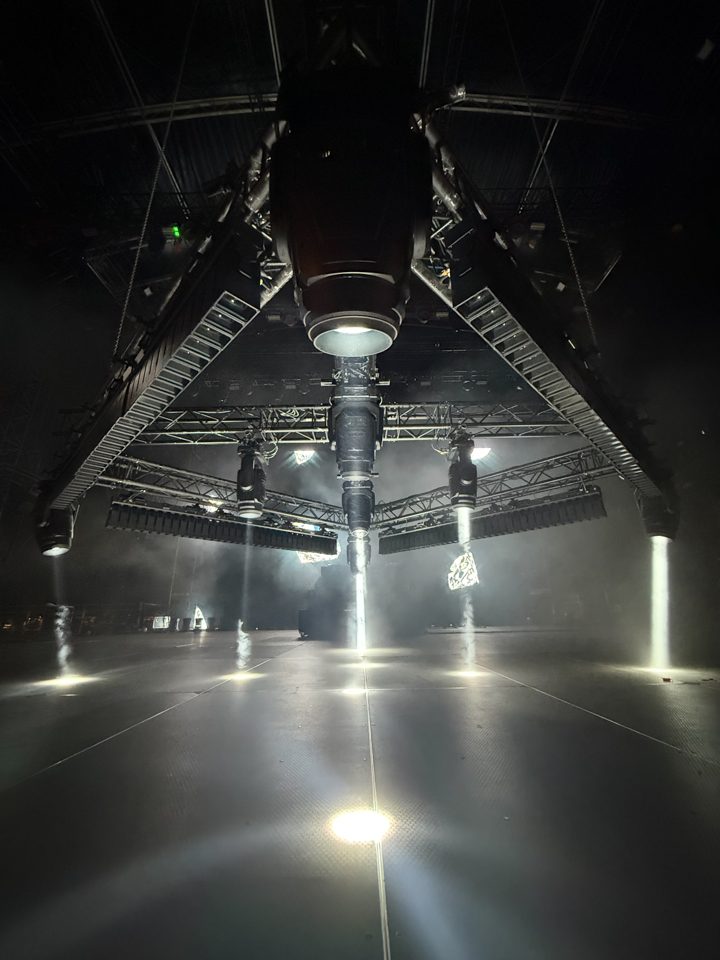
Whether it’s for the management of the welcome area at a festival. An LED strip integration for the DJ booth of the famous French club Amnésia in Cap d’Agde, Projency has already earned its stripes and can boast a few fine feathers in its cap. Terry explains: “We kicked off over the summer with the Azura Festival in the south of France, where we welcomed Jul, Maître Gims and Théodora on a substantial stage.”
SLU : Which roles did you cover on this project?
Terry Di Isernia : We handled the lighting design, the lighting plots, lighting direction and the coordination of the crews, so that the build went smoothly and matched what had been set out in the preparatory study and the visuals that came out of it. We also looked after the console for the evening shows. Overall it was a big job, but there have been others.
SLU : Such as what, for example?
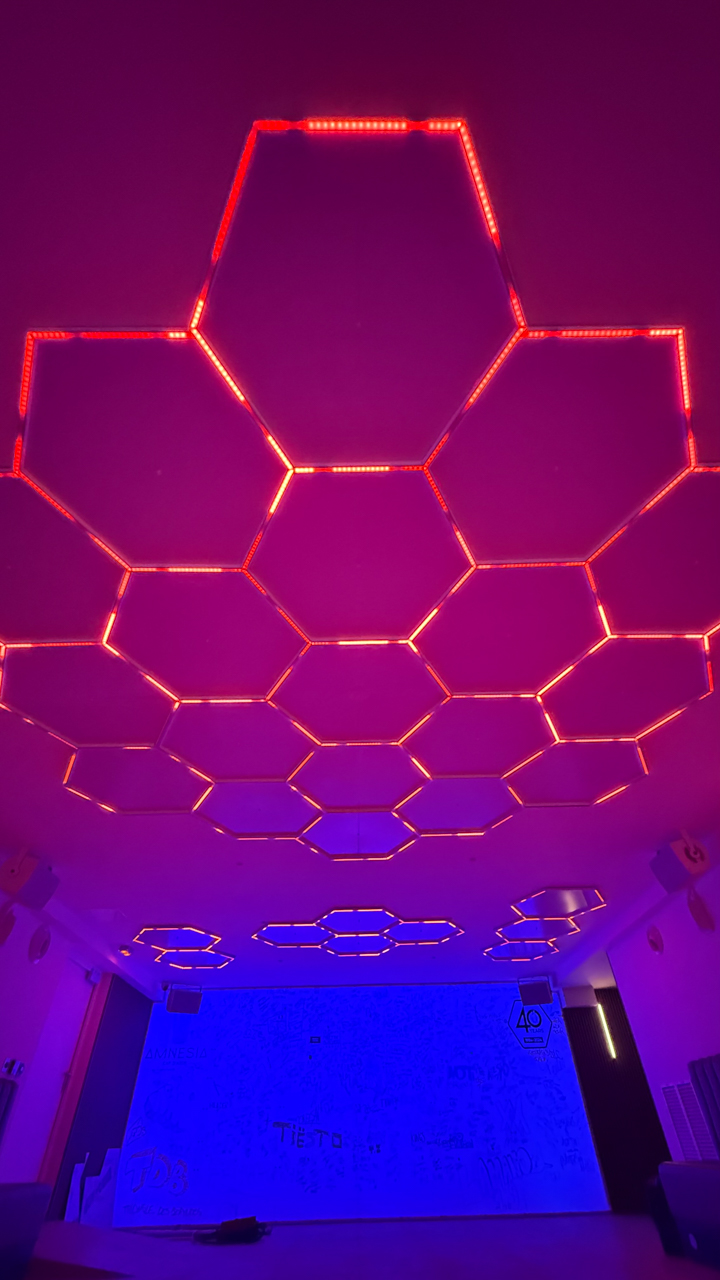
Terry Di Isernia : We handled the integration of an LED strip across the entire ceiling of the Amnésia DJ booth, which is actually a sort of VIP+ area. The strips are controlled via video mapping using pixel-mappable Visual Production products.
SLU : What did you particularly enjoy about this project?
Terry Di Isernia : These are large booths, and LED strip means a huge number of universes. We designed and programmed it with a video playback unit, the MiniMad, which is dedicated to video mapping and hidden in the false ceiling. We were also on hand for the installation and cabling of the Visual Production products, their LED driver and the wall controller. All the user has to do is send the video they want at the push of a button. It avoids having a computer in the room and gives a clean result. It was a great project to work on.
Six technicians and a studio to think big
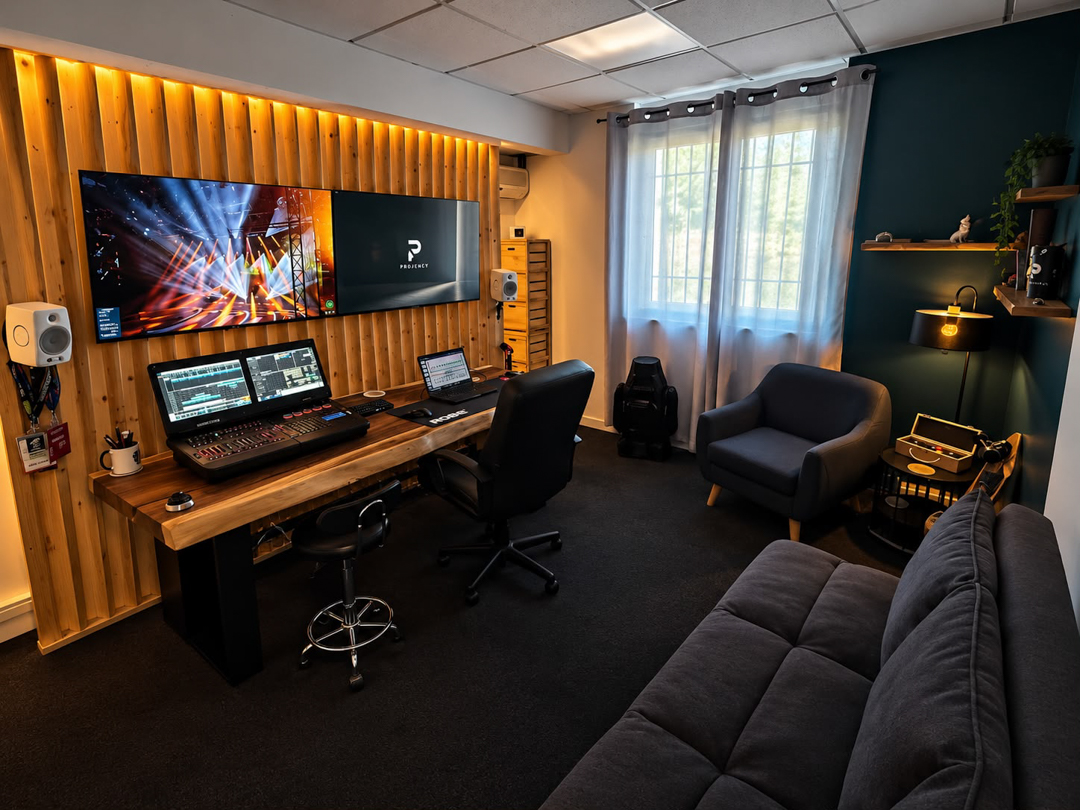
The team is made up of six freelance technicians and operators on annual contracts, forming a core skills base that lets Projency take on any type of request, though the ambition is still to keep moving upmarket.
SLU : How are you set up legally, and will Projency build a pool of technicians to work with over the long term?
Terry Di Isernia : On the administrative side, I’m currently the sole founder. I’m surrounded by six technicians or operators, all freelance, with complementary skills in lighting, video, networking and special effects. We work within a subcontracting framework with annual contracts. The idea from here is to raise the team’s skill level through two layers of training: first, knowledge sharing between the more and less experienced, depending on the discipline; then training sessions that I’ll put at the team’s disposal. The goal is for everyone to grow and take on increasingly complex projects with the latest tools.
SLU : Are you currently recruiting?
Terry Di Isernia : Not for now, we’re still in the phase of prospecting for projects. But depending on the pace and scale of our goals, we’ll grow the team. That’s part of the fun, too.
SLU : What tools have you invested in, and which consoles do you work with?
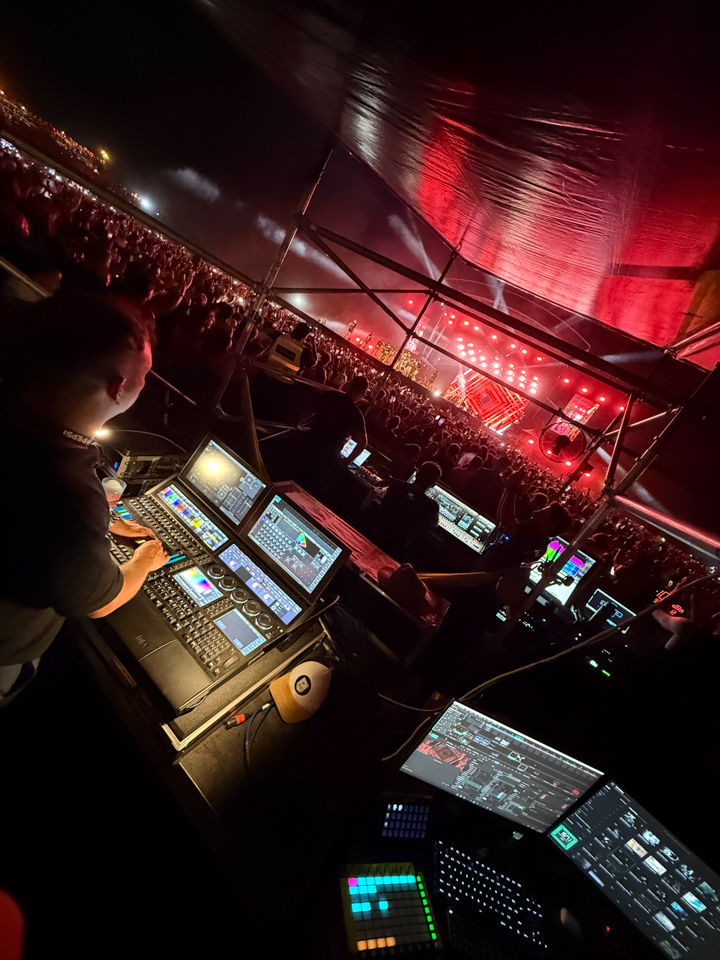
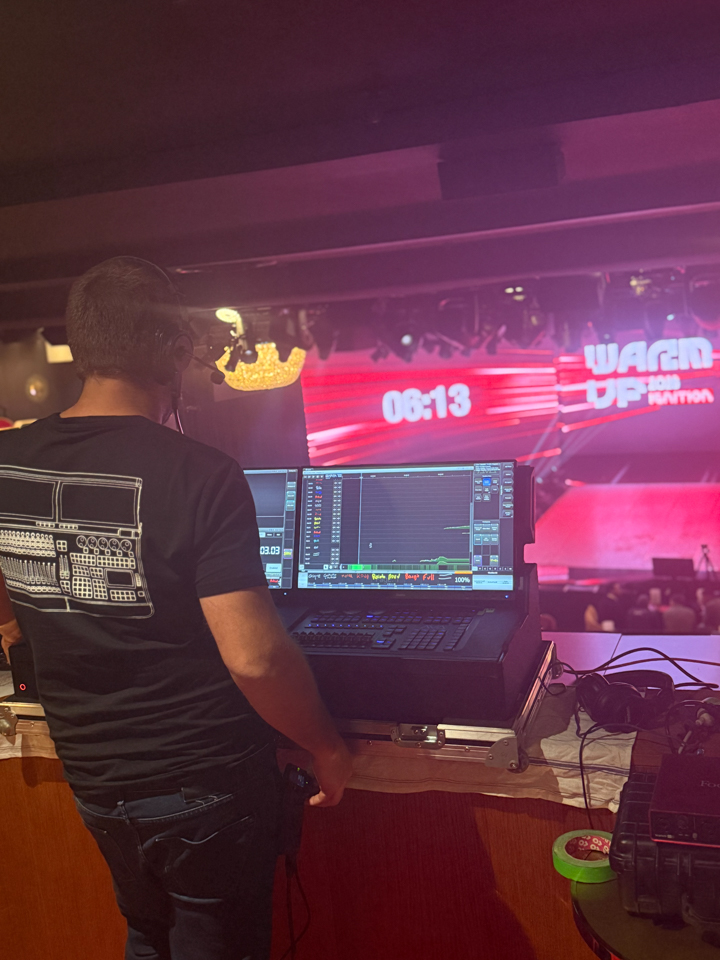
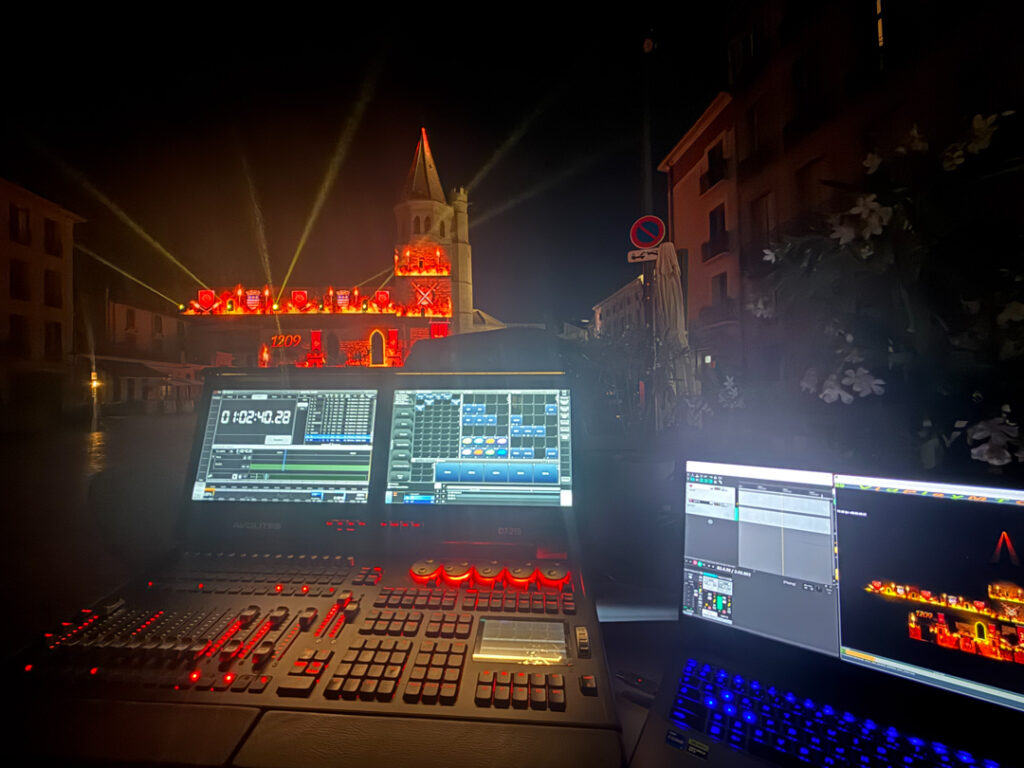
Terry Di Isernia : We already have a programming and 3D visualisation studio near Montpellier. It’s equipped with several monitors and media servers for everything 2D and 3D: programming, previsualisation, and inviting our clients in to see the renders. We don’t have a favourite console, although personally I still operate on Avolites. Anthony Ahunon, who’s part of the team, is also a very good Avolites operator. That brand of console has a special place at Projency, but we’re also equipped with MA Lighting and ChamSys. For media servers, we have Avolites, Resolume and MadMapper. On the 3D side, we use Depence, Vectorworks and Capture.
SLU : Why use so many different tools?
Terry Di Isernia : If a project is technically more demanding in terms of precision, we’ll go for Vectorworks, which is very useful for structure, rigging and loading. For an aesthetic render, Depence is the preferred choice. Finally, Capture is our everyday tool, given its very versatile philosophy.
SLU : Where is your studio based? Can it be made available to people who’d like to work with you?
Terry Di Isernia : In Frontignan, next to Montpellier. It’s easily reached by train and plane. It could be made available depending on scheduling, so don’t hesitate to get in touch and we can definitely consider it.
Leaving on good terms is the hardest part
Terry, one of the faces of Robe Lighting France, who worked across the southern half of the country and into North Africa depending on the project, makes no secret of how emotional it was to leave the company. “The departures that go well are the hardest, and it would almost have been easier if someone had slammed the door (laughs). On a more serious note, I thank the whole team for understanding my choice to launch this project and for supporting me through my departure.”
SLU : Who will replace you now that you’ve left?
Terry Di Isernia : I’m staying close to them, kept up to date on all the new products, and I’ll support them on certain operations depending on their needs. Vincent Bouquet has taken over part of my role. The sales reps have also trained up so they can present the consoles autonomously. The after-sales team is also fully competent on these products, and I have no doubt that Avolites will go well in France. I think Robe can still push the brand further, and I’m keeping a close eye on it.
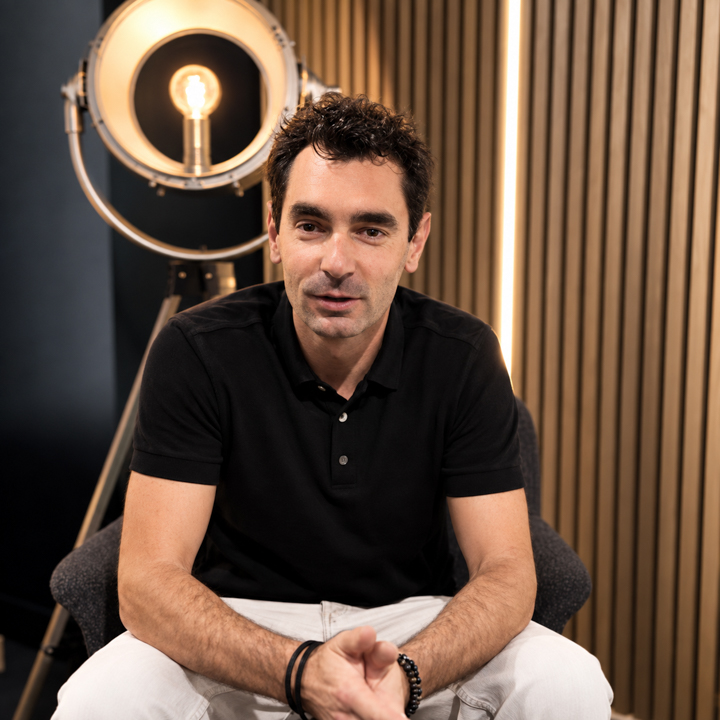
Terry Di Isernia grew up in the world of music and live entertainment, which he came into contact with very early on by accompanying his father. Self-taught from middle school onwards, he studied by correspondence, then from 16 to 18 chose to go straight into the events industry, taking a distance-learning course in sound reinforcement and electronics. This set-up allowed him to rack up professional experience over two years with companies in his region, and to work on professional sites from the age of 18.
At around 19, he took out his first loan to buy a Hog lighting console. He then spent a full year mastering it inside out, English manual in hand, while continuing to work as a lighting technician. He went on to become an operator, working on concerts, festivals and events such as the Fête des Lumières in Lyon, as well as projects in the Middle East, including French Business Council galas in the UAE and building lighting in Saudi Arabia. His career also took him into rigging and technical management.
He then moved into sales, becoming a technical sales rep at Innport (an Asset company) specialising in LED lighting for film and audiovisual, where he looked after the south of France for almost three years. In 2019, he joined Robe as regional manager for the southern half of France, with occasional trips to North Africa. There he handled demonstrations, technical support and customer follow-up, and built up a solid network of lighting designers and rental companies.
When Robe acquired the Avolites console brand, he proposed to Bruno Garros, managing director of Robe France, that he take charge of developing and distributing the Avolites range in France. This allowed him to get back to programming and extend his territory to the whole country. Today, with the Robe team now autonomous, he is handing over the reins while continuing to collaborate with them on certain operations. He will notably be on the Robe stand at JTSE to run demonstrations. “I’ll be there as backup. We get along well, and my departure went very smoothly. There’s no reason we can’t keep working together on certain assignments.”
AI: an unavoidable technology, for better and for worse
AI, he says plainly, will become unavoidable and will let us come up with solutions very quickly. Despite its destructive power, the benefits will far outweigh the drawbacks. He explains: “It’s a subject I’m passionate about, because I’m keen to anticipate what’s coming, for myself and for my son too. But before going further, I’d like to say that the job itself has become more complex over time. That’s one of the reasons I’m setting up Projency and want the team to build up its skills, so we stay current with innovation.
You have to be able to tell, when something doesn’t work, whether the problem comes from the network, the programming or the install. With the growing number of tour dates and day-of installs, preparation becomes essential, and AI, in this technology race in our industry, is a new milestone. For me, it’s the most powerful tool humans have ever had at their disposal. It will do an enormous amount of good and just as much damage, and it’s extremely broad in scope. It’s a revolution, because it can be useful for programming, creative work, tech rider analysis, straightforward assistant work, code and new plug-ins.
For example, I coded the Projency.fr website 99% with AI, in a single day. That would never have been possible before, and it proves that limits are coming down, apart from the time we all have. We’ll be able to code plenty of time-saving tools, for even the smallest problem. I sometimes want to code a new tool I need and it would take me three or four days, but unfortunately I have less and less time to do it.”
SLU : It’s true that with these tools we’re moving from specialised trades to multi-hat profiles.
Terry Di Isernia : Absolutely. With AI, you can address every stage of the design process, right through to the network diagram. It’s essential, especially for getting a clear picture of complex rigs. That said, you have to keep in mind that AI can be messy, and it has to be checked, tested and approved before it’s operational, which also takes a lot of time. But once again, it will remove the limits on the software side. After that, we’ll still be needed for hardware, for thinking and for the artistic side. We’re at the beginning, and I think a lot of innovation is coming for consoles and media servers, especially as very few of them integrate AI yet, if any.
SLU : Do you see any concrete stages that could be sped up with AI?
Terry Di Isernia : Today I’m working on Place de la Concorde, lighting the Pope’s visit at the end of the week. I spent an hour setting up the console the way I wanted so the fixtures would respond properly, and I still haven’t been able to start programming. Yet those fixture movements are simple maths: sine waves, tangents and offsets. It seems basic, but these time-consuming steps are bound to disappear.
With Projency, Terry Di Isernia closes a seven-year chapter at Robe to get back to the field, this time with a tight-knit team, a fully equipped studio in Frontignan and an approach centred on design and artistic coordination. The first projects, from the Azura Festival to the Amnésia DJ booth, show that the young company can already handle large-scale productions as well as highly technical integrations. His departure from Robe was on good terms, and the collaboration will continue on certain operations, notably on the Robe stand at the various trade shows the brand attends.
As for the future, Terry takes a clear-eyed view: in his opinion, AI will be unavoidable and will save precious time, provided it is checked and supervised, and there will always be a need for people on hardware, creative thinking and the artistic side. It now remains for Projency to turn that promise into results and grow its team at the pace of its projects. A name to watch in the event lighting scene.
More information on the Projency website and social media:
– Projency
– Instagram
– Youtube
– Facebook
– TikTok
– Linkedin