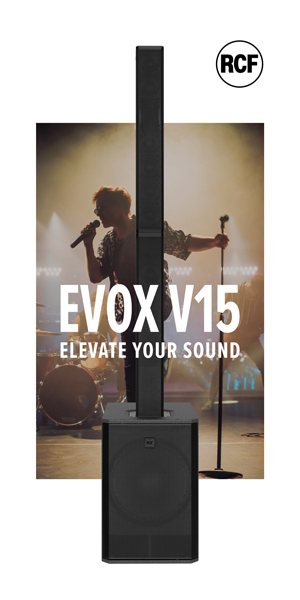

This year at ISE we were spoiled at the RCF & TT+ Audio booth as well as in their demo room, with the new 3-way Evox J9 and especially J11 columns, and the compact cardioid line-array system GTX 7C with its cardioid sub GTS 16C, which is making a strong move into the integration and touring markets for small and medium venues that are difficult to cover.
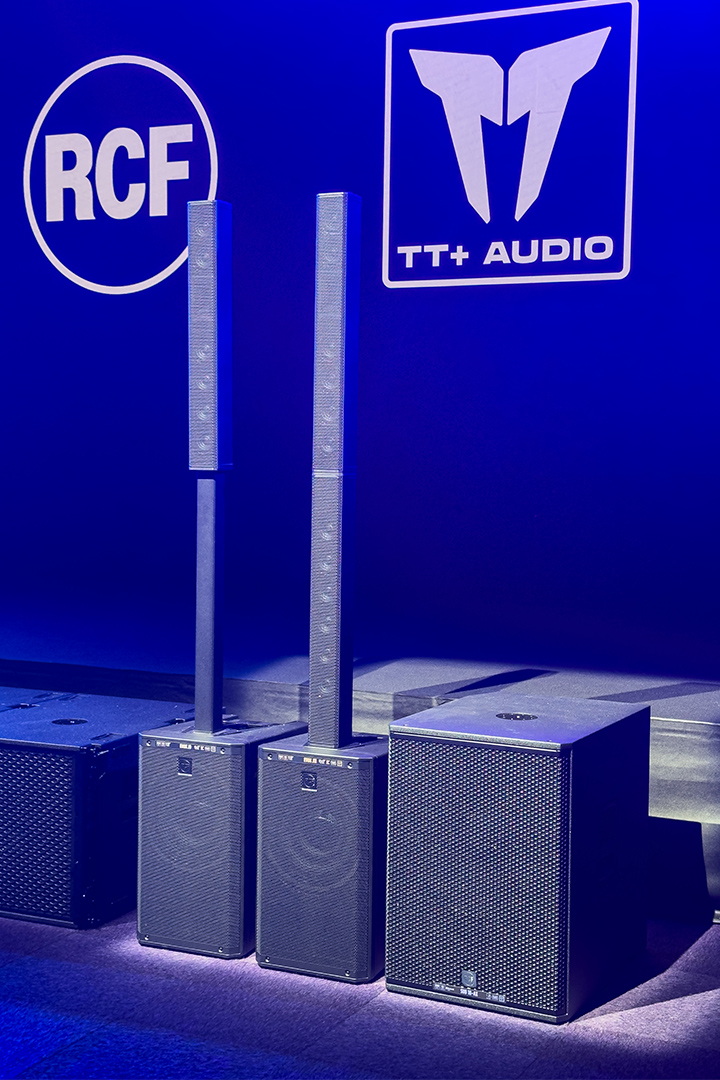
EVOX J9 & J11
The J9 and J11 renew the Evox series, but above all they use new components and amplifiers, along with the full range of modern solutions found in the Italian manufacturer’s high-end models.
This includes low-frequency excursion management via the Bass Motion Control algorithm, as well as linear-phase, low-latency FIRPHASE filtering between the low and mid/high sections.
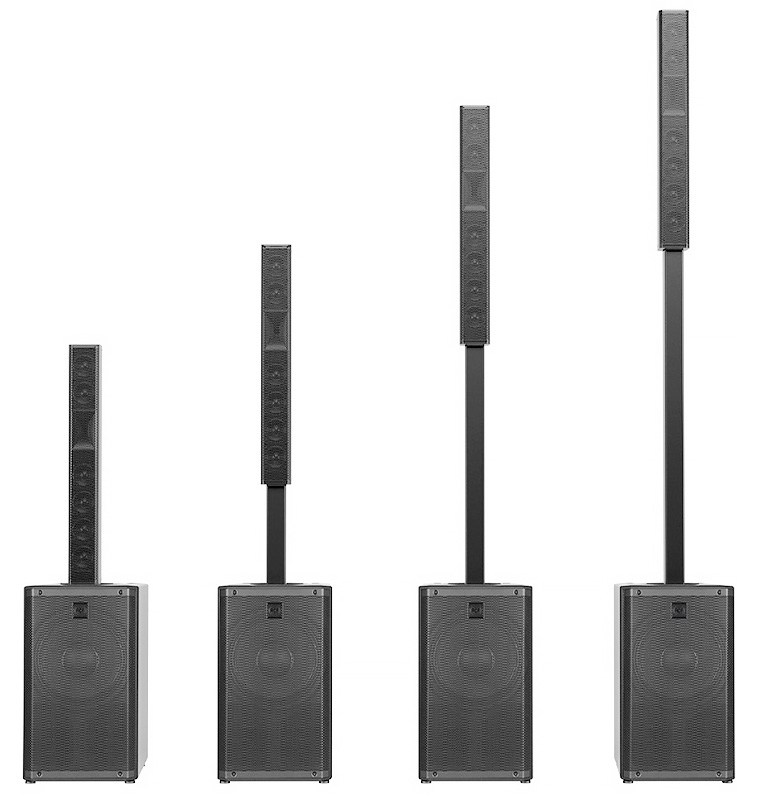
Both the J9 and J11 feature a 12” woofer housed in a composite cabinet, which also contains amplification and processing, and in the JMIX9 version, an 8-channel digital mixer with mic and line inputs.
Peak power (summing both channels) is 2,100 W for the J9 and 3,500 W for the J11. The difference between the two models is not limited to power, but also to the number of 3” neodymium midrange drivers in the column.
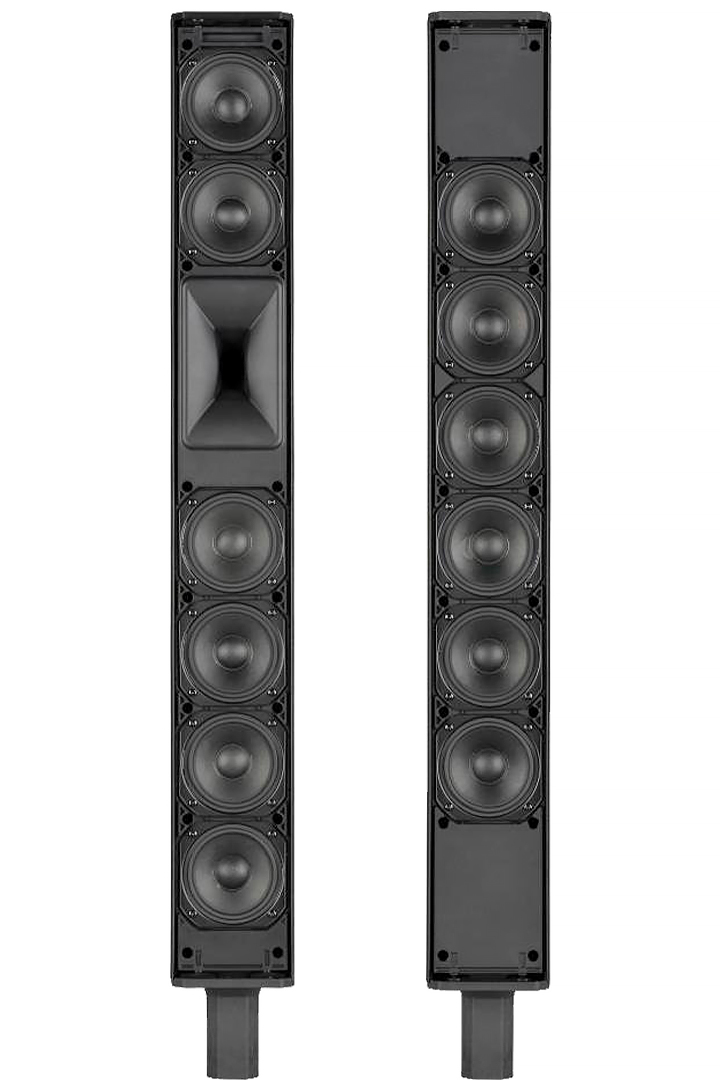
For the J9 there are six 3” mids; for the J11 there are twelve. Both columns also feature a 1.75” Kapton dome neodymium compression driver with a TRW waveguide offering 120° x 40° dispersion. Active crossover between the 12” and the mid/high section is set at 160 Hz. The HF driver takes over at 1.8 kHz via a passive filter.
This 3-way configuration allows the midrange drivers to operate in their optimal frequency band and leaves the highs to the compression driver, resulting in better projection and dispersion and significantly lower distortion in the upper spectrum.
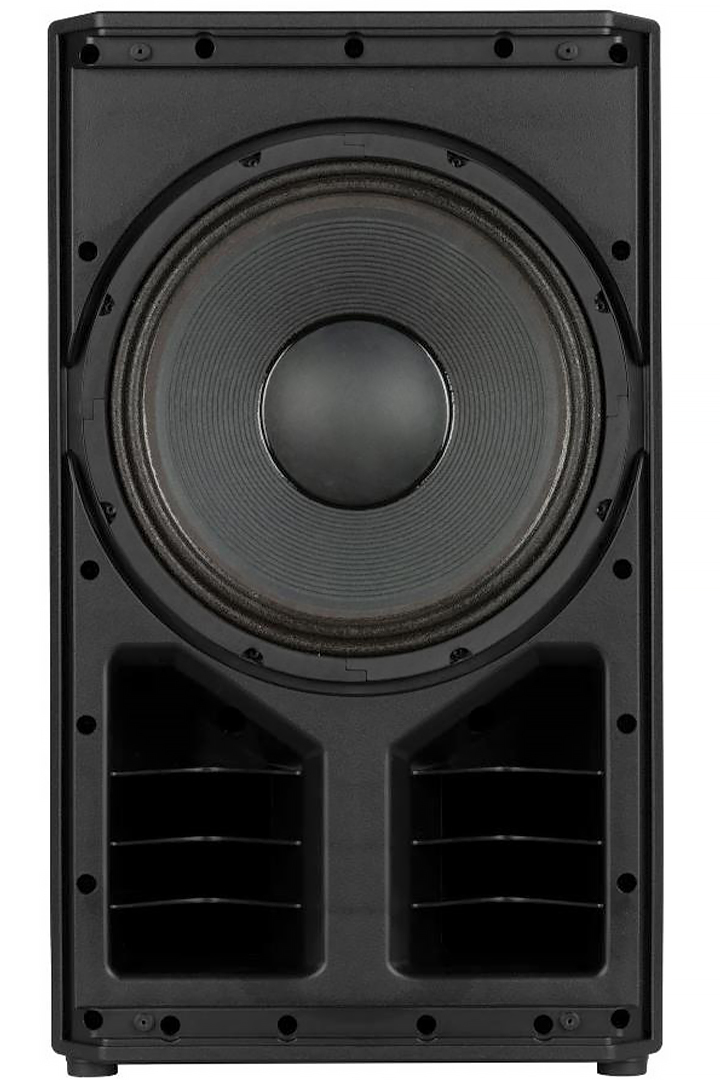
Frequency response is wide on both models: according to manufacturer data, 40 Hz to 20 kHz for the J9 and down to 37 Hz for the J11. Maximum SPL reaches 130 dB and 132 dB for the J11. We will revisit these usually optimistic figures, because subjectively these columns really produce a lot of sound.
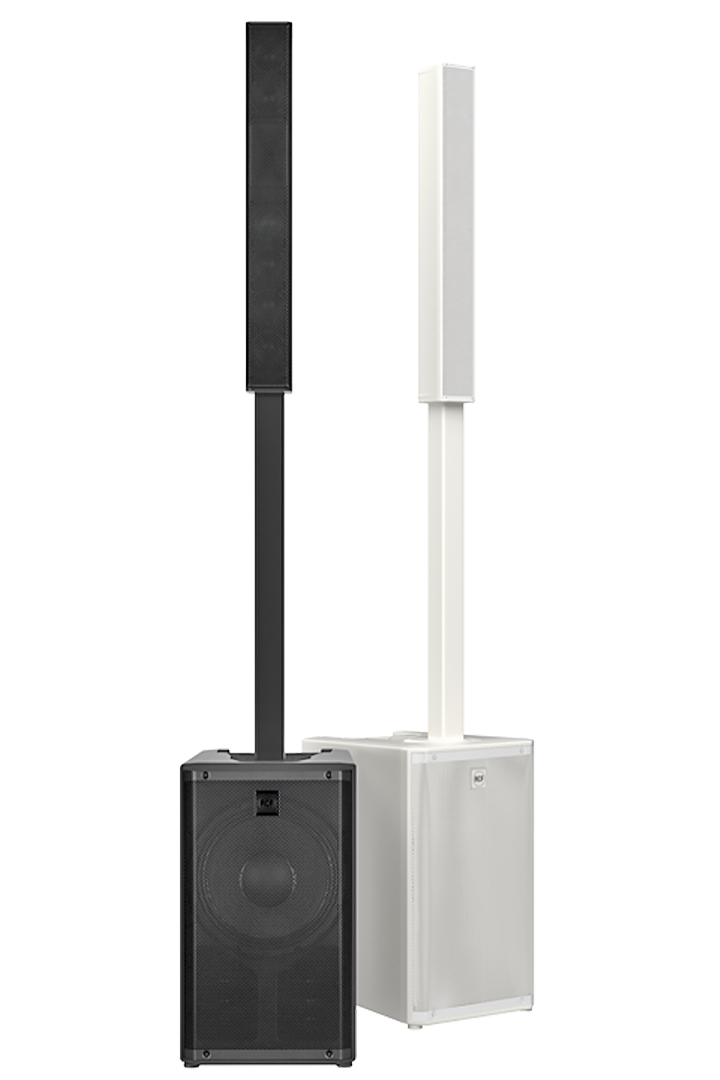
Both models have the same height, but the J9 includes an aluminum pole to raise the active section, while the J11 uses drivers over the entire height. If needed, both models offer a half-pole spacer so the speaker can be placed on the floor with the HF driver at ear level or slightly above.
Both systems are available in black and white and come with a transport cover. Finally, both models are now available for sale.
Stay tuned for our listening report. We were blown away.
.
GTX 7C and GTS 16C
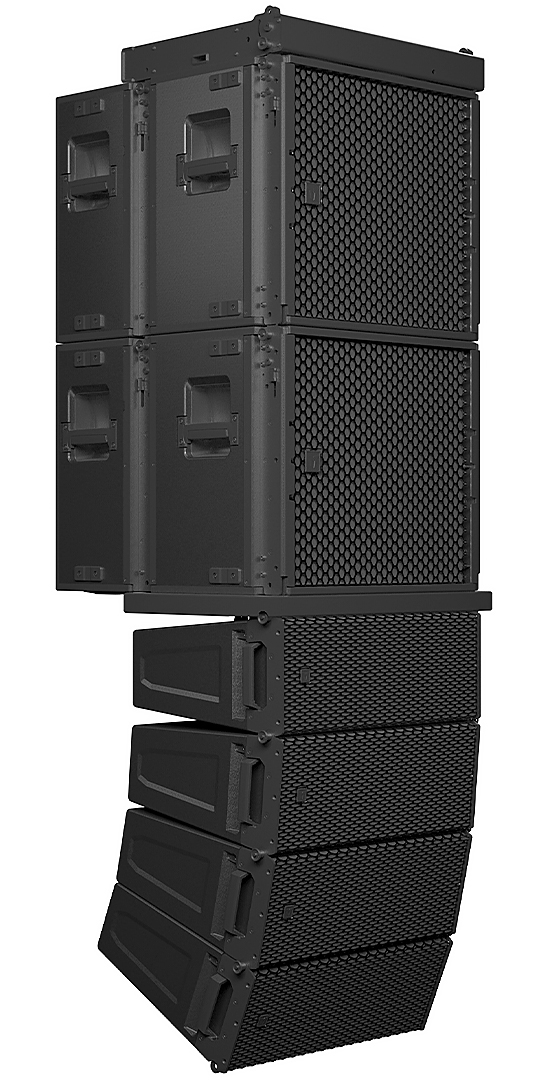
Announced at last year’s ISE, this new system is now fully operational and available. Compact despite its SPL and the technology implemented, the GTX 7C operates with its dedicated cardioid low-frequency reinforcement, the GTS 16C.
Equipped with two 7” drivers and a 3” titanium dome compression driver, the GTX 7C also features two 5.5” drivers radiating exclusively to the rear.
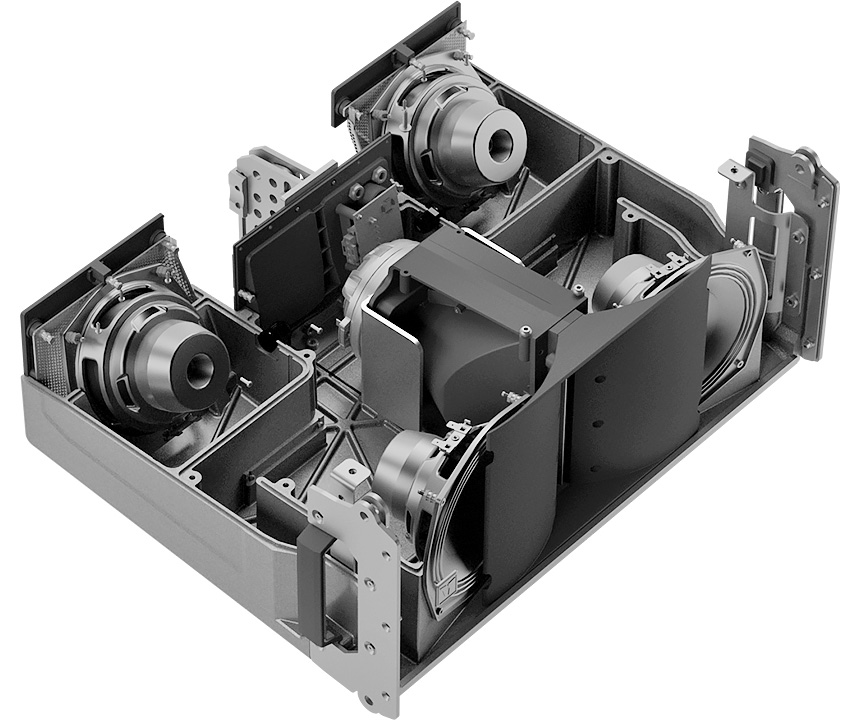
All five drivers, neodymium and specifically designed by RCF engineers for this enclosure, use two channels of the XPS 16K amplifier: one for the front (with a passive crossover for the HF at 800 Hz) and one for the rear, with the possibility of connecting up to four cabinets in parallel.
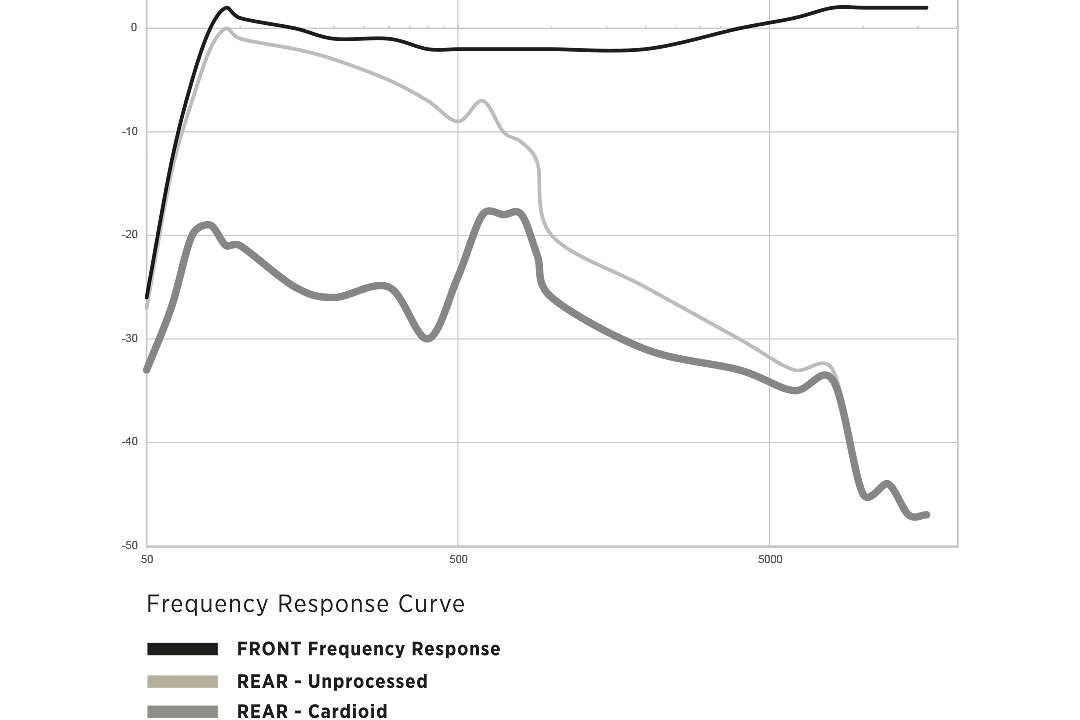
Maximum SPL reaches 140 dB despite 120° x 10° dispersion, with frequency response extending below 50 Hz and above 20 kHz at -10 dB.
Weight remains moderate at 24.5 kg thanks to the composite cabinet.
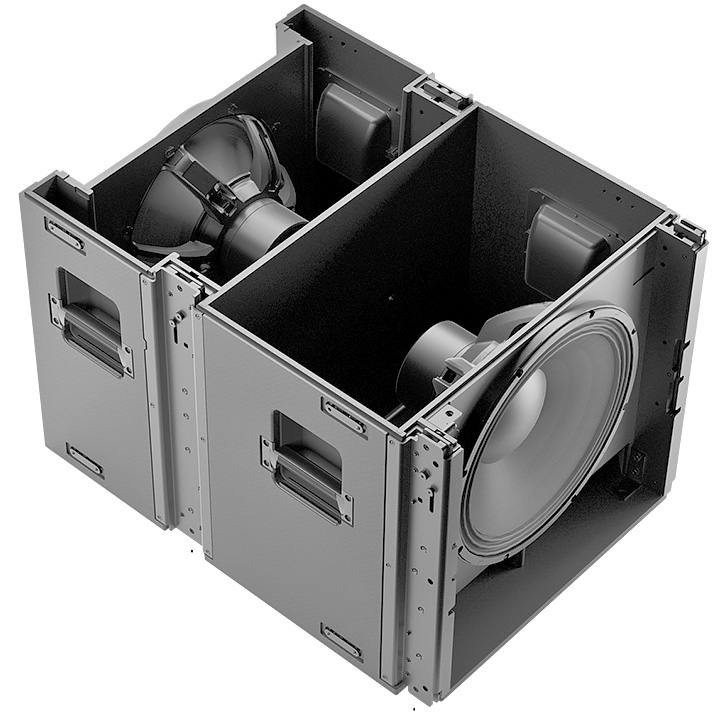
The GTS 16C sub shares the same width as the top cabinet for easier rigging and returns to plywood construction, weighing 73 kg.
It is equipped with two drivers: a front 16” and a rear 14”, optimized dimensions providing sufficient extension while maintaining strong impact thanks to relatively “small” moving masses but with 4” voice coils.
As Antonio Ferri reminded us while detailing these products, the R&D department requested unconventional sizes and RCF’s loudspeaker factory developed them on demand.
Powered by its four 4 kW modules, the XPS 16K touring amplifier from RCF and TT+ Audio can drive up to three subs in parallel on two channels, with rear rejection up to 30 dB at certain frequencies thanks to specific algorithms. Maximum SPL is rated at 137 dB, with usable bandwidth from 25 Hz to 200 Hz at -10 dB.
XPS 4K
Also appearing in the RCF catalog and derived from the XPS 16K model, the XPS 4K platform is a DSP power amplifier, four channels in a high-density 2U format, delivering 4 × 1,000 W continuous power at 4 Ω, with 96 kHz audio processing and extended routing capabilities, designed for demanding touring and fixed installation applications at lower power and cost.
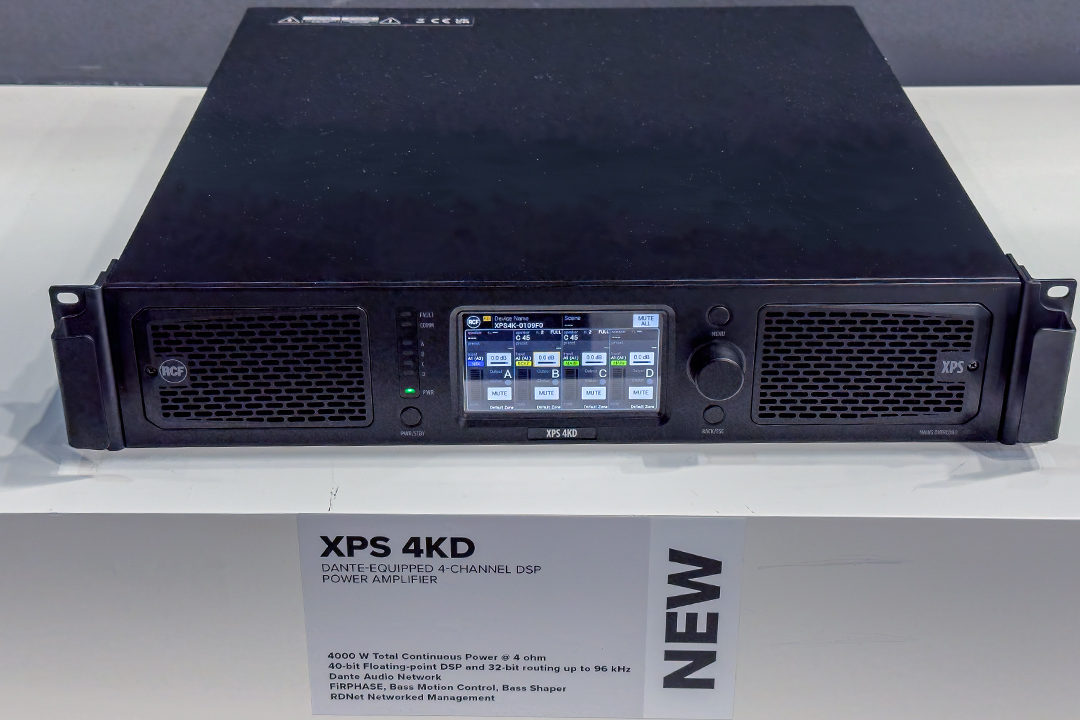
The onboard interface and RDNet remote management enable simplified optimization, supervision, and scalable deployment, while the XPS 4KD version integrates Dante compatibility for AoIP integration. This new amplifier is expected in Q2 2026.
.
KPS & X-Series
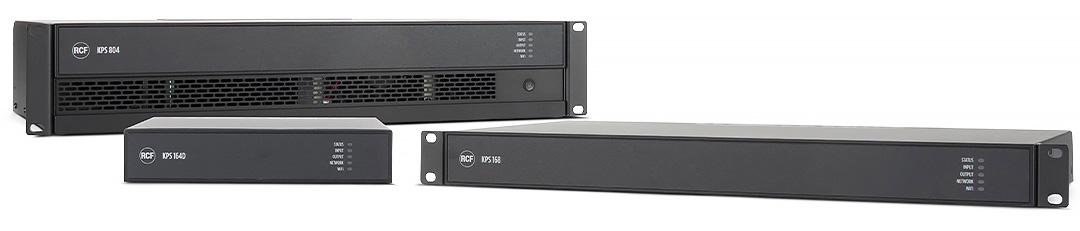
For installation, RCF highlights the KPS series power amplifiers, designed for modern venues requiring high power density, advanced DSP, and great operational flexibility, as well as the IP-certified X Series loudspeakers for arenas, stadiums, sports complexes, theme parks, and outdoor hospitality areas. The KPX and X-Series are available.
KX-Series
Finally, RCF presents two new additions to the KX series, two wedges: the KXM 20-A, equipped with two 8” woofers and a 3” compression driver on a 90° x 70° constant-directivity waveguide, powered by dual amplification totaling 2,000 W peak; and the KXM 25-A, a 15” coaxial floor monitor with a 2.5” compression driver, 60° x 60° constant-directivity waveguide, and dual amplifier modules totaling 3,200 W peak.
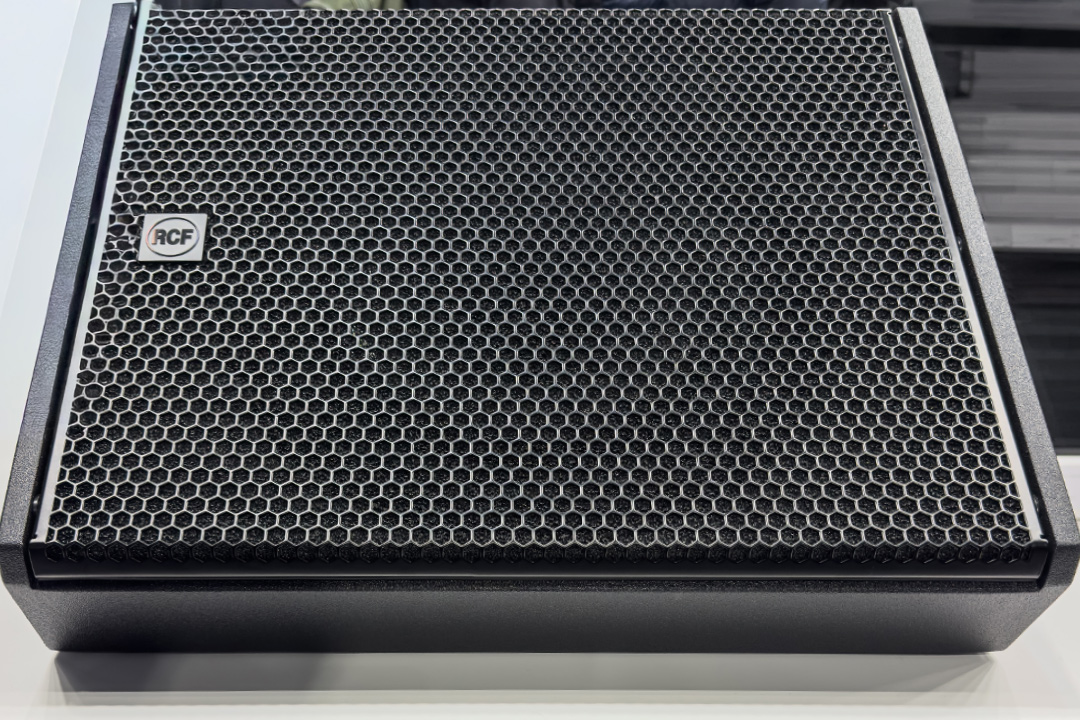
Designed for high-level reproduction (137 dB SPL for the 15” and 131 dB SPL for the smaller model), they feature touring-ready mechanical design, next-generation DSP, ACE compatibility for subwoofer + full-range configurations, and full RDNet control. Both wedges will be available in Q2 2026.
Low-frequency reinforcement for portable and flexible deployments is provided by the new active SUB 15-AS and SUB 18-AS subwoofers, developed to deliver powerful, controlled bass thanks to integrated DSP. The SUB 18-AS was deployed in the demo auditorium to complement the EVOX J11 column. Successfully.
Listening
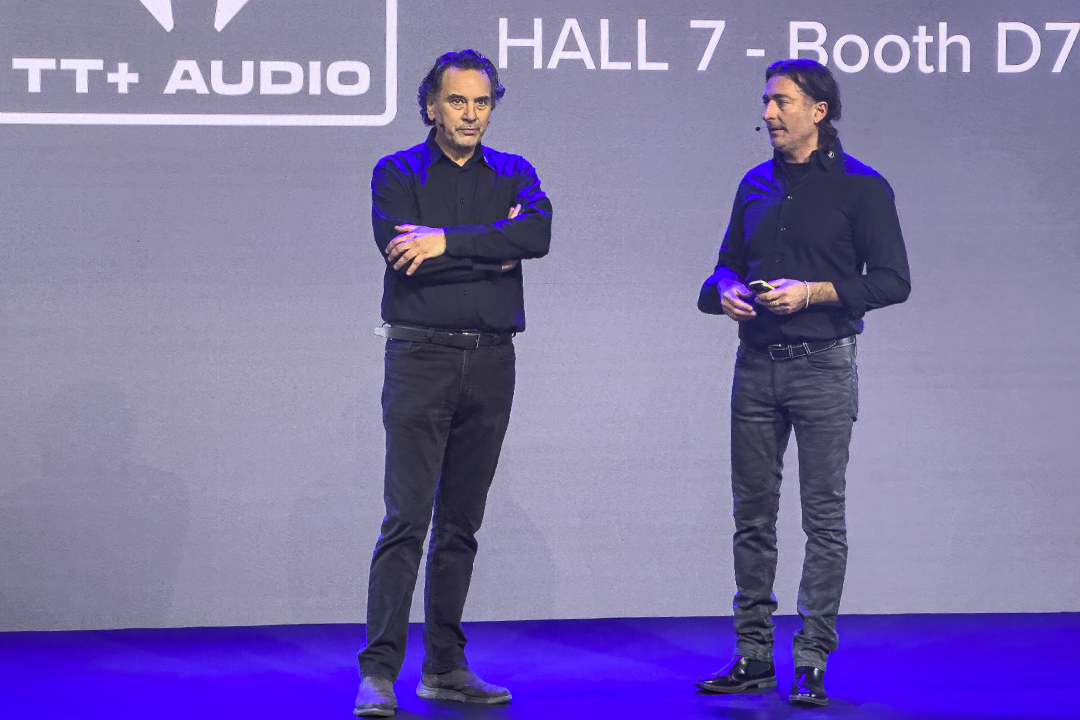
RCF and TT+ Audio once again benefited at ISE from a large demo studio located in Hall 8, allowing products to be experienced at near-operational levels, sometimes even into limiting, with sessions led by Lucio Boiardi Serri and Emanuele Morlini, seasoned product specialists from the field, with systems tuned by Zachary Anthony.
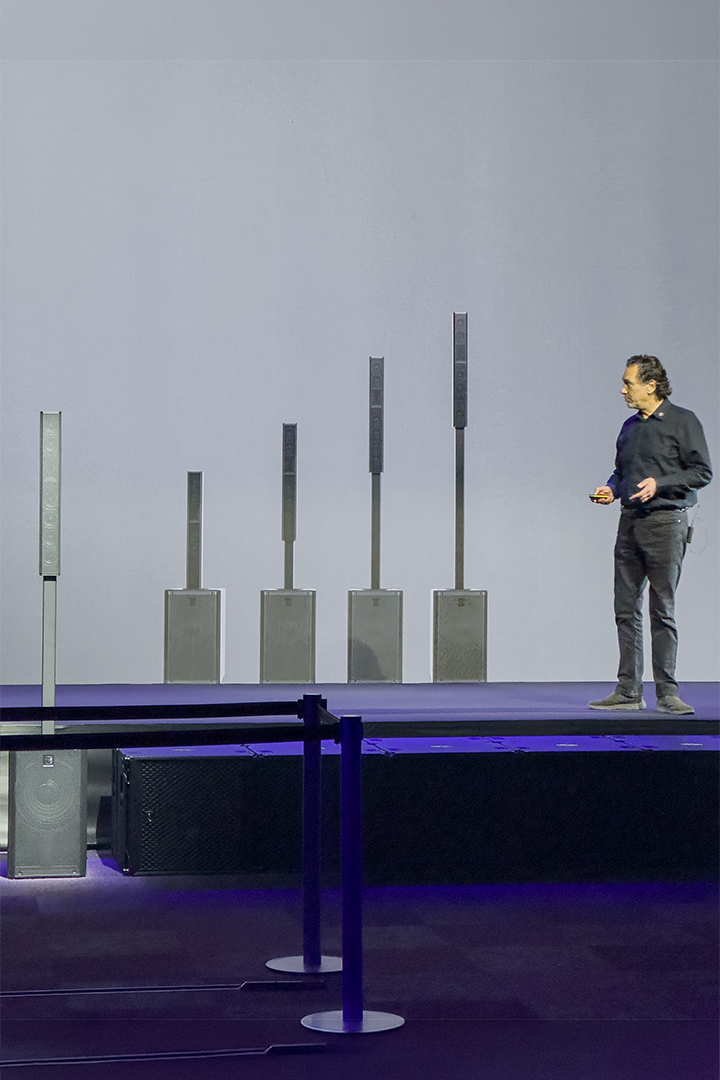
The Evox J9 opened with a dynamic, coherent, serious sound, sufficient to cover at least the 200 m² demo room. The contribution of the HF driver is very noticeable, almost too much, as it seems capable of projecting beyond the 3” and 12”. The low end is suggested rather than dominant, and the low-mid is slightly lean, but for the room size and system, it is exhilarating.
The Evox J11 immediately brings greater projection and density, integrating very well with its 12”. The twelve 3” drivers find their place better, and the system becomes, accepting slightly limited low-end, entirely satisfying or even very good on the selected excerpts, with well-rendered vocals and no disturbing distortion even when pushed into the red. As they stand, the J11 are ready for major success.
Completed with a SUB 18-AX per side and aligned via ACE presets, the J11 become a remarkable system for the price, with projection, balance, and punch that should delight many bands, DJs, small multipurpose venues, and, in white, event service providers. The demo room suddenly feels smaller. Kudos RCF.
The demo of the compact cardioid line array and its GTX 7C and GTS 16C sub begins with a stack of two subs and three tops entering on a motorized trolley, allowing the many sound engineers present to listen behind the system and easily move back to the front.
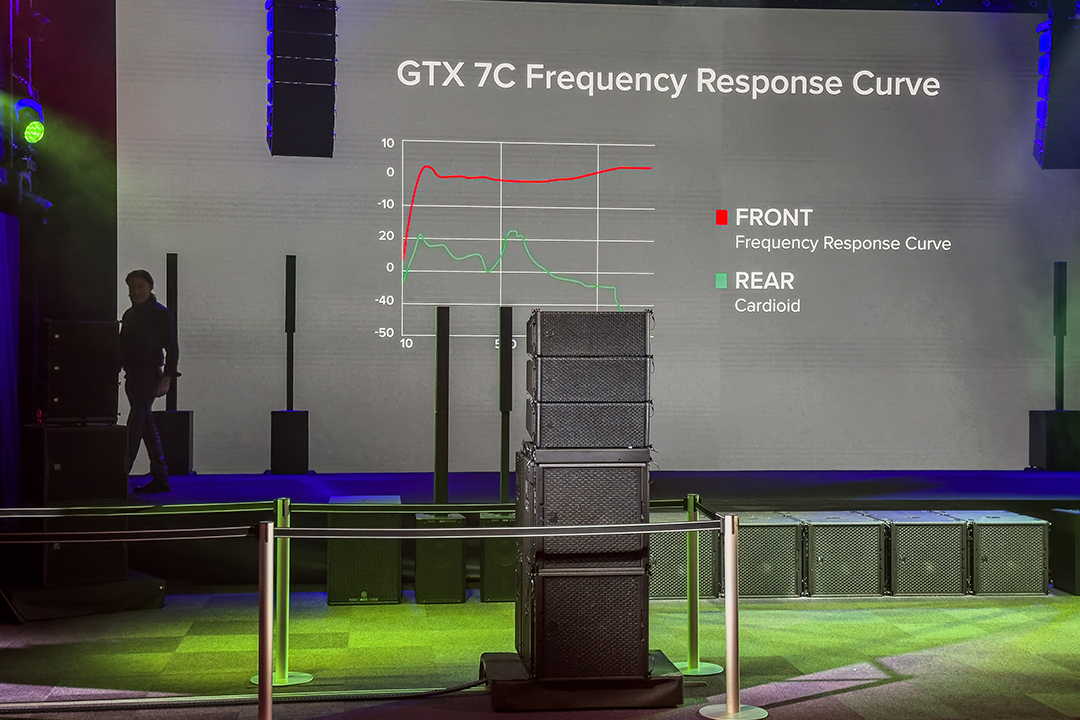
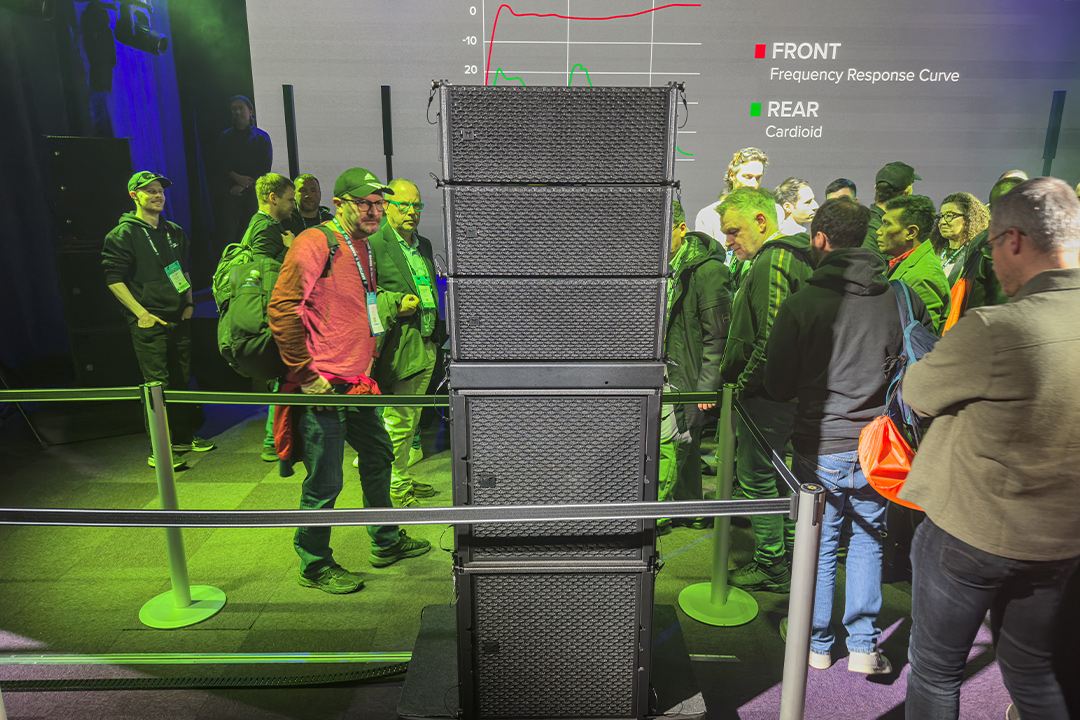
Rear rejection, the result of work on both tops and subs, is very pronounced and seems effective on the sides as well, which will help clean up stages and downstage areas. The system demo itself is equally successful, with more faithful tuning to the source material.
The inflated contours of Frankfurt (Germans love bass, Ludo…) are gone, and the grand finale featuring a Dirty Loops track hits hard, precise, with clarity and definition reminiscent of the excellent GTX 10 we previously covered. Integration with the 16” subs feels natural, delivering a massive, tight, analytical overall sound. No overhang.
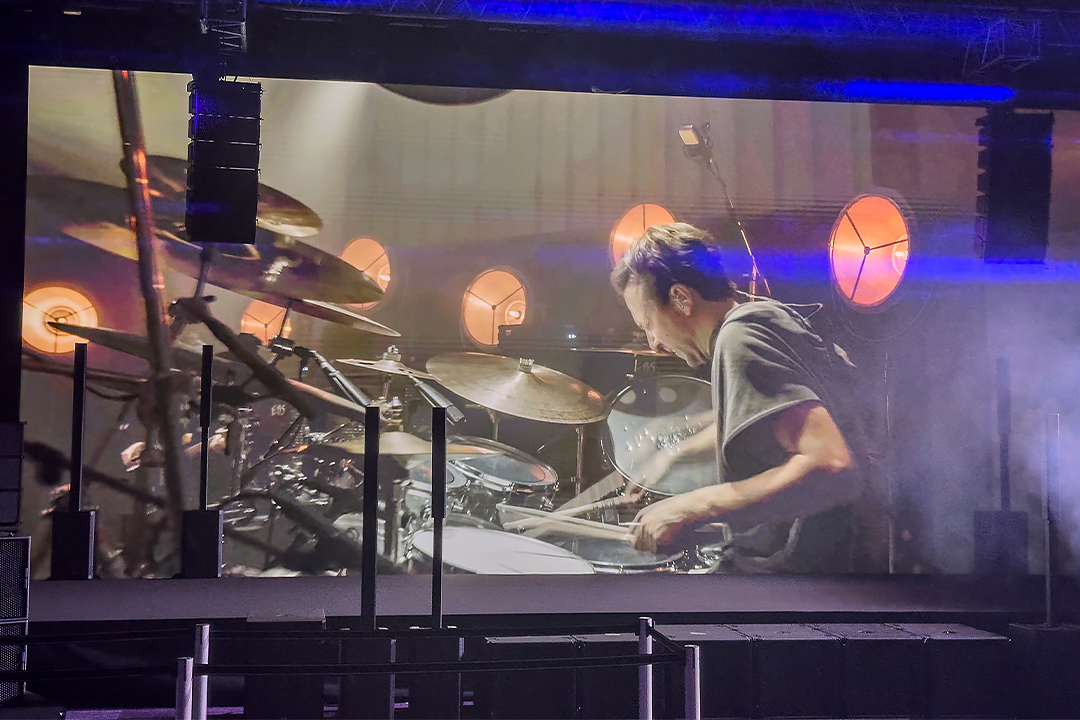
This system makes you want to hear it in larger venues and hope that this new cardioid range will expand with a model capable of tackling arenas and especially stadiums, which host huge shows in Italy. One can dream, and as they say there, sognare non costa niente!
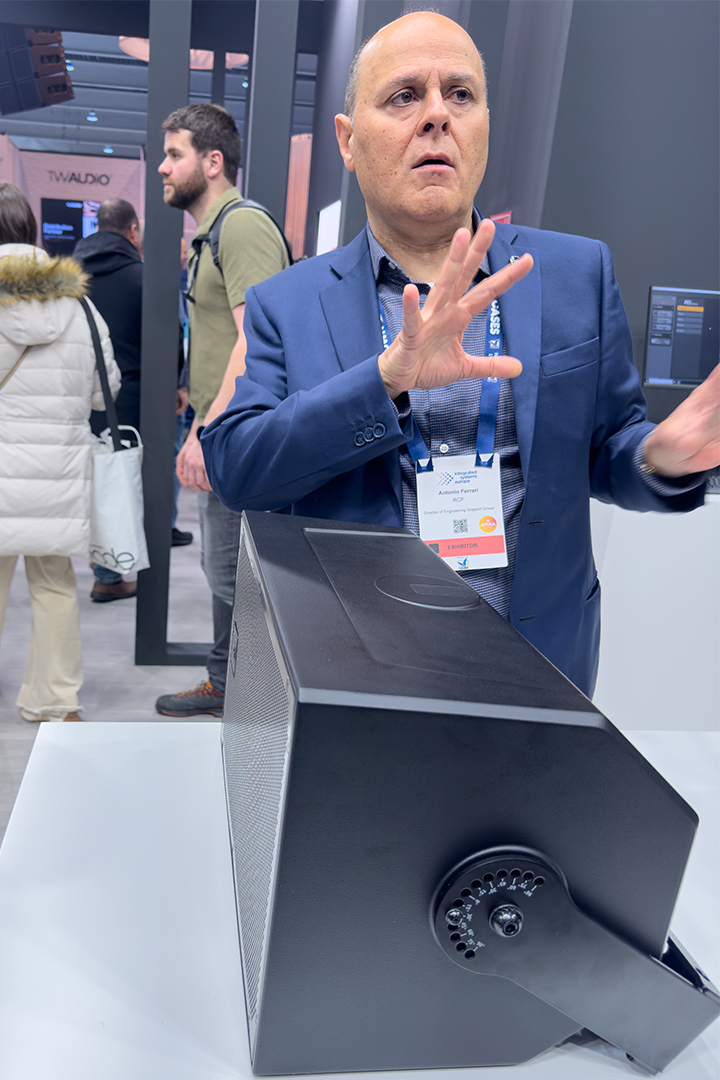
Finally, a big thank you to Antonio Ferrari, Director of Engineering Support Group, who took the time to walk us through his new products in depth.
For more information on the new RCF products and everything concerning TT+ Audio