
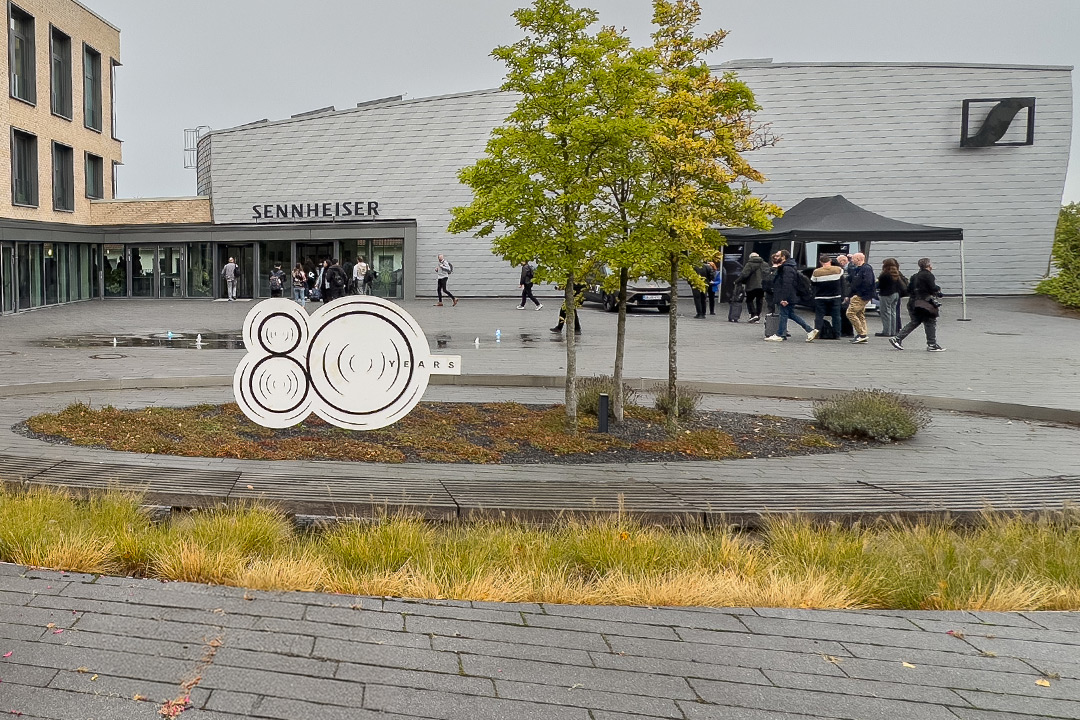
Sennheiser, the company, has just celebrated its 80th anniversary and wants to let the whole world know. To mark the occasion, it opened the doors of its technical center in Wedemark, where it all began in a modest house. Today, almost all of Sennheiser’s professional products are designed, tested, and manufactured in this factory, which welcomed dozens of journalists from around the world for the occasion.
Before these three days of intense visits and seminars, SoundLightUp and a few other magazines had the pleasure of being chosen to interview the company’s executives. The interview is available below. We will soon publish a report on these three intense days spent in Wedemark and Berlin.
SLU : First of all, we would like to thank you, Daniel and Andreas, for your time, for being here with us, which is rare and much appreciated, and for answering our questions. How is Sennheiser doing since it sold its consumer division and refocused on its professional roots?
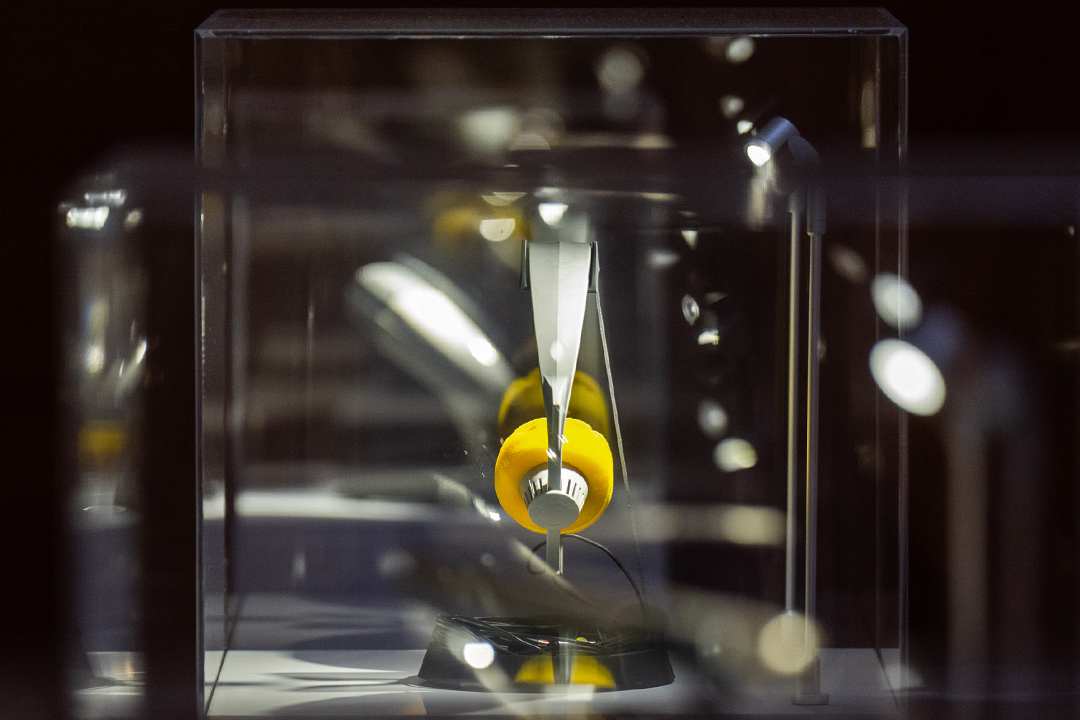
Daniel : Well, this year we’re celebrating 80 years of Sennheiser. And in those 80 years, we’ve had many stories, many things that shaped the future of audio in what we’ve done. And one of those stories was in 1968, the creation of the world’s first open-back headphones, the HD 414, the bestselling full-size headphones of all time that created that industry, and as it goes through all these years.
You always have to look at what you can create. We invent so many new things that sometimes, you also need to step back and say, what is the best strategy going forward and we did that for all our business units at the time, the consumer business, communication, pro audio, and also Neumann and we developed individual strategies for all four areas and realized that we’re very good for three of these areas.
For consumers which has grown out of the niche into a much more mainstream commodity business, we thought that a larger company would be the better owner to bring that strategy to life, so we sold the consumer business to Swiss company Sonova and focused on the strategies of our professional field specifically. As a result we’ve seen great growth but also a firework of innovation which we brought to the market.
SLU : I suppose WMAS and Spectera helped you focus more on this revolutionary technology and products…
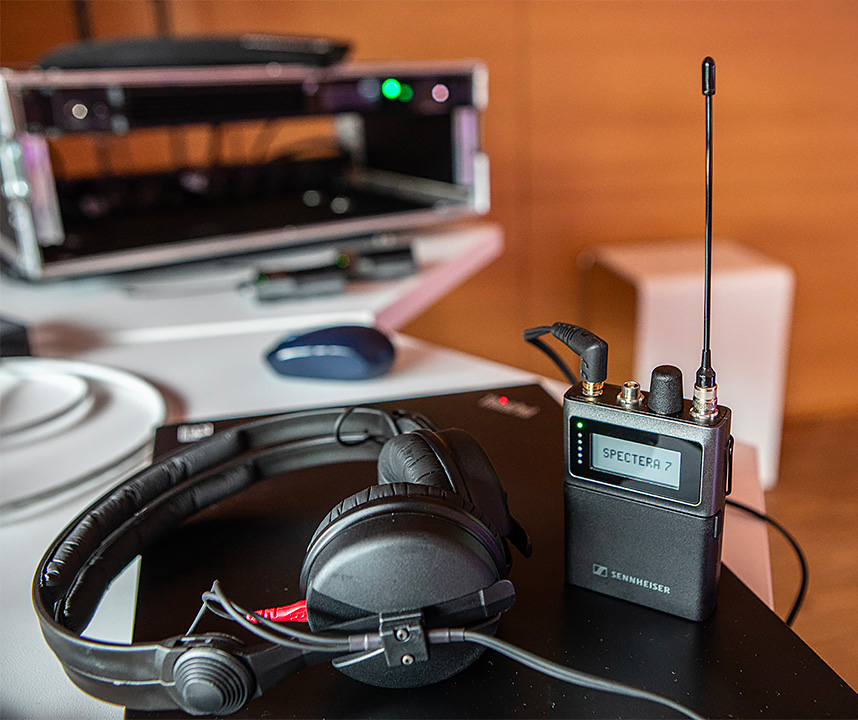
Andreas : The development of Spectera and his core technology WMAS is more than 10 years back so we really took that bold move into reinventing the wireless world with the totally new technology quite early and thought it was time to think totally different for that industry.
What of course did help us after focusing on the pro business was that we could have more funds available for accelerating everything on the pro side and at the same time a lot of management attention to bring this new ecosystem to life. But it was really not all about Spectera at this time but definitely it is one of the big game changing innovations that we brought to our customers from this year on.
SLU : You have chosen to break with the past with Spectera, without focusing on compatibility with your current line-up, and this seems to be a smart decision, even though rental companies will have to replace almost their entire HF stock. France has said yes, but what about the United States, for example?
Daniel : We still have a very large and very successful portfolio of products, D6000, the EW DX, EW DP, and below that even the XS Wireless Series. So we do have quite a lot of classical digital wireless RF systems that are very good and also AVX, SpeechLine Wireless for universities and the corporate sector. We do have those great solutions that work very well and are compatible with everything we’ve done in the past.
At the same time, if you bring something forward which is so different, you need to also break the mold and say, hey, this is something which works. It’s a different game. It’s not, from a physical standpoint, possible to make it compatible. For a while, we’ll have both technologies in parallel. We don’t have decided yet if we give up the classical RF technology or if we move everything to Spectera, but Spectera definitely for larger installations is actually a more cost-effective, more flexible and simply much better system because it allows you to invest once in one base station and have a 64 channels bidirectional system adding so much flexibility that compatibility is no longer an issue.
Andreas : To add to your question about who loves it, it’s so it’s not just France who loves it, In the U.S., we have the large rental companies that are in different locations. And setting up a system with the ease of Spectera is, of course, reducing a lot of their effort. Not needing to ship huge racks of equipment around the world makes their logistics much easier, so really, everybody loves it.
There is a great possibility for coexistence of different technologies at the same time. We see Spectera being co-used with our traditional RF links very often. It’s just like you have electric cars and combustion engine cars on the same street, and that works perfectly, but no one complains that you can’t charge your electric car at a petrol station. Spectera is just a step ahead.
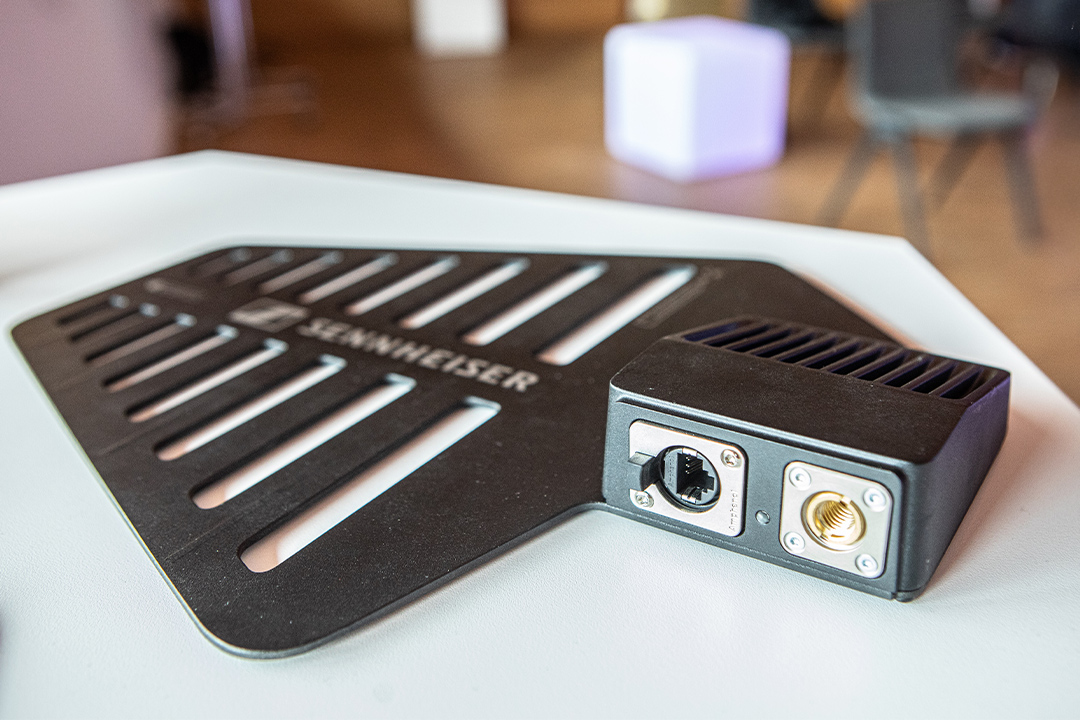
SLU : After introducing Spectera, what will happen to your current line-up? Will you create a family of new, more affordable WMAS products for musicians, businesses, or even cinema, using a smaller RF carrier, for example?
Daniel : Well, let’s see what the future brings, but so far we believe that there is a great place for Evolution Wireless Digital and EWDX. Also there is a new part of the market on the higher end market which we can grab with Spectera and the systems can coexist. For a small four-channel system you probably don’t want Spectera, at least not today. Maybe in the future when the whole chipsets and everything has become significantly cheaper, then that might be an option. The amateur user don’t need to care what technology is behind it. It should just be a Sennheiser system that works, whether we transmit via narrowband systems or WMAS technology.
SLU : So, what good things are coming to Spectera through firmware updates, and what about the handheld mic? Is it about to be introduced? To sum up, what is hot? (Editor’s Note. It was so hot that the handheld transmitter can be ordered now and will be available in early 2026)
Andreas : The software is being developed with a backlog that we get as feedback from our users. So we have different feedback sites either through a Discord channel or through our My.Sennheiser as a website. So actually the backlog is prioritized based on the user feedback. And because it’s all software-defined, it is very easy for us to do those requests. What we announced already is that we are working on different functionalities for the Cascade port so to have more antennas being connected to it, to have more redundancy, even to the point of hot-swap redundancy possibly at one point. So this is where actually the firmware development goes to.
SLU : Sennheiser owns Neumann and has decided to focus entirely on the analog segment, discontinuing its line of digital microphones. As a user of these marvels, I can’t help but wonder if the “blue” microphones will ever make a comeback.
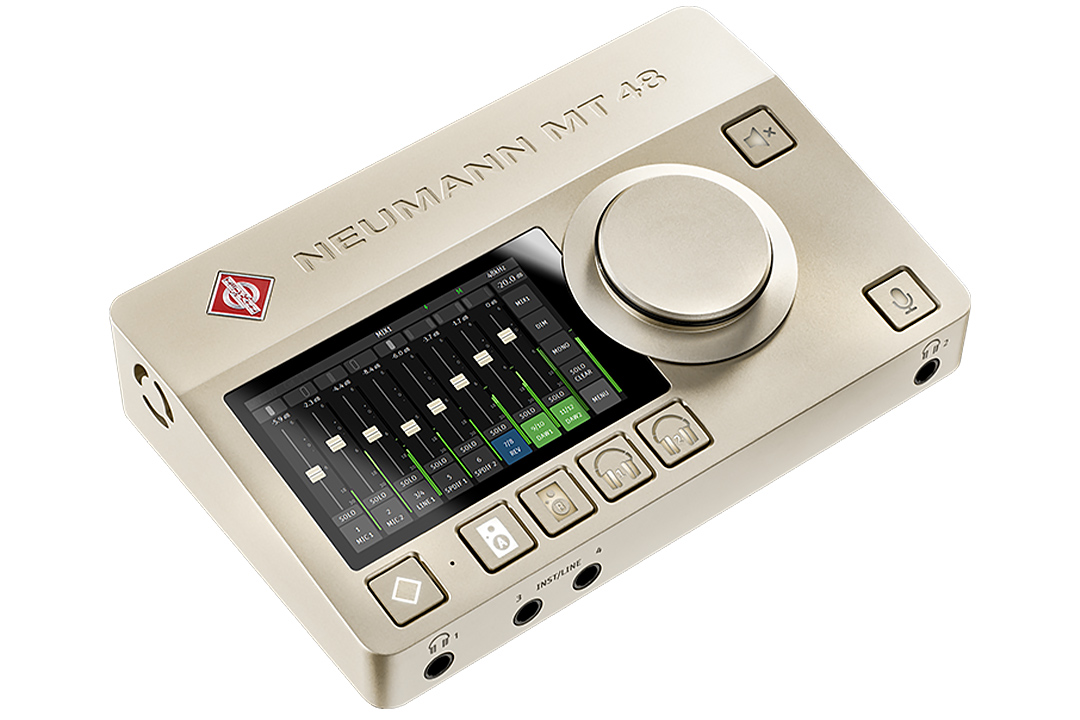
Daniel : You have a very good solution today with the Neumann MT 48 as, I would say, a really, really high-end converter and at the same time, the legendary Neumann microphones or Sennheiser microphones that you can plug into that. So that is a digital microphone solution, which is a bit more modular and more versatile than what we had before and especially it is multi-format, so you can plug it in with USB, you can use A67, it’s Dante-ready. All of these possibilities are now possible. You have a digital system that you can control. If you need to have it more complex, more multi-channel, you can also use a Merging Anubis or a HAPI which are allowing you to control much more microphone channels.
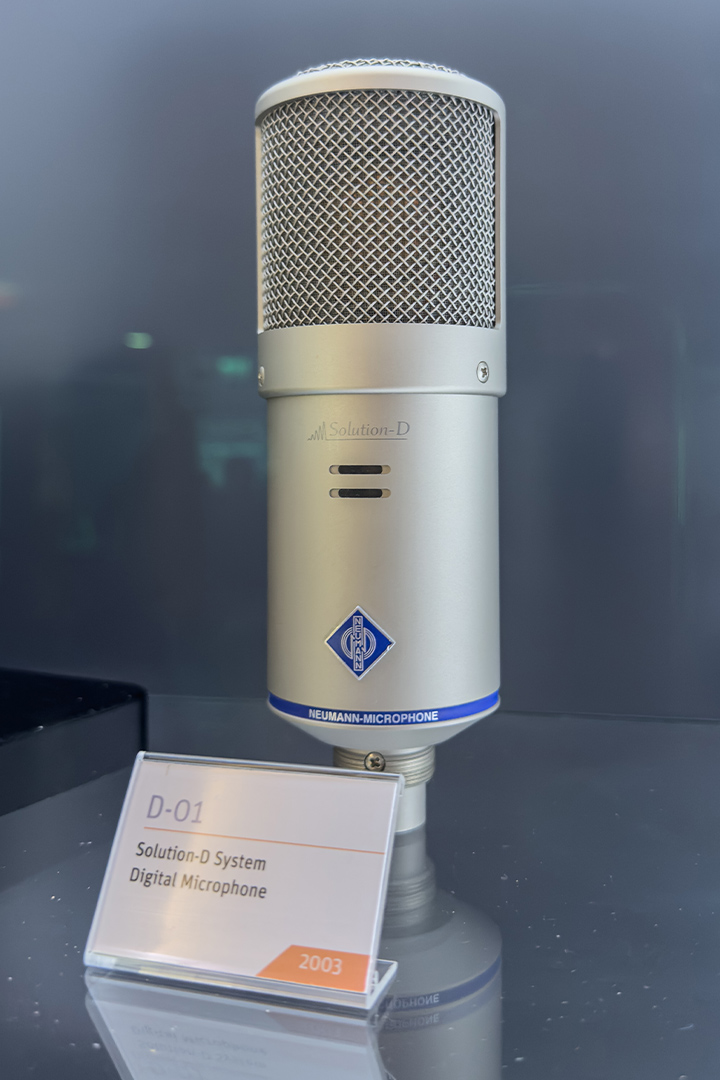
SLU : But you will continue to service the digital microphones ?
Andreas : One of Neumann’s strongholds is extending the life of its products beyond what users can typically get out of them. And if you look at all the U47s that still exist around the world and have witnessed very prestigious moments where artists have sung through them, I think Neumann places a lot of importance on its repair and maintenance capabilities. Sometimes the components are a little difficult to find, but if anyone can get them, it’s us, so there’s no need to worry about any of our products.
SLU : What are your plans for external growth? You have done an excellent job with Neumann, Klein + Hummel, Ambeo, and, more recently, Merging. What could be the next step?
Andreas : To stimulate growth, we sit down with our clients and try to understand what the next step is in their field, what is preventing them from producing easier, more creative content, what the next challenge is in sports broadcasting, or what the future holds for immersive shows on Broadway. That’s really how we operate when it comes to fueling our innovation pipeline and, ultimately, driving business growth: by being close to our customers, listening to what they want to create, which leads to an endless stream of ideas and innovations that we then have to prioritize. We usually have more ideas than funds which is a good thing.
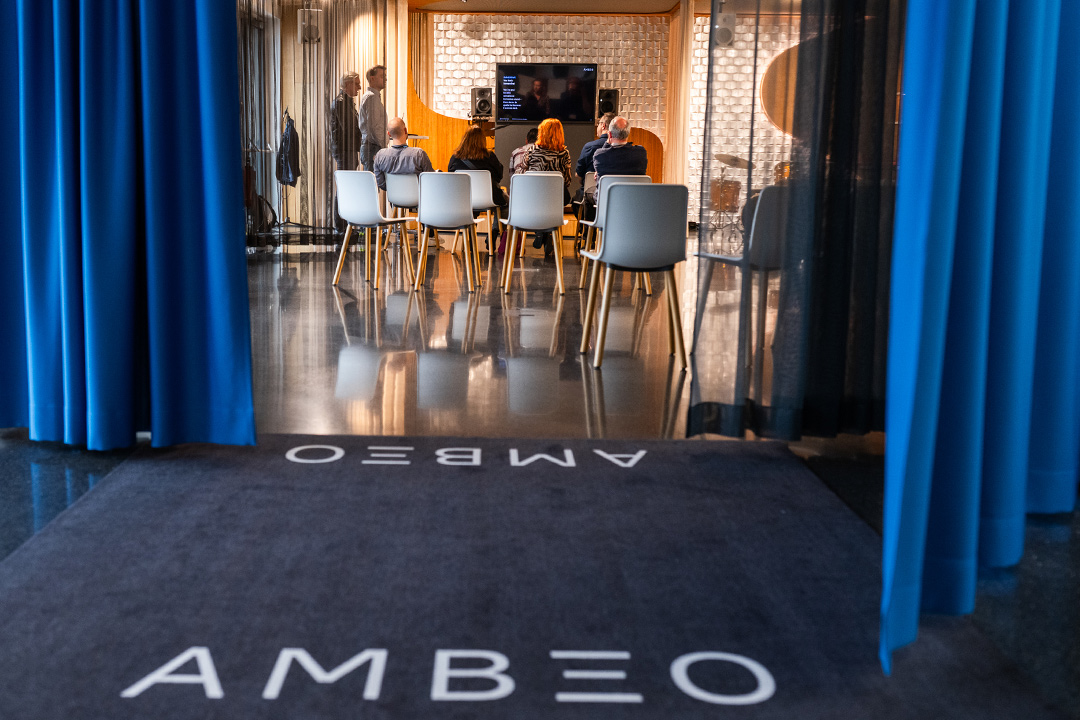
Daniel : More specifically, we believe that Ambeo and immersive formats will be a driving force for the future, as we have finally broken out of the vicious circle where everyone was passing the buck. Immersive productions are now ubiquitous, because platforms such as Apple Music and Netflix, to name just two examples, all use immersive formats to offer users more emotional and meaningful audio productions.
SLU : So, can we imagine that new microphones designed for immersive audio will be developed ?
Andreas : For immersive recording you don’t necessarily need a lot of new types of mics. We have of course our VR mic, which is an Ambisonic recording mic, but for capturing the sensation of a live studio, a live performance, it is more about where to place the microphones, how to do the mix and how to do the post-processing of all that, so that on the playback side it is really an immersive experience.
So it’s really collaborating with the mixing engineers, the publishing houses, and everybody and the production companies, everybody in the chain, to ultimately bring a truly immersive NFL game to people’s homes. So it’s not about the single microphone alone, but it’s about the whole workflow and the experience at the end.
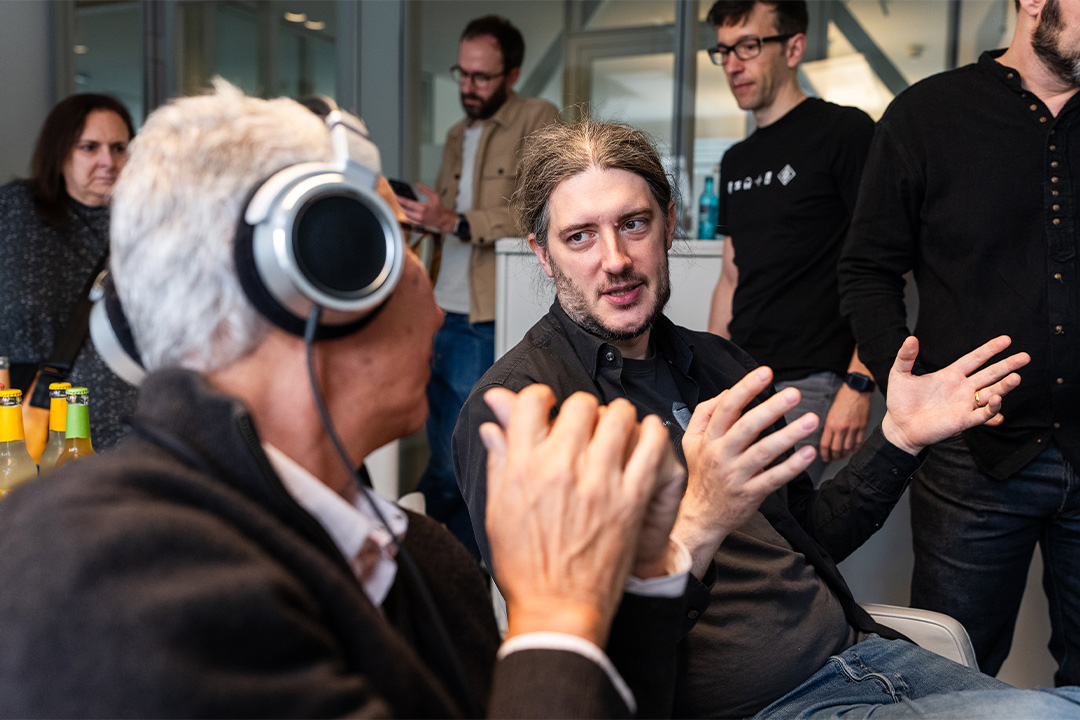
Daniel : It’s a combination of everything and one of the building blocks that we just launched is Rime, a software plug-in that you can use to create a virtual immersive studio using Neumann headphones and it really works extremely well to work and listen, to immersive and therefore allow much, much easier production of such formats.
We want to enable you to use immersive audio even if you don’t have a full set of equipment. We still believe that if you’re creating an immersive track, you’re probably working in a studio equipped with, say, Neumann speakers all around you in an Ambeo or Atmos immersive setup. But on the other end, if you have a client who is listening to, say, a movie soundtrack in an immersive way, they can use Rime to critique the work and give their feedback. Or so you can edit it on the fly, which saves you from having to take your studio with you, because you have it on your MacBook.
SLU : Thank you very much for these minutes that flew by and for your detailed answers. And happy birthday to Sennheiser, to its 80 years of innovation and, above all, to its products designed by sound enthusiasts for sound enthusiasts.
Daniel & Andreas : Thank you too, it’s always nice to talk to someone who really understands what we do. See you soon!
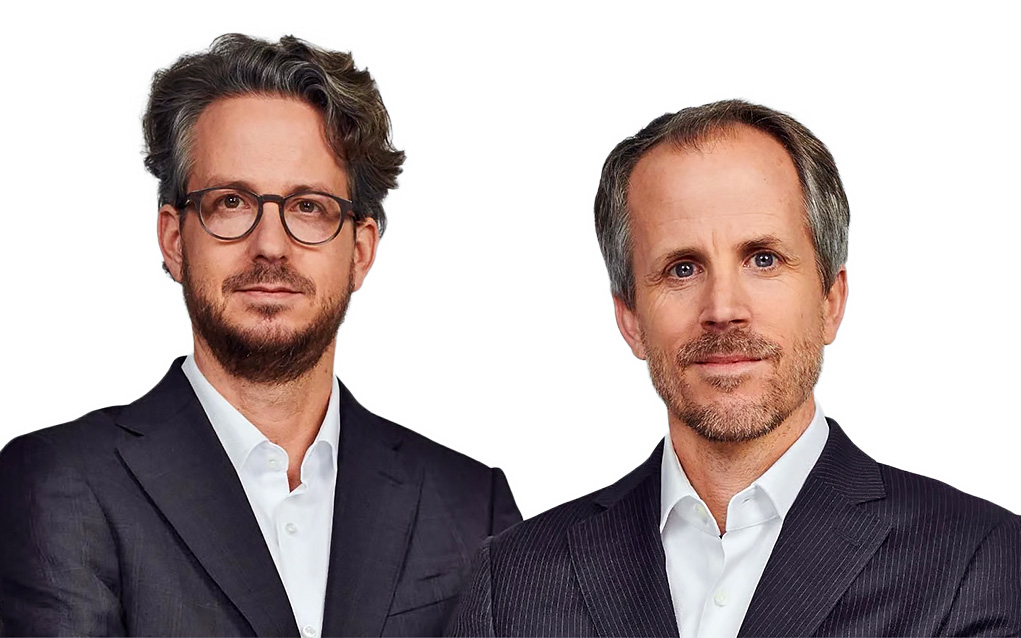
Since this interview, a press release has announced a change in Sennheiser’s Group governance. After 12 years of joint management and effective January 1, 2026, Daniel Sennheiser will become Chairman of the Board of Directors while Dr. Andreas Sennheiser will continue to serve as CEO, overseeing operational business of the family-owned company.
.
Below is a message from Daniel and Andreas Sennheiser.
Dear customers, partners, and friends,
After more than a decade of successfully leading the Sennheiser Group together with my brother Andreas as Co-CEOs, I have decided to take on a new role for the Sennheiser Group. Effective January 1, 2026, I will join the Board of Directors as Chairman, while Andreas will continue to lead the company’s operational business as CEO.
In my new position on the Board, I will focus on the strategic direction of the Sennheiser Group and drive the long-term development of the company, in close collaboration with my brother. Andreas will continue to manage the company’s operational business together with the Executive Management Board. This new structure enables us to achieve an ideal balance between day-to-day business and strategic foresight – both crucial for the future success of the Sennheiser Group in an increasingly dynamic environment. Maintaining and strengthening important customer relationships will also remain a shared responsibility for Andreas and me.
Our Co-CEO model with shared responsibilities is truly special: our trusting relationship and complementary perspectives have enabled us to successfully lead the company for more than 10 years, even during challenging times. This will remain the basis for our future collaboration. We will continue to work very closely with each other and the Executive Management Board.
We look forward to this next chapter of our family business, which has successfully evolved over three generations. To us, progress means positively shaping change – and this applies both to ourselves in our new roles and to Sennheiser as a company.
What remains unchanged is our shared commitment to our vision: building the future of audio. Together – Andreas and I, the Board of Directors, and the entire EMB – we continue to put our customers at the center of everything we do to drive the sustainable, independent growth of the Sennheiser Group.
Finally, Andreas and I would like to thank Mr. Dornbracht for his dedicated work and valuable support as Chairman of the Board of Directors over the past four years. We are delighted that he will remain on the Board and contribute his expertise.
Daniel & Andreas Sennheiser
More information on the Sennheiser website