
The Avignon Festival in France is innovating with Robe and Dushow with the addition to its inventory of 20 iForte LTX and 16 iEsprite. A technological revolution driven by a committed technical team serving drama companies from all over the world.
The Avignon Festival is a globally recognized reference with nearly 1,800 performances in total spread over 22 days from July 4 to July 25, 2026. To ensure exceptional lighting at the Palais des Papes, the technical team turned to Robe via its specifier Dushow.
Avignon attracts with the beauty of its landscapes and the richness of its heritage. Its emblematic monuments, built in light-colored stone, offer a remarkable aesthetic on the other side of the Rhône. Its ramparts, 6 km of stone walls, draw a majestic line up to the famous Pont d’Avignon. They define the playground for artists from all over the world who every year, at the same period, join one of the two largest theatres in the world. A European record that France shares with Scotland and its Edinburgh International Festival (EIF).
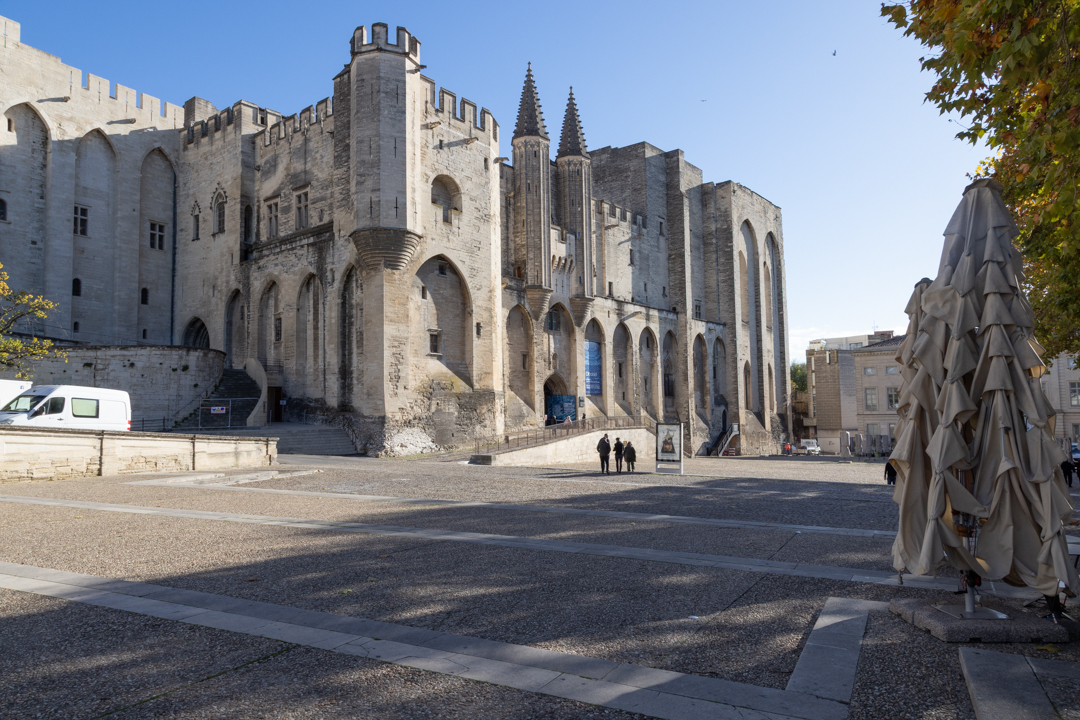
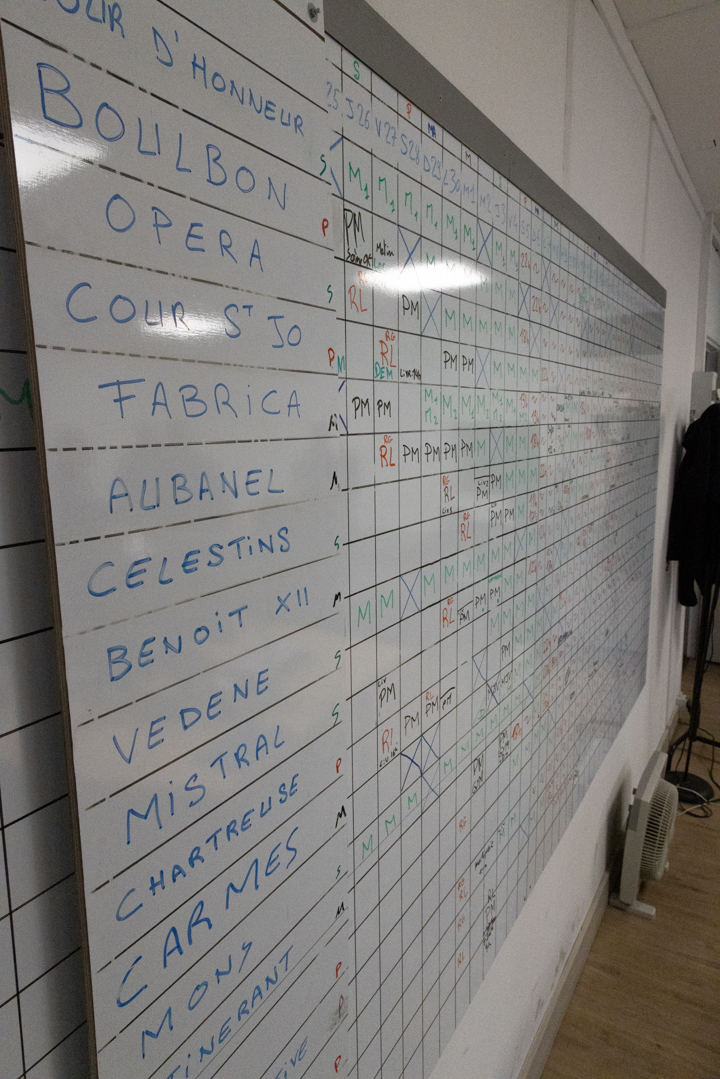
While the OFF doubles its inventiveness to imagine parking lots, outdoor gardens and cellars as performance spaces in addition to the city’s theatres, the IN is not to be outdone, with 25 historical venues that also stand out for their atypical character. From the former limestone quarry of Boulbon through castle courtyards, arenas, gymnasiums, village halls, gardens or chapels up to the Cour d’honneur of the Palais des Papes on the heights of the city, the technical team solves all equations with flexibility and absolute safety compliance, all within spaces listed as UNESCO World Heritage sites such as the Cour d’honneur.
The art of convincing to ensure the safety of the public, artists and technicians
Philippe Roussel, the new technical director of the Avignon Festival, explains: « “The schedule extends over a wide period. The team is currently in full preparation for the next season.”
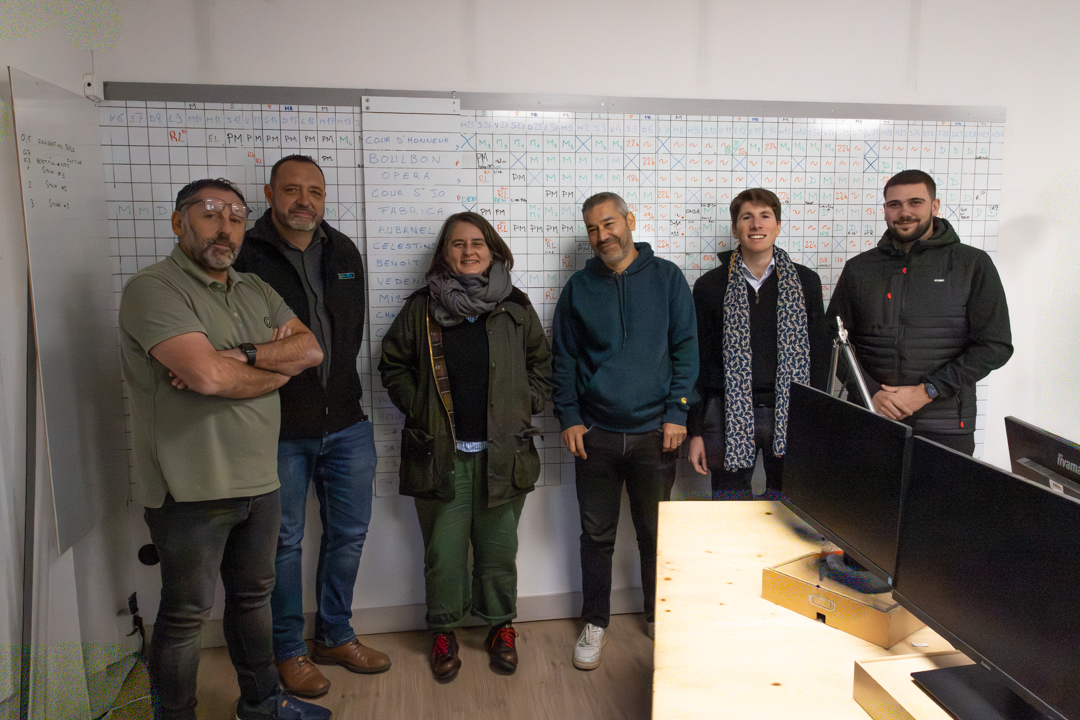
Manuella Mangalo works intermittently in lighting, sharing her time with other companies, while Philippe, Daniel, Xavier, Stéphane and Marion are present full-time.
Manuella (head of the festival lighting department) explains: “The lighting team grows from mid-May when I am happy to start handing over the different projects. The rest of the team joins us at the beginning of June until the end of July, which brings the lighting department to 42 people.”
Philippe Roussel : “At the peak of IN activity, the team rises to 350 technicians. If we add ticketing, front-of-house, administration, etc., this figure rises to 800 people, and I am not talking about the companies and actors.”
SLU : Do you recruit new technicians every year?
Manuella Mangalo : “Yes, but very few because people are happy to come back from one year to the next. They sometimes complain but in reality it’s a team of care bears (laughs).”
During the Festival, the architecture and urban planning of the city are transformed. The flow of passers-by increases considerably within the ramparts. And when the city hall gives the green light to communicate, the quantity of posters is such that the streets become unrecognizable.
Philippe Roussel : “Some houses equipped with window bars disappear under the posters. The fire brigade is concerned about preventing potential fires, especially in a city where traffic is difficult behind the ramparts.
To remedy this, our meetings with the firefighters start from December 1st in order to discuss set designs and technical sheets. The negotiations aim to get the needs of the directors accepted and in case of refusal to propose alternatives to the companies.”
SLU : What are these possible alternatives?
Manuella Mangalo : “If a director asks to produce fire, it is for a specific reason otherwise they would already have chosen less costly and simpler effects. It is Philippe’s job, Joao (Deputy Technical Director) and the festival safety manager to propose another hosting venue that is not in the city center for example, or compensatory measures such as increasing the SSIAP staff present on site. Different levers exist but they all rely on human or technical solutions to prevent critical scenarios.”
Philippe Roussel : “Trust and presentation of the project play an important role. On our side we ask companies to make videos of their fire effects for example to show them to the firefighters and reassure them about their total control. They have a military approach and on our side the concern remains the protection of the public and its immediate evacuation if necessary.”
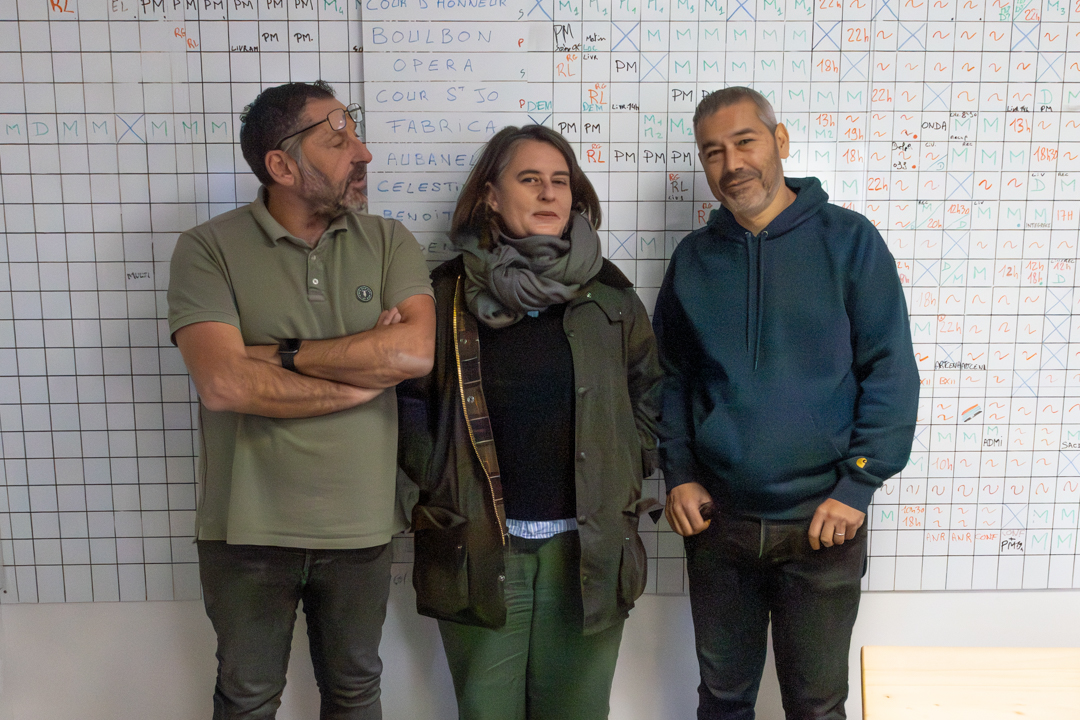
Philippe Roussel is the technical director of the Avignon Festival. Having entered live performance in 1985, he trained alongside major technical figures and very early accompanied the Avignon Festival, where he worked on around twenty editions. His career then led him to the Aix-en-Provence Festival for twelve years as general sound, video and surtitling stage manager. Former general stage manager of ISTS in Avignon, he also directed the company AEC and took part in major projects, including Carmen at the Stade de France. Returning to Avignon in 2018 at La FabricA and with 40 years of experience, he now oversees the Avignon Festival, motivated by the pleasure of working as a team and the demanding nature of this event.
Manuella Mangalo trained at ENSATT, graduating in 2000, then joined the Festival in 2002. After several years in the field, she joined the lighting office department and then became its head. A collaboration which, according to Philippe Roussel, is “a pleasure”.
Regional pooling of equipment
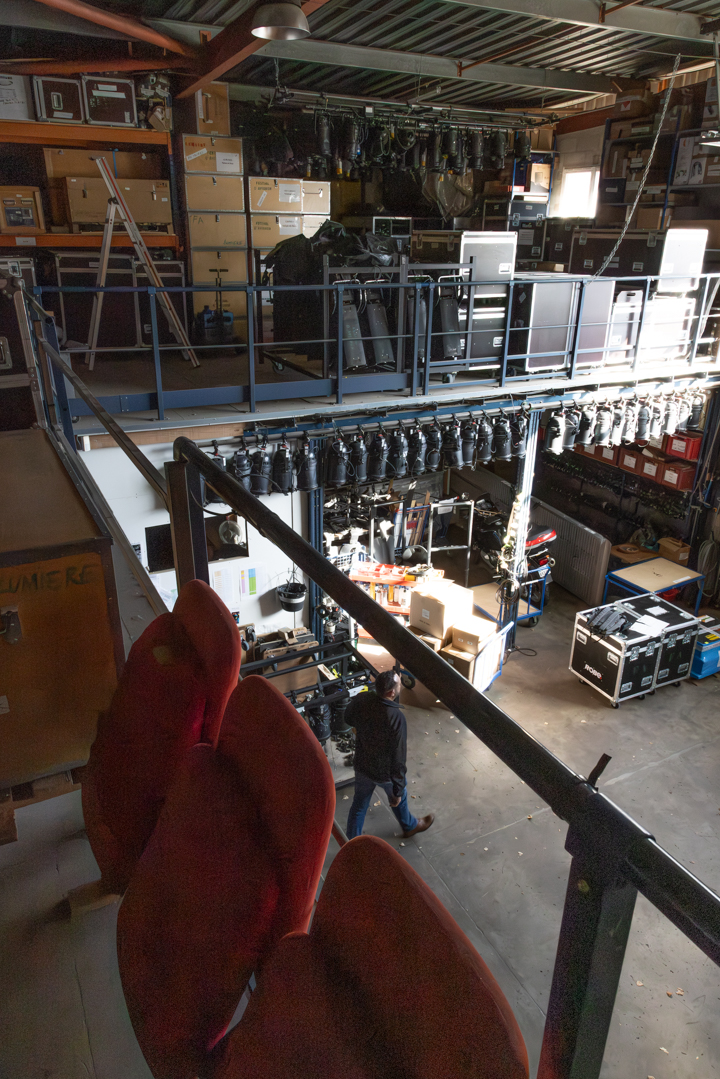
To get around multiple constraints, the technical team favors a versatile, all-terrain kit.
Sébastien Scolari (Dushow sales): “At the Cour d’honneur the fixtures are installed at 35–40 meters in height, in full sun. The constraints are enormous and when the heat hits, the temperature can reach 40°C or more as in Boulbon where the white stone accumulates heat, creating extreme conditions for the machines. Robe is also working in partnership with the festival to carry out temperature measurements and precisely analyze the behavior of the equipment in these conditions.”
These fixtures are IP65 certified and resist humidity all the more as they are equipped with a system of filtering capsules in the arms with a balancing valve to ensure air intake and exhaust within the machine.
To reach its ambitious objectives, three key partnerships must be included in the equation. The Avignon Festival received a subsidy to be spent over two years. Following the advice of Sébastien Scolari of Dushow (the equipment supplier), the team invested in 20 iForte LTXs in 2025 and 16 iEsprite saddles for the 2025 season.
A complex balance to maintain given the appetite of companies for large kits. To overcome this problem, the festival set up two approaches: sending a machine to companies ahead of the season for testing, and a policy based on solidarity with local theatres to organize loans of machines in high and low season according to each one’s activity.
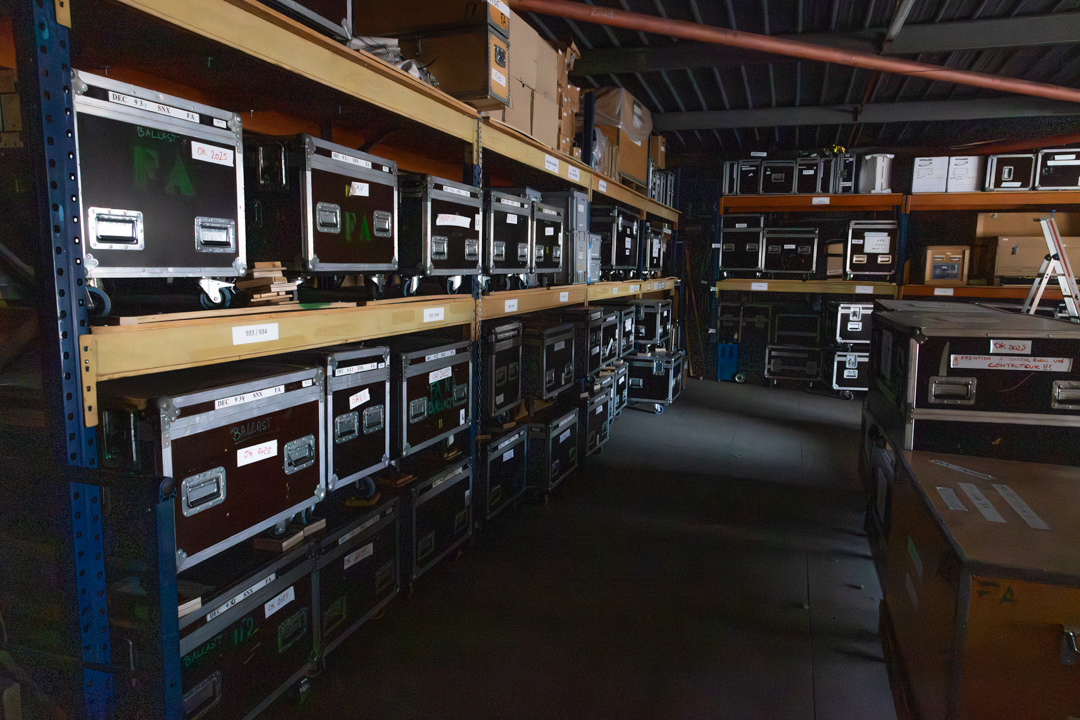
That said, some venues such as the former limestone quarry of Boulbon remain dedicated to rental to avoid the maintenance inevitably linked to extreme conditions. These decisions can then open more flexibility to respond to companies’ requests. On this point, Dushow, more oriented toward live concerts, has positioned itself as a major partner in recent years in order to offer services adapted to rental requests.
Manuella nuances: “The methods are different because a concert lighting designer does not have the same language as a theatre lighting designer. But this has evolved a lot and lighting designers discover that they can create new images with LED.”
SLU : For Dushow Groupe Novelty, is it important to support a festival like Avignon?
Louis De La Guillonnière (Dushow project manager): “It is an important event, first from a local point of view because it is a key player in the cultural, economic and social fabric of the south, but it is also a major national event. We are committed to setting up teams and building friendly business relationships across the entire territory.”
Sébastien Scolari : “For Dushow, theatre is a new world because our core identity is more rooted in live events. This partnership has existed for three years. I myself have been working for the festival for many years, but it took me a year to understand how Dushow operates. The Avignon Festival is a unique client, but we share common ground within this large lighting family.”
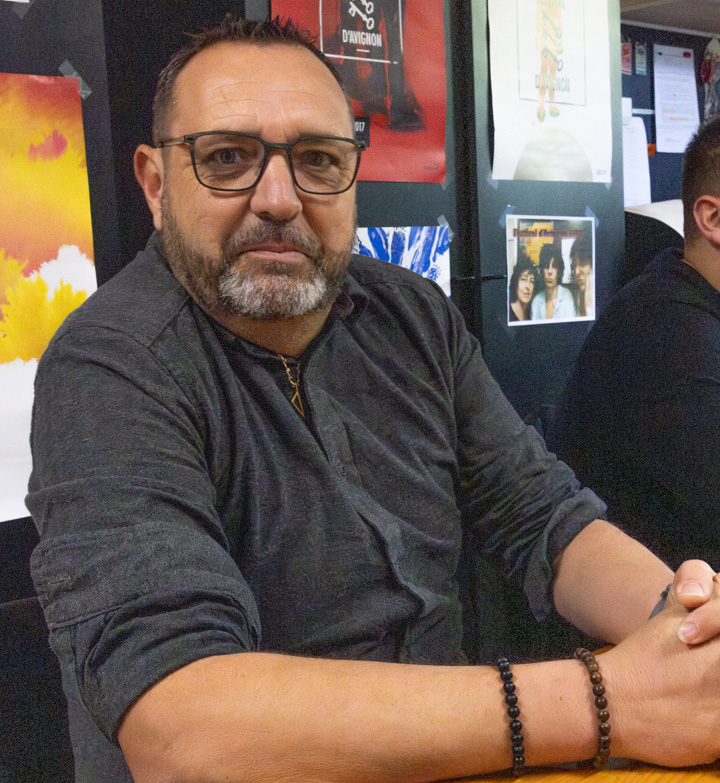
Sébastien Scolari joined Dushow in 2022, after a professional career spanning live performance and the audiovisual sector. Having gained experience within the company Scénic, he very early collaborated with the Avignon Festival, an event to which he has been deeply attached since childhood.
Theatre, television, TV production: he has explored many fields while maintaining a constant link with Avignon, notably as general television stage manager for Compagnie des Indes.
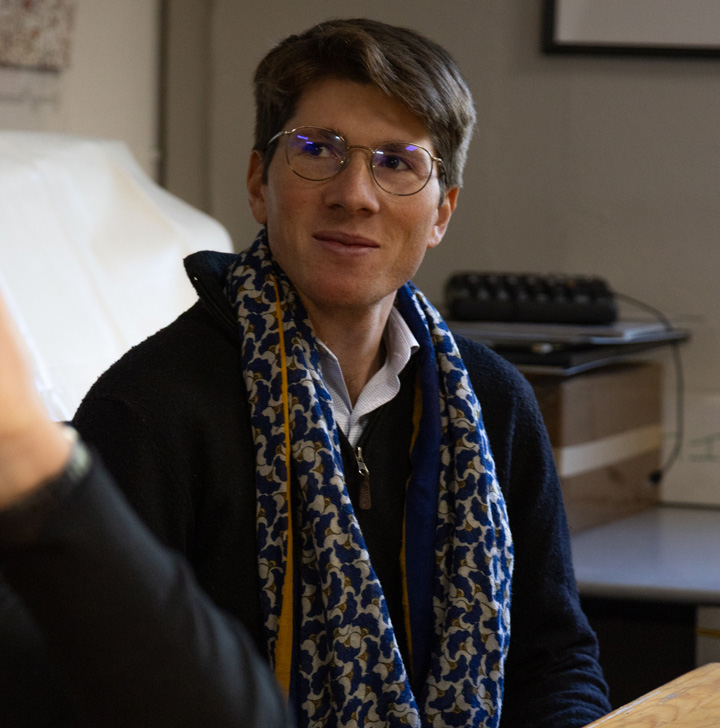
Louis De La Guillonnière is a project manager for services. He started at Novelty in Longjumeau, in investments, for four years, then joined their Middle East branch in Doha before returning to France, to Dushow, in 2025. Since then, he has been supporting the Avignon Festival with additional lighting equipment.
He explains: “The Novelty branch in Marseille allows us to access the group’s equipment stock, which is the largest inventory in France. We are therefore able to respond to any request.”
SLU : How are the investment choices of the festival team made?
Sébastien Scolari : “They are based on discussions and relationships, but their choices also prioritize products manufactured in Europe and supported by after-sales service that can be quickly mobilized if needed. When we install equipment at the Avignon Festival, we keep in mind that it may be acquired by another venue that will lend it to the festival during its low season, such as the Sennheiser Spectera wireless system, which was tested this year at the Cour d’honneur and then acquired by the Théâtre de Nîmes.”
During their discussions, Sébastien does not hesitate to guide the team toward Robe equipment that he feels directly meets the festival’s needs, as he describes himself: “We try to assess lighting trends over 5, 10, 15 or 20 years in order to determine the need for sustainable equipment. Then we integrate these purchases into an ecosystem. The Avignon Festival is an event that we manage somewhat like R&D, and we do not hesitate to carry out product tests, like last year for front-of-stage units. Dushow needs to create partnerships that take into account the needs of its clients and ensure equipment durability of at least 10 years.”
Philippe Roussel : “Indeed, there is a tacit agreement with nearby theatres to lend each other equipment. But when we invest, the composition of their inventories is taken into account in the equation in order to have a coherent regional assortment.”
Manuella Mangalo : “Our activity extends over two months of operation, with a smaller part going on tour for the rest of the year. But since the festival period concerns 25 venues, the amount of equipment not in use is significant. The idea is to lend this equipment when it is available and in return to receive equipment during the festival period, which is generally a slow period for theatres.”
A gradual transition toward automated LED, with Robe
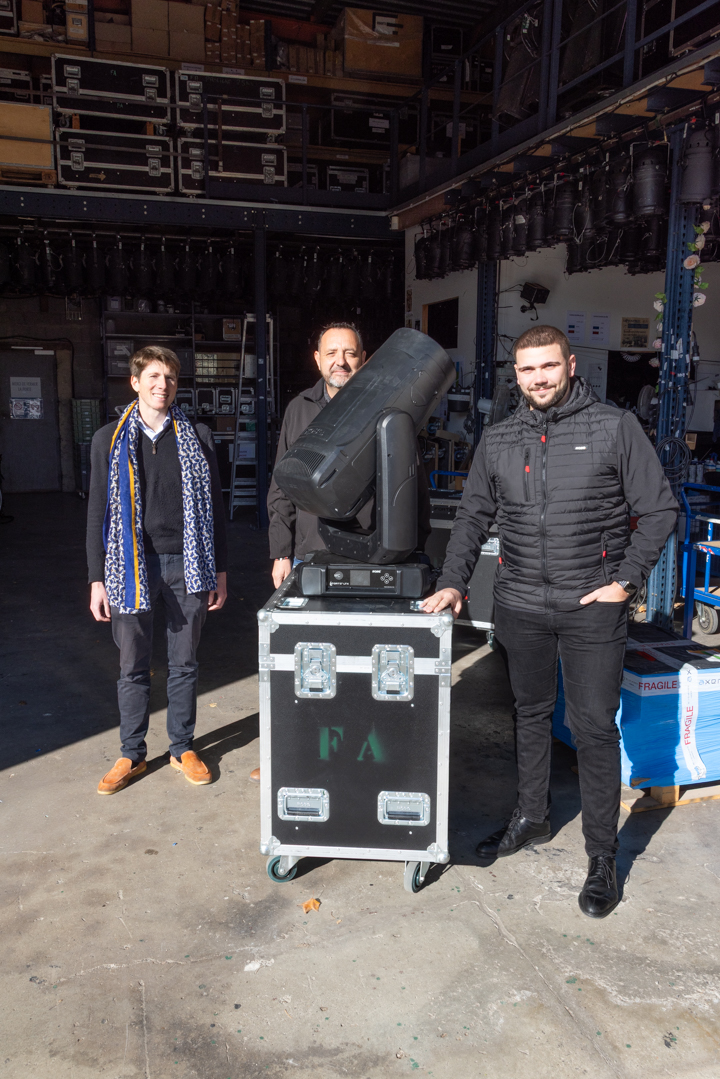
Philippe Roussel : “We were late with LED. That being said, if we had bought LED fixtures 3, 4 or 5 years ago, they might have remained in storage and no one would want them today. Lighting designers can be inflexible in their choice of equipment and we must remain flexible, but with Robe, I think we did not take huge risks.”
Sébastien Scolari : “Companies come from all over the world, as for the 2026 season where South Korea will be in the spotlight. For them, technical specifications necessarily require automated LED.”
Manuella Mangalo : “Negotiations are always possible, especially for automated wash fixtures. However, when we talk about blades profile fixtures, it becomes complicated to switch from one machine to another because it impacts their programming. Moreover, 2 to 3 different shows can be performed in the same venue and we try to pool the equipment. Finally, as the venues are atypical by nature, the ceiling is sometimes lower than that of a traditional theatre, as in Aubanel and Mistral where we are limited to 6 meters in height. The Cour d’honneur, on the other hand, has no grid. We therefore have to adapt to these specificities.”
SLU : You decided to invest for the Cour d’honneur, but you could have continued renting. Why this choice?
Manuella Mangalo : “The rental of fixtures for the Cour d’honneur was what cost us the most because it is the longest operating period. To reduce costs, we decided to purchase, and Sébastien and Jean-Marc (Farré from Robe, editor’s note) guided us toward this fixture. Following a comparative demo between the iForte and the iForte LTX, we found that the latter was better suited for the Palais des Papes. A state and regional subsidy to initiate a transition toward LED and reduce power consumption was also one of the important arguments that led us in this direction.”
20 Robe iForte LTX units join the equipment inventory. This long-throw fixture marks a significant evolution in LED lighting, with a 1,000 W white source, a motorized zoom (3.5°–52° in standard mode, 2–52° in follow-spot mode with iris, and 0.7–2° in long-throw follow-spot mode) and a motorized framing shutter system. It is therefore ideal for large stages and outdoor installations. Its dimensions (904 × 480 × 335 mm) and its weight (49 kg) make it a relatively compact and lightweight unit, designed to withstand the most extreme conditions thanks to its IP65 rating. It produces an impressive luminous flux of 55,000 lumens at 6,700 K, with optimized color rendering (CRI 70+ or 80+ optional).
This investment was followed by that of 16 iEsprite units, a profile fixture equipped with a 650 W LED engine capable of producing a luminous flux of 34,000 lumens at 6,000 K. Its motorized zoom of 5.5°–50°, combined with a complete animation system (CMY, two dichroic color wheels, 7 rotating gobos, 9 fixed gobos, motorized shutters, prism and frost), makes it a versatile tool for all applications. With reduced dimensions (733 × 443 × 264 mm) and a light weight of 28.2 kg, the iEsprite is easy to handle and integrate into all spaces, whatever their size.
Robe highlights, for almost all its single-source white LED fixtures spots, profiles and washes whose reference ends with TE the quick interchangeability of their LED module, an economical and sustainable solution that allows only the light source to be replaced if necessary, thus reducing long-term investment costs.
SLU : Do you have a message to share, Philippe?
Philippe Roussel : “I think Robe is lucky to work with intermediaries of the Avignon Festival like Sébastien and Louis. Dushow was not originally established in the theatre sector, but we met Louis through them, and beyond the fact that Robe produces top-level fixtures, the human aspect is very important and is part of our exchanges. In the same way, discussions with Bruno Garros (Managing Director of Robe France) have considerably facilitated our work.”
Sébastien Scolari : “Indeed, Bruno was very involved in the project. He was able to make himself available very quickly when needed and we thank him for that.”
Robe, feedback on the iForte LTX
Controlled by an EOS ETC console, the fixtures installed in the Cour d’honneur are subjected to climatic conditions that can be extreme. For two months, they endured rain, dust and sun, but the system did not falter.
Sébastien Scolari : “The machines heat up well. The idea is to leave them on so they ventilate and regulate their temperature during the day. To protect themselves from sunlight, their head automatically tilts downward to prevent damage to the optics. This avoids having to cover them with a tarp like in the past. Moreover, there are certain things to respect with LED. The circuit breaker must be properly sized according to the voltage required when powering up the machines. These are additional parameters to take into account and they require an evolution of practices.”
SLU : Did you encounter any problems with these fixtures?
Manuella Mangalo : “One of the iForte LTX units made strange movements at startup, but in the end we were able to use it throughout the entire festival. These machines had just come out of the factory when we received them, so out of 20 units, that can happen. Especially since Jean-Marc and Sébastien had provided us with spare units in case of issues. However, there were no sealing problems at all. One of the fixtures had its optics covered with a gel that filled with water and nothing got through. One point that could be improved is the frosts, which are essential for ‘French-style’ theatre. The insertion of the standard integrated frosts lacks a bit of finesse.”
In stage lighting, every detail matters. Robe Lighting has fully understood this by developing MagFrost™, an interchangeable frost system inside the fixture for FORTE, T1 Profile, iFORTE or ESPRITE projectors. An optional collection of 7 filters (0.5°, 1°, 3.5°, 5°, 10°, 20° and 30°) allows the lighting designer to select the one whose density matches their needs. These magnetically mounted filters can be installed and removed instantly, which facilitates the work of technicians.
Furthermore, L3™ technology (Low Light Linearity system), an 18-bit refined dimming curve, guarantees imperceptible fades to black even at very low intensity, a major asset for theatre.
LED in addition to traditional lighting
The lighting plots of the Avignon Festival are still hybrid, combining traditional fixtures and LED luminaires.

SLU : Which fixtures do the Robe iForte LTX replace?
Manuella Mangalo : “At the Cour d’honneur, there have been automated fixtures on rental for 10 years. Depending on our budget, requests and availability, we did not have the same ones from one year to the next. Being able to purchase them allowed us to go from 8 to 20 fixtures, which is comfortable. On another note, lighting designers were not necessarily fans of LED lighting colors, nor of how the light rendered on skin.
The evolution of LED quality has worked in its favor. In 2009, I hosted one of the first all-LED lighting plots for Montfavet by Claude Régis. The set was a large somewhat metallic wave with a jetty. Jean-Quentin Chatelain stood reciting poems by Fernando Pessoa, lit in LED. It was innovative but not yet convincing.”
SLU : How has the approach of the lighting designers you host evolved?
Manuella Mangalo : “10–15 years ago, they mostly requested PARs and profile fixtures in quantity. Today, lighting designers consider LED for the enormous possibilities this technology offers, but generally halogen is still present in the same quantities and LED is added to access other types of effects. The lighting designers who come here are often recognized in their field and their approach evolves, but they still have an attachment to the quality and warmth of halogen. Ultimately, what has changed is that thanks to technological developments in LED, we are now able to combine the two qualities of light, which was impossible a few years ago.”
SLU : In your opinion, why do lighting designers still not find the sensation of halogen?
Manuella Mangalo : “I insist on the fact that I am more involved in planning and equipment management than in its use, and I have good feedback on the Robe iForte. But in my opinion, which is very personal, this technology does not heat the air like halogen does, which deprives us of a rather particular texture. Moreover, on almost all lighting plots, I have requests for haze machines to recreate this living texture of beams, an effect of heat on dust in theatres where the air becomes visible.
But we must remain flexible and learn to do things differently. In concert lighting, they have been doing this work for years with lighting plots and beams filled with completely different imagery. I am thinking for example of the Olympic Games where the whole world saw these images of moving projectors with huge beams, or Starmania by the same director, Thomas Jolly, lit by Thomas Dechandon. This has become part of a reference imagination.”
Philippe Roussel : “In theatre, spectators are close to the stage, so we create intimacy, which is less necessary in live music.”
SLU : To continue on this point, the color module integrated into the Forte ensures almost invisible transitions, or allows multiple colors to be projected via gobos. Are these effects used in theatre?
Manuella Mangalo : “For now, lighting designers are still cautious with color. We still use correction filters, but that is nothing new. On Broadway, or in the United States more generally, it was common to use colored gel, whereas in France, where we were trained with André Diot, when you used a 200 (CT blue, used to convert tungsten light into daylight), it was already a big topic! But Avignon is an international festival and therefore likely to host companies from all over the world. Two years ago, an Argentine team fully embraced the use of color, for example.”
2026: Toward a shared network for lighting, sound and video
SLU : Does power consumption fall within your scope?
Manuella Mangalo : “At the Cour d’honneur, the power distribution is generous and we are not limited. However, it has to be distributed, and that becomes more complicated when, for example, it has to be carried up spiral staircases to a height of 30 meters.”
SLU : In terms of networking, have you considered a renovation?
Manuella Mangalo : “Yes. The idea would be to create a ring to ensure redundancy and therefore greater safety. For now, lighting data passes through Luminex switches at five strategic points and is then redistributed over a DMX network. However, we do not have feedback from the fixtures, and my goal would be to extend the network all the way to the fixtures.
The core of our thinking is to implement a network that is easy to troubleshoot and can be handled ‘by bike,’ meaning without heavy equipment to transport. But also keeping in mind that 15 years ago, lightning struck one of the towers of the Cour d’honneur and burned all the dimmers. Our Daniel Bardou, head of after-sales service, has since insisted that we deploy a star network without redundancy to limit damage to a single fixture if it were to happen again.”
Philippe Roussel : “We are thinking about implementing a shared network for lighting, sound and video, which would allow us to run fewer cables. It is a project that will be carried out in stages to spread the costs. Maxence Pesanti, videographer and network specialist for the festival for many years, is working with us on this subject.”
In 2026, the Avignon Festival confirms its commitment to ever more efficient and adapted technical solutions. Between the integration of Robe iForte LTX and iEsprite automated LED fixtures, the pooling of equipment with local cultural stakeholders, and network optimization, every detail is designed to meet the needs of the 25 historic venues and the artists from all over the world taking part in this extraordinary event.
The Robe / Dushow partnership within the Novelty Group illustrates this dynamic of continuous improvement. Well-oiled logistics, tailor-made solutions and an experienced technical team make it possible to reconcile safety, flexibility and quality in order to reach the level that the Avignon Festival has always strived to preserve and offer to live performance. One can admire it without restraint.